
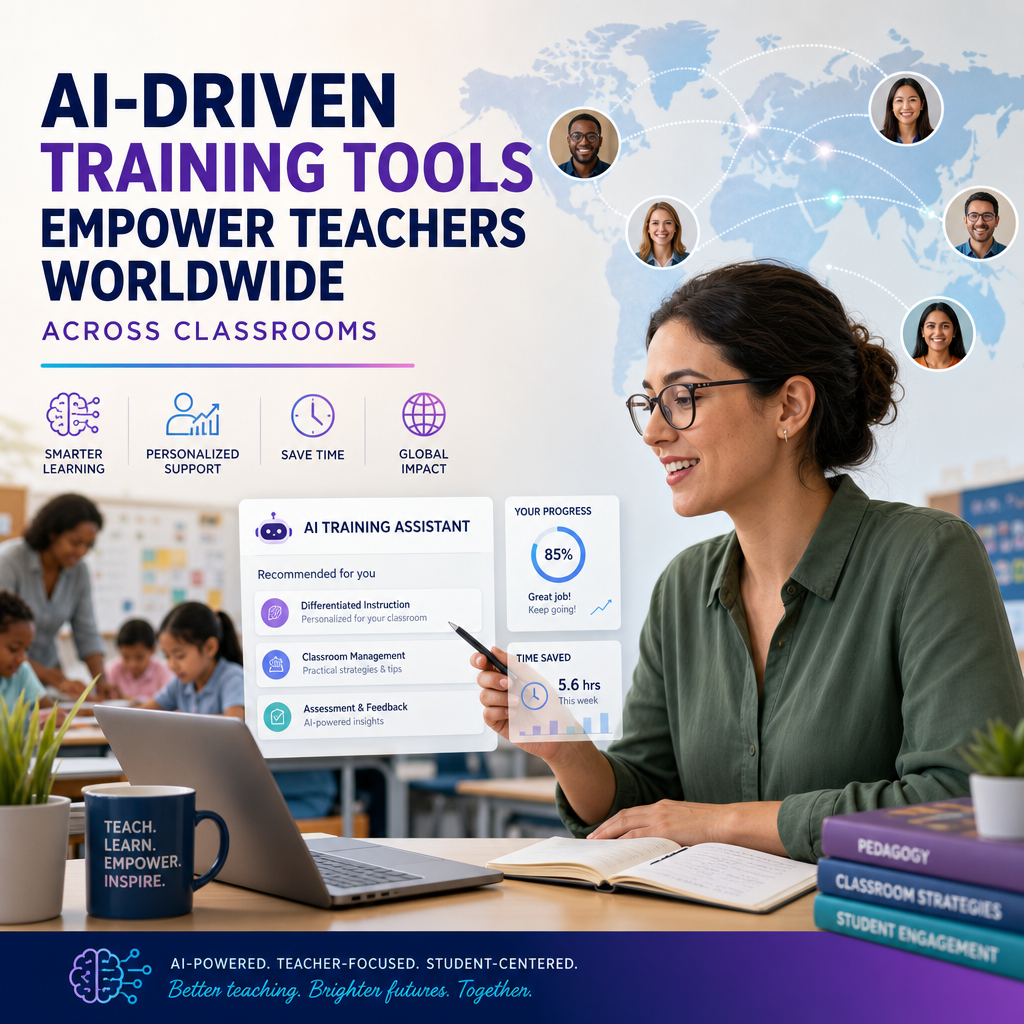
AI-Driven Training Tools Empower Teachers Worldwide Across Classrooms
Empowering Teachers Worldwide With AI-Driven Training Tools
Teaching has always depended on human connection, creativity, and adaptability. But today’s classrooms are changing fast. Teachers are supporting diverse learners, navigating new technologies, and working under increasing pressure. That is why empowering teachers worldwide with AI-driven training tools has become more than a trend—it is a practical way to improve professional development, reduce workload, and strengthen education at scale.
AI is not here to replace teachers. It is here to support them. When used well, AI-driven training tools can help educators learn faster, practice more effectively, and access high-quality development no matter where they live.
Why Teacher Training Needs a Smarter Approach
Traditional training models often struggle to meet the needs of modern educators. Workshops may be too general, too expensive, or too difficult to access. In many regions, teachers also face language barriers, limited internet access, and a lack of local support.
AI-driven training tools help solve these problems by offering:
- Personalized learning paths
- On-demand access to resources
- Real-time feedback and coaching
- Scalable support for schools and ministries
- Flexible learning across devices and locations
Instead of one-size-fits-all training, teachers can receive support tailored to their subject, grade level, experience, and goals.
How AI-Driven Training Tools Support Teachers
AI-powered professional development platforms can take many forms. Some act like intelligent tutors, while others provide analytics, simulations, or content recommendations. Together, these tools create a more responsive and efficient learning experience.
Personalized Professional Development
Every teacher has different strengths and needs. A new primary school teacher may need help with classroom management, while an experienced secondary school teacher may want strategies for project-based learning or assessment design.
AI can analyze teacher preferences, performance, and progress to recommend the most relevant modules. This saves time and makes training more meaningful.
Feedback That Helps Teachers Improve
One of the biggest advantages of AI-driven training tools is instant feedback. Teachers can practice lesson delivery, classroom questioning, or communication skills in simulated environments and receive immediate suggestions.
This kind of feedback can help teachers:
- Improve lesson clarity
- Strengthen student engagement strategies
- Refine assessment techniques
- Build confidence before trying new methods in class
Rather than waiting weeks for a review, educators can adjust and improve in real time.
Language and Accessibility Support
Global teacher training must work across many languages and learning contexts. AI tools can translate content, simplify technical language, and offer voice or text-based assistance.
This is especially valuable for teachers in multilingual regions or remote communities where access to expert trainers is limited. With better accessibility, more educators can participate fully in their own professional growth.
The Global Benefits of AI in Teacher Development
The impact of AI-driven training tools goes beyond convenience. When teachers receive better support, students benefit too. Stronger teacher preparation can improve instruction quality, increase confidence, and encourage innovation in classrooms.
Reaching More Educators
One of the biggest strengths of AI is scale. A single platform can serve thousands of teachers across countries and time zones. This makes it possible to deliver consistent training in places where in-person workshops are difficult to organize.
Reducing Cost and Time Barriers
Professional development can be expensive, especially when travel and time away from school are involved. AI tools reduce many of these costs by making training available online, on demand, and in smaller learning units.
Teachers can learn during breaks, after school, or whenever they have time. That flexibility is especially important for educators balancing heavy workloads.
Supporting Lifelong Learning
Teaching is a career that requires continuous learning. Curriculum changes, new technology, and changing student needs mean teachers must keep adapting. AI-driven tools make it easier to build a habit of ongoing development rather than relying on occasional training events.
Challenges to Keep in Mind
While the promise is strong, AI in teacher training must be used thoughtfully. Technology works best when it complements human expertise, not when it tries to replace it.
Important considerations include:
- Data privacy and security
- Fair access to devices and internet connectivity
- Avoiding over-reliance on automated recommendations
- Ensuring culturally relevant content
- Keeping teachers in control of their learning choices
The best AI systems are designed with teachers, not just for them. Human educators, school leaders, and policymakers should help shape how these tools are built and used.
A Better Future for Teacher Development
The future of education depends on supporting the people at the heart of it. AI-driven training tools offer a powerful way to make professional learning more flexible, inclusive, and effective. They can help teachers build confidence, save time, and access support that fits their unique context.
By empowering teachers worldwide with AI-driven training tools, education systems can move toward a model that values both innovation and equity. The result is not just better training for teachers, but better learning for students everywhere.
As AI continues to evolve, its greatest value in education may be simple: helping teachers do what they do best, with more support and less friction.