

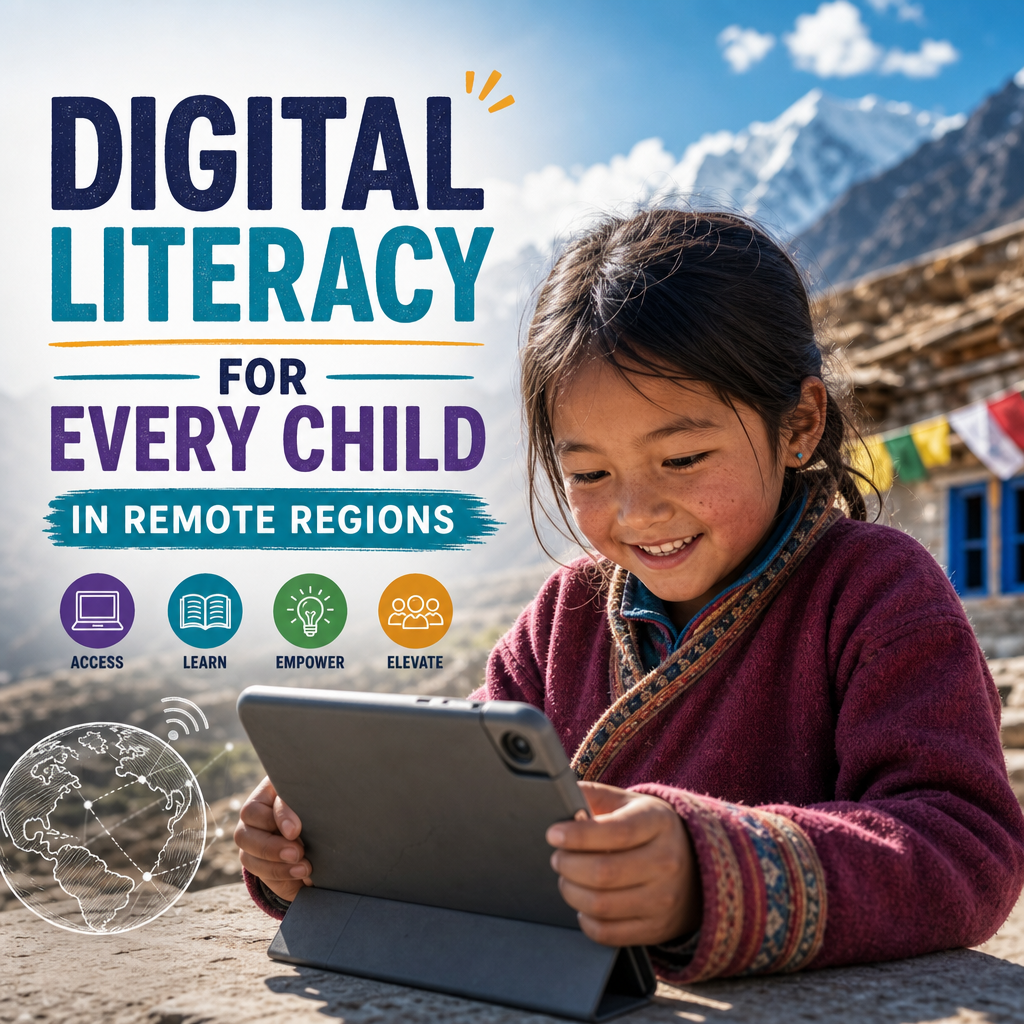
Digital Literacy for Every Child in Remote Regions
Digital Literacy for Every Child: Bringing World-Class Learning to Remote Regions
For many children, the path to education is no longer limited by distance alone. It is limited by access to devices, connectivity, and the confidence to use digital tools. Digital literacy for every child is becoming one of the most important goals in modern education, especially in remote regions where classrooms may be far apart and resources are often scarce.
When children can read, write, and solve problems in digital spaces, they gain far more than technical skills. They gain access to information, teachers, opportunities, and a wider world. That is why bringing world-class learning to remote communities is not just an education project. It is a long-term investment in equity, resilience, and opportunity.
Why Digital Literacy Matters
Digital literacy is more than knowing how to use a tablet or computer. It includes:
- Finding and evaluating information online
- Communicating safely and respectfully
- Using educational apps and platforms
- Creating content, not just consuming it
- Understanding privacy, security, and digital responsibility
For children in remote regions, these skills can open doors that geography once closed. A student in a rural village should have the same chance to explore science simulations, read global stories, and learn from skilled teachers as a student in a major city.
Without digital literacy, children risk falling behind in both school and life. With it, they can participate in the modern economy, continue learning independently, and build confidence in their own abilities.
The Challenge of Remote Learning Access
Remote regions often face a combination of barriers. Some communities lack reliable electricity. Others have weak internet coverage or no connectivity at all. In many places, families cannot afford laptops, data plans, or even basic maintenance for devices. Schools may have dedicated teachers but limited training in technology.
These challenges are real, but they are not impossible to overcome. In fact, some of the most effective education solutions are designed specifically for low-resource environments. The key is to match the technology to the community, rather than expecting communities to adapt to expensive systems that do not fit local needs.
Building Learning That Reaches Every Child
To bring world-class learning to remote regions, education programs need to be practical, flexible, and locally supported. A strong approach usually combines several elements.
1. Affordable, Durable Devices
Children need tools that can survive dust, heat, long travel, and frequent use. Low-cost tablets, rugged laptops, or shared community devices can make a big difference. Devices should also be easy to charge and maintain.
2. Offline and Low-Bandwidth Content
Learning should not stop when the internet does. Offline libraries, preloaded lessons, and low-bandwidth platforms allow children to keep studying even in isolated areas. This is especially important where connectivity is inconsistent or expensive.
3. Teacher Training
Technology alone does not create learning. Teachers need support to use digital tools effectively. Training should focus on simple, practical methods, such as guiding students through interactive lessons, assigning digital activities, and helping children develop safe online habits.
4. Community Involvement
Parents, caregivers, and local leaders play a major role in success. When communities understand the value of digital education, they are more likely to protect devices, support study time, and encourage regular use. Programs that involve local voices also tend to last longer.
5. Relevant Local Content
Children learn best when lessons connect to their lives. Educational content should reflect local languages, cultures, and everyday realities whenever possible. This helps students feel seen and makes learning more meaningful.
The Power of Digital Literacy for Every Child
When digital literacy is introduced early, the benefits spread quickly. Children become more curious, more independent, and more prepared for future learning. They can practice literacy and numeracy at their own pace, explore new interests, and gain confidence through interactive lessons.
There are also broader community benefits. A digitally literate generation can help improve communication, support local businesses, access health information, and strengthen disaster response. In remote regions, this can have a powerful ripple effect.
A child who learns to use a device for school today may become a teacher, entrepreneur, nurse, or engineer tomorrow. That future starts with access.
What Success Looks Like
Real success is not measured only by the number of devices distributed. It is measured by what children can do with them. Are they logging in regularly? Are they finishing lessons? Are they reading more, asking better questions, and solving problems with confidence?
The most successful programs often share these traits:
- They are affordable and scalable
- They work offline or with weak internet
- They support teachers, not replace them
- They reflect local needs and languages
- They track learning outcomes, not just usage
A Fairer Future Starts Now
Every child deserves the chance to learn, explore, and build a future. In remote regions, that means making digital tools available in ways that are realistic and sustainable. It means treating technology as a bridge, not a luxury.
Digital literacy for every child is not a distant dream. It is a practical goal that can be achieved through smart planning, local partnerships, and a commitment to equity. When we bring world-class learning to remote communities, we do more than connect classrooms. We connect children to possibility.