Emergency Medical Response: How Save World Children Mobilizes in Minutes
Emergency Medical Response: How Save World Children Mobilizes in Minutes
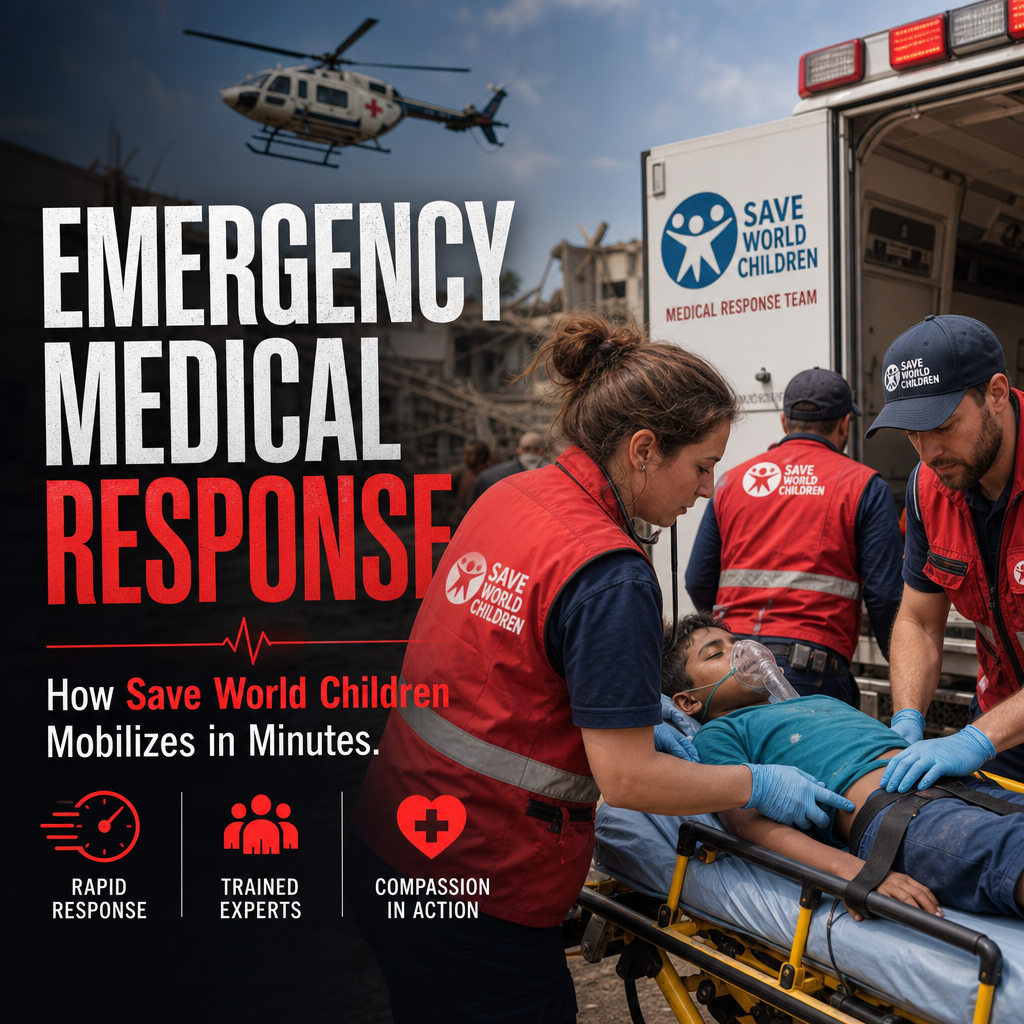
When a child’s life is at risk, every second matters. In a crisis, the difference between hope and heartbreak can come down to how fast help arrives. That is why Emergency Medical Response is at the center of Save World Children’s mission. The organization is built to move quickly, coordinate clearly, and deliver care when children need it most.
Whether the emergency is caused by conflict, disease, natural disaster, or displacement, Save World Children focuses on one goal: getting lifesaving support to vulnerable children in minutes, not hours.
Why the First Minutes Matter
In pediatric emergencies, time is critical. Children can deteriorate faster than adults, and common crises such as dehydration, breathing difficulty, infection, or trauma can become life-threatening quickly.
A rapid response can mean:
- Stabilizing a child before complications develop
- Preventing a treatable condition from becoming fatal
- Reducing long-term damage
- Connecting families to ongoing care
The early phase of an emergency is often the most chaotic. Roads may be blocked, clinics overwhelmed, and families unsure where to go. Save World Children’s model is designed for that exact moment.
How Save World Children Mobilizes So Quickly
Speed does not happen by accident. It comes from planning, training, and systems that are ready before an emergency begins.
1. Early alerts trigger action
The response process starts with information. Local partners, community workers, and field teams monitor conditions and report warning signs such as outbreaks, displacement, floods, or shortages of essential medical supplies.
Once a threat is confirmed, the organization activates its emergency protocol. This allows teams to move immediately instead of waiting for layers of approval.
2. Rapid assessment teams are deployed
Before a larger response is launched, small assessment teams are sent to the affected area. Their job is to understand:
- How many children are in danger
- What type of medical support is needed
- Which routes are accessible
- What supplies must be sent first
This step keeps the response focused. It ensures that aid is not only fast, but also relevant.
3. Medical kits are pre-positioned
One of the biggest reasons Save World Children can mobilize in minutes is preparation. Emergency supplies are often stored in advance, close to high-risk regions.
These kits may include:
- Oral rehydration salts
- Antibiotics
- Wound care materials
- Fever treatment
- Respiratory support tools
- Clean water and sanitation items
- Child-friendly nutrition supplies
Having these materials ready means teams do not waste precious time waiting for shipments.
Coordinated Care in the Field
Once teams arrive, the emergency medical response shifts from planning to action. Field staff work with local health workers and community leaders to identify the most urgent cases first.
Children are usually triaged based on severity. That means the sickest or most vulnerable are treated immediately, while others receive care in the next phase of the response.
Common services in the field
Save World Children’s emergency teams may provide:
- Basic first aid
- Dehydration treatment
- Infection control
- Malnutrition screening
- Referrals to hospitals or clinics
- Maternal and newborn support
- Psychosocial first response for frightened children and caregivers
This approach helps address both visible injuries and hidden dangers. A child may look stable but still be at risk from fever, shock, or malnutrition. Careful screening catches those issues early.
Working With Local Communities
A strong emergency medical response is never done alone. Local communities are essential to every successful intervention.
Save World Children works through trusted local partners who understand the area, speak the language, and know where the greatest needs are. This local knowledge speeds up access and helps teams avoid delays caused by poor communication or unfamiliar terrain.
Community members also help by:
- Identifying children in distress
- Guiding responders to remote households
- Sharing public health information
- Supporting safe referrals to clinics
This partnership model builds trust, which is crucial in emergencies. Families are more likely to seek help quickly when they know the responders are reliable and respectful.
Beyond the Crisis: Follow-Up Matters
The job is not finished when the immediate danger passes. Children who survive emergencies often need follow-up care, nutrition support, or rehabilitation. Some need wound checks, medication, or ongoing treatment for illness. Others need emotional support after trauma.
Save World Children’s emergency response is designed with this next step in mind. Teams connect families to longer-term services so recovery continues after the first rush of crisis care.
That continuity is what turns a temporary intervention into lasting protection.
Why This Model Saves Lives
Emergency response works best when it is fast, local, and well organized. Save World Children combines all three. By preparing supplies in advance, training rapid response teams, and partnering with communities on the ground, the organization can reach children when they are most vulnerable.
The result is simple but powerful: fewer preventable deaths, faster recovery, and better outcomes for children caught in crisis.
In an emergency, minutes matter. Save World Children is built to make those minutes count.