
AI-Assisted Micro-Tasks Are Transforming the Future of Work Globally
The Future of Work: How AI-Assisted Micro-Tasks Are Transforming Global Labor Opportunities
The future of work is no longer limited to office jobs, full-time contracts, or fixed locations. A major shift is underway, driven by digital platforms, automation, and the rise of AI-assisted micro-tasks. These small, repeatable jobs are opening new doors for workers around the world, especially in regions where traditional employment opportunities are limited.
Instead of one person handling an entire project, work is now being broken into smaller pieces that can be completed quickly and remotely. AI helps assign, sort, and improve these tasks, creating a more flexible labor market. This model is changing how companies hire and how people earn income.
What Are AI-Assisted Micro-Tasks?
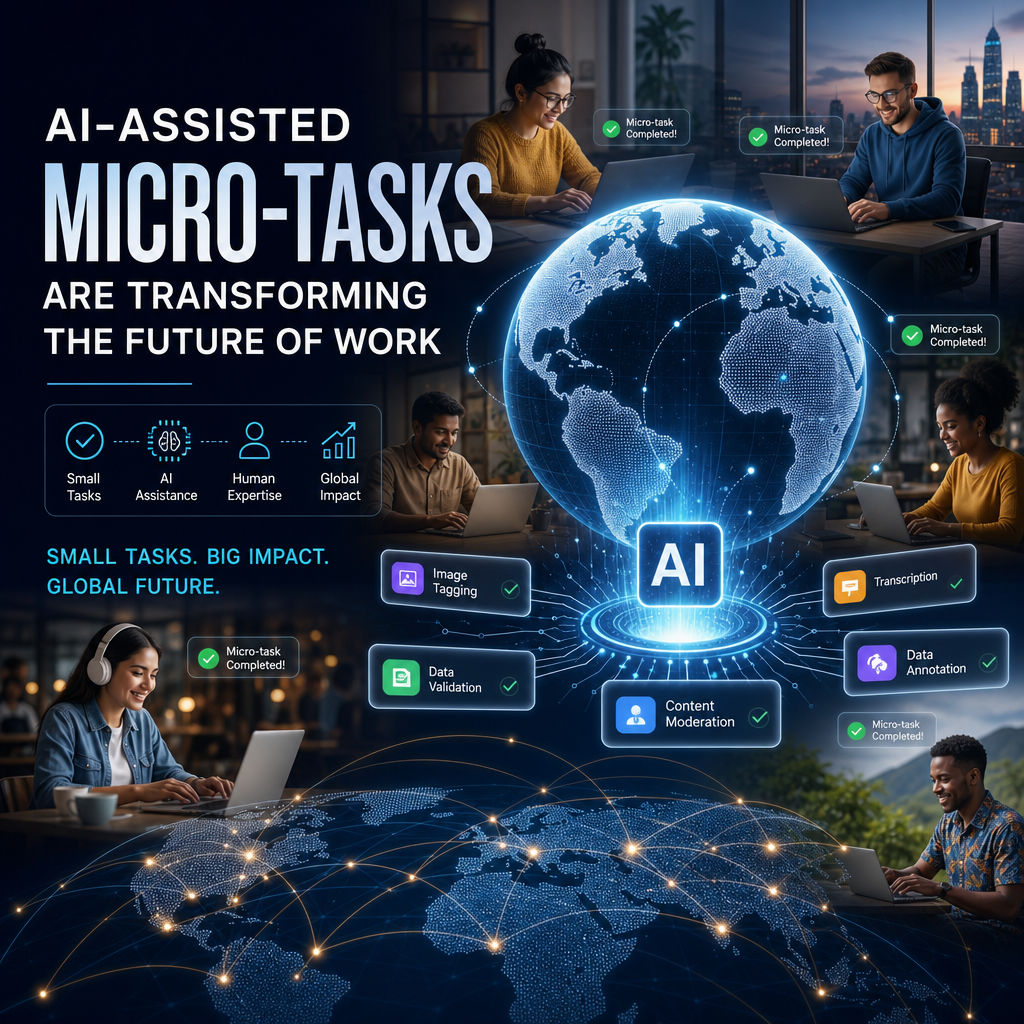
AI-assisted micro-tasks are small digital tasks that can be completed in minutes or even seconds. They often include:
- Labeling images or text
- Transcribing short audio clips
- Reviewing search results
- Moderating content
- Checking data accuracy
- Providing human feedback to train AI models
AI systems help distribute these tasks to workers, monitor quality, and speed up processing. In many cases, the tasks are too small or too repetitive for traditional jobs, but together they support important business operations and machine learning systems.
This is where the model becomes powerful: millions of small contributions can support large-scale digital products and services.
Why This Model Is Growing Fast
Several trends are pushing micro-task work into the mainstream.
1. Businesses Need Faster, Cheaper Workflows
Companies want to process large volumes of data without expanding full-time staff. Micro-task platforms allow them to delegate work to a global workforce on demand.
2. AI Still Needs Human Input
Even advanced AI systems make mistakes. They need humans to verify outputs, correct errors, and supply context. Micro-tasks provide that human layer, improving AI accuracy and reliability.
3. Remote Work Is Now Normalized
The pandemic accelerated remote work adoption, but micro-task labor took the idea even further. Workers can now contribute from nearly anywhere with an internet connection, making labor markets more accessible.
4. Demand for Flexible Income Is Rising
Many people want work that fits around caregiving, school, or other jobs. Micro-task platforms can offer flexible schedules and low barriers to entry, which is especially valuable in developing economies.
How AI-Assisted Micro-Tasks Are Expanding Global Opportunities
The biggest promise of AI-assisted micro-tasks is access. People who may not have local job opportunities can participate in a global digital workforce.
More Entry Points for Workers
Traditional employment often requires degrees, experience, or proximity to a city. Micro-task work is different. Many platforms only require basic digital literacy and an internet connection.
This lowers the barrier to participation for:
- Students
- Stay-at-home parents
- Freelancers
- Rural workers
- People re-entering the workforce
- Workers in lower-income countries
Cross-Border Income Opportunities
A worker in Kenya, the Philippines, or Colombia can contribute to projects for a company based in the United States, Europe, or Asia. This global reach creates new income pathways and allows talent to flow beyond geographic borders.
Skill Development Through Repetition
While micro-tasks may seem simple, they can help workers build useful digital habits. Over time, people may improve:
- Attention to detail
- Data handling
- Basic AI literacy
- Platform navigation
- Time management
For some workers, micro-tasks can be a stepping stone to more advanced online jobs such as data annotation, quality assurance, or AI operations.
The Challenges Behind the Opportunity
The growth of AI-assisted micro-tasks is promising, but it is not without problems.
Low Pay and Unstable Income
Many micro-task jobs pay very little per task. Workers often need to complete high volumes of tasks to earn meaningful income. This can lead to long hours and income uncertainty.
Lack of Benefits and Protections
Because many workers are classified as independent contractors, they may not receive health coverage, paid leave, or job security. That makes the model flexible, but also fragile.
Quality Control Pressure
AI systems rely on accurate human input, which means workers are often under tight deadlines and strict review systems. Rejected work can reduce earnings and create frustration.
Unequal Access to Platforms
Although micro-tasks are global, not everyone can access them equally. Language barriers, payment restrictions, and platform availability can exclude many potential workers.
What the Future May Look Like
The future of work will likely combine human judgment with AI coordination. Micro-tasks are one example of that shift, but they point to a broader change in how labor is organized.
More Hybrid Human-AI Workflows
In the coming years, more companies will use AI to automate task distribution, while humans handle exceptions, edge cases, and quality checks. This will make workflows faster and more scalable.
Specialized Micro-Skill Markets
As platforms mature, workers may begin to specialize in niche areas like language evaluation, safety testing, or model auditing. These roles could pay better and require more expertise.
Greater Policy Attention
Governments and labor organizations will likely pay more attention to digital labor rights, pay standards, and worker protections. If micro-task work continues to expand, regulation will become essential.
A New Labor Model Takes Shape
AI-assisted micro-tasks are not just a technical trend. They represent a new way of thinking about labor itself: distributed, digital, and global. They give companies a way to scale work efficiently and offer workers a chance to participate in the digital economy from almost anywhere.
The challenge now is making this system fairer, more transparent, and more sustainable. If that happens, AI-assisted micro-tasks could become one of the most important engines of opportunity in the future of work.