

Agentic AI: How It Powers Save World Children’s Global Mission
Why Agentic AI Matters: The Technology Behind Save World Children’s Global Impact
In today’s rapidly evolving tech landscape, artificial intelligence (AI) continues to be a pivotal force, especially in sectors where it can make a significant humanitarian impact. One such area is in the initiatives led by organizations like Save World Children, which harness powerful AI technologies to drive global change. At the forefront of these advancements is Agentic AI, a technology that is reshaping how non-profits operate and influence world issues. Here’s a deep dive into why Agentic AI matters and how it’s utilized by Save World Children to amplify their global outreach and impact.
Understanding Agentic AI
Agentic AI refers to systems that can act autonomously, making decisions and performing actions without human intervention. This level of AI is capable of understanding complex scenarios and adapting to them with little to no guidance. It’s distinguished from other forms of AI by its proactive nature, allowing it to be more than just a tool; it becomes a participant.
Key Features of Agentic AI
- Autonomy: The ability to operate independently.
- Adaptability: Can adjust to new information and environments efficiently.
- Proactivity: Not only responds but also initiates actions when necessary.
These characteristics make Agentic AI uniquely suited for applications in diverse and dynamic fields like humanitarian aid, where each situation can vastly differ from the next.
How Save World Children Uses Agentic AI
Save World Children has been leveraging Agentic AI in several innovative ways to enhance their missions across the globe. Here’s how they are making a difference.
Streamlining Operations
By integrating Agentic AI into their operations, Save World Children has been able to automate numerous routine tasks, from data processing to complex logistical operations. This automation reduces the burden on human staff and allows them to focus on more critical, decision-centric aspects of their work.
- Efficient resource management: AI systems analyze patterns to predict where resources are needed most and manage inventory accordingly.
- Automated reporting: Ensures that stakeholders are kept informed with real-time data on the impact and status of ongoing programs.
Enhancing Decision Making
Agentic AI excels in making well-informed decisions by analyzing vast amounts of data faster than any human equivalent. This capability is crucial in planning and executing effective humanitarian interventions.
- Predictive analytics: AI tools forecast potential future crises and the impact of various interventions, helping to strategize more effective responses.
- Real-time adjustments: AI can rapidly alter plans in response to changing ground realities, ensuring that aid efforts are always relevant and impactful.
Improving Outreach and Engagement
With the ability to analyze data on a granular level, Agentic AI helps Save World Children tailor their outreach efforts to be more personal and effective.
- Personalized communication: AI-driven platforms can send tailored messages to donors and volunteers, increasing engagement and continued support.
- Social media optimization: By analyzing trends and engagement rates, AI optimizes content delivery, ensuring maximum visibility and interaction on various platforms.
The Impact of Agentic AI on Humanitarian Efforts
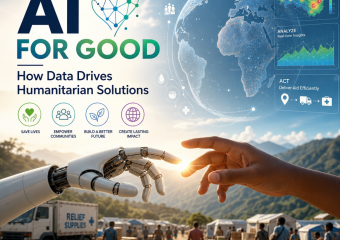
The deployment of Agentic AI by humanitarian organizations like Save World Children has led to significant improvements in both efficiency and effectiveness. Here are some of the measurable impacts:
- Increased operational efficiency: Reduced operational costs and quicker response times.
- Enhanced accuracy in aid delivery: More targeted aid delivery thanks to precise data analysis.
- Data-driven decision making: Grounded and objective decision-making processes enhance overall strategic planning and implementation.
Conclusion: The Future is Here
As Agentic AI continues to develop and become more sophisticated, its potential to support and enhance the capabilities of humanitarian organizations like Save World Children grows exponentially. This autonomous, proactive, and adaptable technology is not just transforming how missions are carried out but is also setting new standards for what can be achieved in global humanitarian efforts. With such technologies at their disposal, the future of non-profit work in crisis response and development looks more promising than ever. Agentic AI doesn’t just support the mission; it propels it forward, ensuring that aid is timely, efficient, and, most importantly, effective.