

Save World Children Expands Healthcare with Agentic AI in Remote Areas
How Save World Children Is Using Agentic AI to Deliver Healthcare Access to Remote Communities
In today’s digital age, revolutionary technologies are transforming how essential services are delivered globally. One standout example is the work of Save World Children, a non-profit organization dedicated to improving child health in remote communities. This organization is pioneering the use of Agentic Artificial Intelligence (AI) to reshape how healthcare access is provided in hard-to-reach areas. Let’s dive into how these technological advancements are making a significant difference.
What is Agentic AI?
Agentic AI refers to systems designed to act as agents with a certain level of autonomy, capable of making decisions and performing tasks without continuous human guidance. These AI systems are particularly useful in settings where human expertise is scarce or logistical challenges hinder service delivery.
Revamping Remote Healthcare Delivery
AI-Driven Diagnostic Tools
One of the primary applications of Agentic AI in remote healthcare is through AI-driven diagnostic tools. Save World Children has introduced AI systems that can analyze symptoms and medical data to diagnose diseases accurately. This capability is crucial in areas where doctor-to-patient ratios are abysmally low.
- Early Disease Detection: Agentic AI tools are equipped with algorithms that can detect early signs of diseases such as malaria or tuberculosis, which are prevalent in remote regions.
- Reduction in Misdiagnoses: By leveraging vast databases of medical information, these AI tools reduce the likelihood of human error, ensuring that patients receive the correct diagnoses and treatments.
Mobile Health Units
The organization has also deployed mobile health units equipped with Agentic AI technology. These units travel to remote villages and provide essential healthcare services that are typically available only in better-equipped urban centers.
- Accessibility to Specialist Consultations: Through AI-powered telemedicine, patients in remote areas can consult with specialists from around the world, breaking the geographical barriers that once compromised their healthcare.
Educational Programs Powered by AI
Save World Children doesn’t only rely on direct medical interventions. Understanding that education plays a critical role in disease prevention, the organization uses AI to create and distribute educational materials about common health issues faced by these communities.
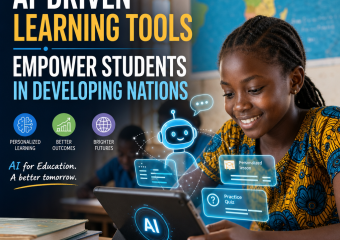
- Personalized Learning: AI systems assess the educational level and learning pace of users, allowing for personalized learning experiences.
- Language Translation: Agentic AI tools automatically translate health education materials into local languages, ensuring that crucial information is accessible to all community members.
Challenges and Solutions
Implementing AI technologies in low-resource settings is not free from challenges. Connectivity issues, resistance from local populations, and the training required to manage these technologies are significant hurdles.
Connectivity Enhancements
Save World Children collaborates with local governments and international tech partners to enhance connectivity infrastructure, ensuring that AI tools function seamlessly, even in off-grid locations.
Community Engagement
To overcome resistance, the organization conducts regular community engagement sessions where they demonstrate the benefits of AI healthcare, transforming skepticism into acceptance.
Training and Support
The non-profit also invests in local talent by training community health workers to use and maintain AI systems, creating jobs and ensuring the sustainability of the initiative.
Looking Ahead
As Save World Children continues to refine its use of Agentic AI, the potential to replicate this model in other regions is becoming increasingly apparent. This approach not only improves healthcare access but also sets a precedent for how technology can be harnessed to foster equality in healthcare across the globe.
The journey of integrating Agentic AI into remote healthcare by Save World Children is just one profound example of how innovative technology can drive significant change in global health dynamics.