

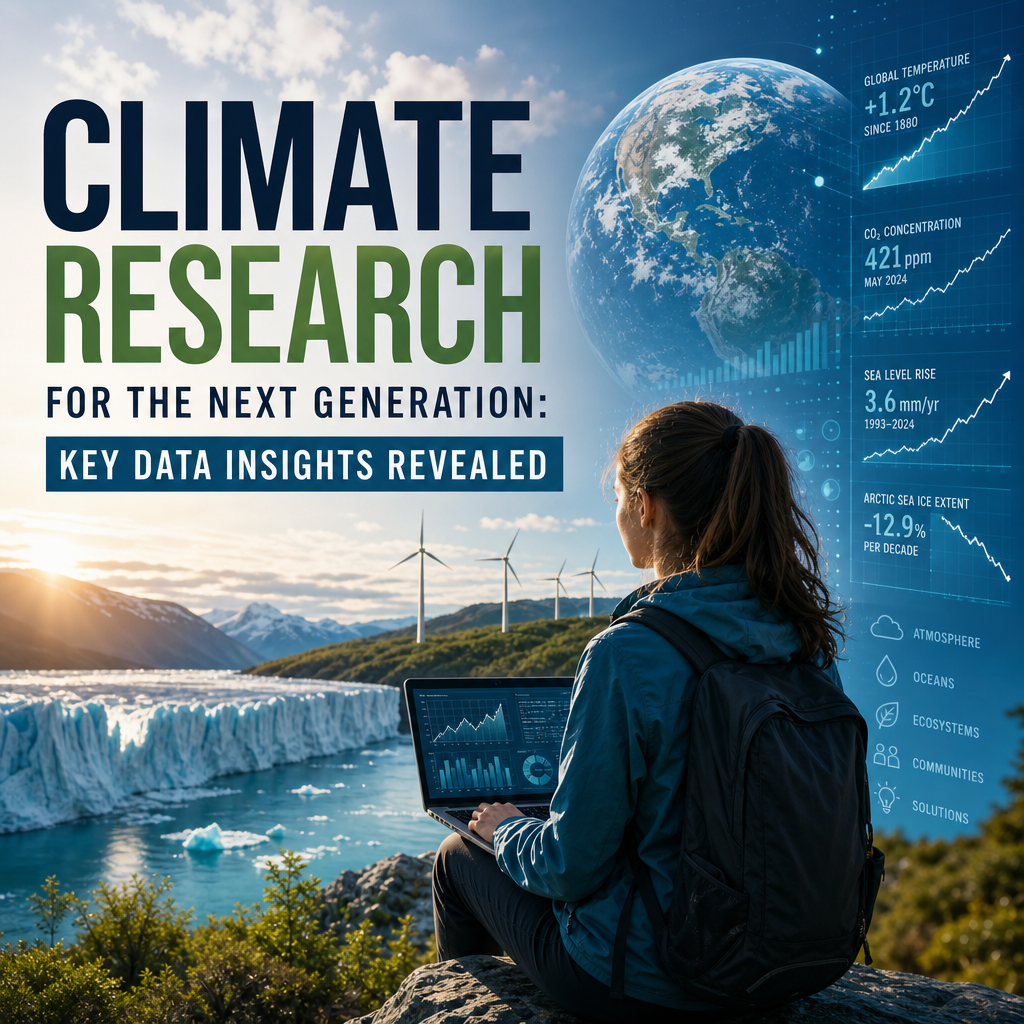
Climate Research for the Next Generation: Key Data Insights Revealed
Climate Research for the Next Generation: What Our Data Reveals
Climate research is no longer about predicting a distant future. It is about understanding changes already unfolding and preparing the next generation to respond with clarity, confidence, and speed. The latest data tells a detailed story: the planet is warming, extreme weather is intensifying, and ecosystems are under growing pressure. But it also reveals something equally important—there is still time to act, and data can show us where action matters most.
What the data says about a changing climate
Across decades of observations, the pattern is consistent. Global temperatures continue to rise, sea levels are climbing, and ice sheets are shrinking. These are not isolated events. They are part of a connected system that affects food production, water supplies, health, and infrastructure.
Researchers use satellites, ocean buoys, weather stations, and computer models to track these changes. Together, these sources create a clearer picture of how climate systems behave and how quickly they are shifting.
Some of the strongest findings include:
- Rising average temperatures across nearly every region of the world
- More frequent and severe heatwaves
- Increased rainfall in some areas and longer droughts in others
- Higher ocean temperatures and acidification
- Greater risk of coastal flooding due to sea-level rise
For the next generation, these findings are not abstract. They influence the world they will inherit, and they help define the choices available to them.
Why climate research matters for younger generations
Climate research is especially important because young people will live longest with the consequences of today’s emissions and policy decisions. The data does more than warn; it provides a roadmap.
By studying long-term trends, scientists can identify the most vulnerable regions, forecast future risks, and evaluate the effectiveness of climate solutions. This knowledge helps communities plan smarter cities, resilient farms, and stronger disaster response systems.
Climate research also supports education. When students see how evidence is collected and interpreted, they are better equipped to think critically about environmental issues. They learn that climate science is not built on opinions, but on repeated observation, testing, and analysis.
Data reveals both risk and opportunity
One of the most valuable lessons from climate research is that every data point can lead to action. For example, patterns in rainfall data can help farmers choose better planting schedules. Temperature records can guide city planners in designing cooler neighborhoods. Energy-use data can help governments expand clean power more efficiently.
This is why the phrase climate research for the next generation is more than a title—it is a call to use evidence as a tool for resilience.
Here are a few areas where data is already shaping the future:
1. Disaster preparedness
Climate models help predict where floods, storms, wildfires, and heat emergencies are most likely to occur. That allows officials to prepare evacuation plans, strengthen infrastructure, and save lives.
2. Agriculture and food security
Farmers and researchers use climate data to understand how shifting seasons affect crops. This helps improve irrigation, protect soil health, and reduce harvest losses.
3. Public health
Warmer temperatures and changing rainfall patterns can expand the spread of disease and increase heat-related illness. Climate research helps health systems prepare for these risks.
4. Conservation
Wildlife habitats are changing quickly. Data on migration, breeding patterns, and habitat loss helps conservation teams protect biodiversity before more species are lost.
The role of technology in climate research
Technology has transformed climate science. High-resolution satellites now monitor forests, glaciers, oceans, and atmospheric conditions in real time. Artificial intelligence helps researchers process huge datasets faster than ever before. Even citizen science, where communities contribute local observations, is expanding the reach of climate research.
This combination of global monitoring and local reporting gives scientists a richer, more accurate view of environmental change.
It also means the next generation will likely inherit more powerful tools for understanding and responding to climate challenges than any generation before them.
What young people can learn from the data
The most important lesson from climate data is that the future is not fixed. Trends are serious, but they are also measurable, and that makes them addressable.
Young people can take away three key ideas:
- Evidence matters. Decisions should be guided by reliable data, not rumor or fear.
- Small actions scale up. Local changes in energy use, transport, and land management can have major effects over time.
- Innovation is essential. New ideas in clean energy, storage, building design, and conservation will shape what comes next.
When students, educators, and communities engage with climate research, they help build a generation that is informed rather than overwhelmed.
Looking ahead
The data is clear: climate change is reshaping the planet in real time. But it also shows where society can intervene, adapt, and improve. That is the real promise of climate research for the next generation. It turns uncertainty into understanding and concern into action.
The next generation will not just study climate change. They will live its consequences, respond to its challenges, and create its solutions. The better we read the data today, the better prepared they will be tomorrow.
