
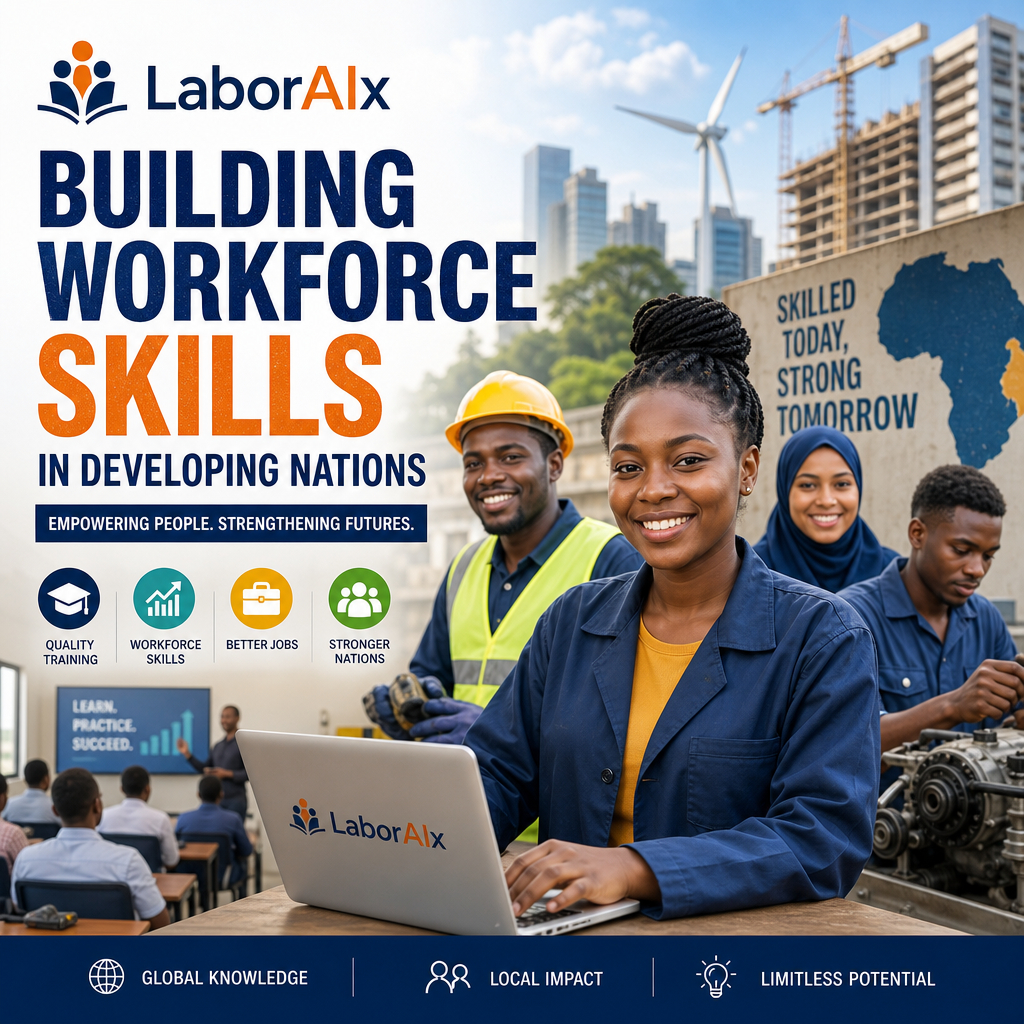
Building Workforce Skills in Developing Nations with LaborAIx Training
Building Workforce Skills in Developing Nations Through LaborAIx Training
Developing nations face a shared challenge: how to prepare millions of workers for jobs that are changing faster than ever. As automation, digital tools, and global supply chains reshape industries, traditional training models are often too slow, too expensive, or too disconnected from local labor needs.
This is where LaborAIx Training offers a powerful new approach. By combining labor market data, AI-driven learning pathways, and practical skills development, LaborAIx Training can help build a stronger, more adaptable workforce in emerging economies.
Why workforce skills matter more than ever
A country’s economic growth depends heavily on the quality of its workforce. When workers have the right skills, businesses can grow, productivity increases, and incomes rise. But in many developing nations, skills gaps remain a major barrier.
Common challenges include:
- Limited access to quality training
- Weak alignment between education and labor market demand
- High youth unemployment
- A large informal workforce with few upskilling opportunities
- Rapid technology adoption without enough digital literacy
These gaps do not just affect workers. They also make it harder for employers to find talent and for governments to attract investment. Closing them is essential for long-term development.
What makes LaborAIx Training different?
Traditional training programs often take a one-size-fits-all approach. They may teach general skills, but not necessarily the skills local employers need. LaborAIx Training changes that by focusing on data-driven workforce development.
Instead of guessing which skills matter, LaborAIx Training uses labor market insights to identify where demand is growing. That means training can be tailored to sectors such as:
- Agribusiness
- Construction
- Manufacturing
- Logistics
- Healthcare
- Digital services
This targeted approach helps workers gain skills that are more likely to lead to real jobs and career growth.
Personalized learning pathways
One of the most valuable features of LaborAIx Training is personalization. Workers come from different backgrounds, education levels, and career goals. A young job seeker in a city may need digital and communication skills, while a rural worker may need technical training tied to agriculture or local industry.
LaborAIx Training can adapt content to the learner, making it easier to:
- Start at the right skill level
- Learn at a practical pace
- Focus on relevant job opportunities
- Track progress over time
This makes training more inclusive and more effective.
Building skills that match real demand
A major weakness in many workforce programs is the mismatch between what is taught and what employers need. Training may be available, but not in the right areas.
LaborAIx Training helps solve this by connecting learning with labor demand trends. That means programs can be designed around skills such as:
- Digital literacy
- Machine operation
- Basic coding and data handling
- Workplace communication
- Health and safety
- Customer service
- Supply chain coordination
These are not just “future skills.” They are practical skills that support jobs today and help workers stay employable tomorrow.
Supporting youth, women, and informal workers
In developing nations, workforce development must be inclusive. Youth often need entry-level pathways into the labor market. Women may face barriers related to access, time, mobility, or social norms. Informal workers often lack any structured training at all.
LaborAIx Training can help close these gaps by offering flexible and scalable learning options. For example:
- Mobile-friendly lessons for workers with limited internet access
- Short modules that fit around work and family responsibilities
- Local-language content for broader accessibility
- Certifications that improve job credibility
When training is designed with inclusion in mind, more people can participate in economic growth.
Benefits for employers and governments
The impact of LaborAIx Training goes beyond individual workers. Employers benefit from a more skilled talent pool, while governments gain a more resilient labor market.
For employers
- Easier recruitment
- Better worker productivity
- Lower turnover
- Faster adoption of new technology
For governments
- Reduced unemployment and underemployment
- Stronger alignment between education and labor policy
- Improved competitiveness
- Greater social and economic stability
In other words, workforce development becomes a shared investment rather than a scattered effort.
Scaling training across communities
One of the biggest advantages of LaborAIx Training is scalability. In many developing countries, reaching large numbers of workers is difficult. Trainers are limited, budgets are tight, and geography can create access barriers.
Digital training systems can help overcome these issues by:
- Delivering content at scale
- Supporting blended learning models
- Reducing training costs
- Updating courses quickly as markets change
This makes it possible to expand access without sacrificing relevance.
A practical path toward inclusive growth
Building workforce skills is not just about education. It is about creating opportunity. When training is aligned with real economic needs, workers can move into better jobs, businesses can grow, and communities can become more resilient.
LaborAIx Training offers a modern model for this challenge. By using data, personalization, and labor market alignment, it can help developing nations prepare workers for the demands of a changing economy.
The result is more than better training. It is a stronger foundation for inclusive growth, poverty reduction, and long-term progress.