
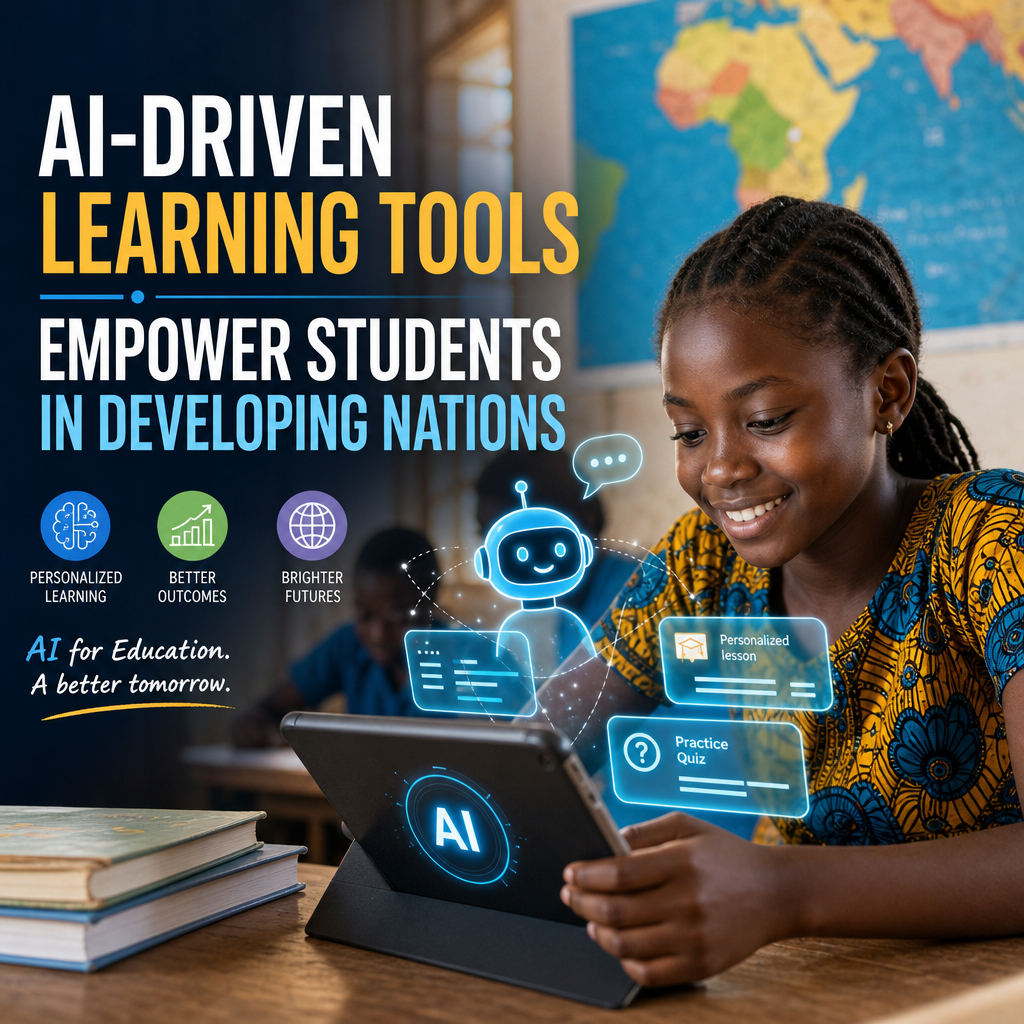
AI-Driven Learning Tools Empower Students in Developing Nations
How AI-Driven Learning Tools Are Empowering Students Across Developing Nations
Education is changing fast, and one of the biggest forces behind that change is artificial intelligence. In many developing nations, where schools often face challenges like overcrowded classrooms, limited teacher resources, and uneven access to learning materials, AI-driven learning tools are opening new doors for students.
These tools are not replacing teachers. Instead, they are helping students learn in smarter, more personalized ways. From mobile tutoring apps to translation platforms and adaptive quizzes, AI is making education more accessible, flexible, and effective.
Why AI Matters in Developing Nations
For many students in developing countries, the biggest barriers to learning are not a lack of ambition, but a lack of access.
Some schools have too few teachers. Others do not have enough textbooks, lab equipment, or internet connectivity. In rural areas, students may have to travel long distances just to attend class. These challenges can make it hard for learners to keep up or get the support they need.
AI helps by filling some of those gaps.
Personalized Learning at Scale
One of the most powerful benefits of AI in education is personalization. Traditional classrooms often move at one pace for everyone, but students learn differently. Some need more time with math concepts, while others may be ready for advanced reading or science topics.
AI-driven platforms can:
- identify a student’s strengths and weaknesses
- adjust lesson difficulty automatically
- suggest practice questions based on performance
- provide instant feedback on answers
This kind of support allows students to learn at their own pace, which is especially helpful in classrooms where teachers are managing many learners at once.
Learning Beyond the Classroom
In developing nations, many students cannot rely only on in-person schooling. Family responsibilities, transportation problems, or school closures can interrupt learning. AI-powered tools help students continue studying outside the classroom.
Mobile learning apps are especially important because smartphones are often more available than laptops or tablets. Through these apps, students can access:
- short lessons
- interactive quizzes
- voice-assisted instructions
- study reminders
- offline content that syncs when internet is available
This makes learning more flexible and easier to fit into daily life.
Making Education More Inclusive
AI is also helping students who have traditionally been left behind.
Support for Language Diversity
Many developing nations are multilingual. Students may speak one language at home but study in another at school. This can create a major learning barrier, especially for younger students.
AI translation tools and voice-based learning systems can help bridge this gap by offering:
- translated instructions
- multilingual practice materials
- text-to-speech features
- speech recognition for pronunciation support
When students can learn in a language they understand better, they are more likely to stay engaged and succeed.
Help for Students With Disabilities
AI-driven learning tools are also making education more inclusive for students with disabilities. Features like screen readers, automatic captions, speech-to-text, and image recognition can help students with visual, hearing, or mobility challenges access learning materials more easily.
This kind of accessibility is not just helpful—it is essential for building fairer education systems.
Supporting Teachers, Not Replacing Them
There is sometimes concern that AI may take over the role of teachers. In reality, the most effective use of AI is as a teaching assistant.
Teachers in developing nations often work with limited time and large class sizes. AI can reduce their workload by helping with tasks such as:
- grading quizzes
- tracking student progress
- identifying students who need extra help
- recommending teaching resources
This gives teachers more time to focus on mentorship, encouragement, and human interaction—things technology cannot replace.
Real-World Impact
Around the world, AI-based education tools are already showing results. Students in remote communities can now access reading support. Learners preparing for exams can practice through intelligent quiz systems. Young people with limited school access can use low-cost digital tutors on basic phones.
Even small improvements can make a big difference. A student who receives instant feedback may improve faster. A learner who can study in their own language may feel more confident. A teacher who saves hours on marking may have more energy for lesson planning.
These gains may seem modest individually, but across millions of students, they can transform education.
Challenges Still Remain
Of course, AI is not a magic solution. Developing nations still face real obstacles, including:
- limited internet access
- high device costs
- electricity shortages
- gaps in digital literacy
- concerns about data privacy
For AI-driven learning tools to reach their full potential, governments, schools, and technology providers must work together. Investments in infrastructure, teacher training, and affordable access are just as important as the technology itself.
The Future of Learning
The future of education in developing nations will likely be shaped by a mix of human support and intelligent technology. AI-driven learning tools are helping students study in ways that are more personalized, inclusive, and accessible than ever before.
As these tools continue to improve, they can help close learning gaps and create more opportunities for students who have long been underserved.
Education has always been a path to progress. With the right use of AI, that path is becoming wider, smarter, and more open to everyone.