
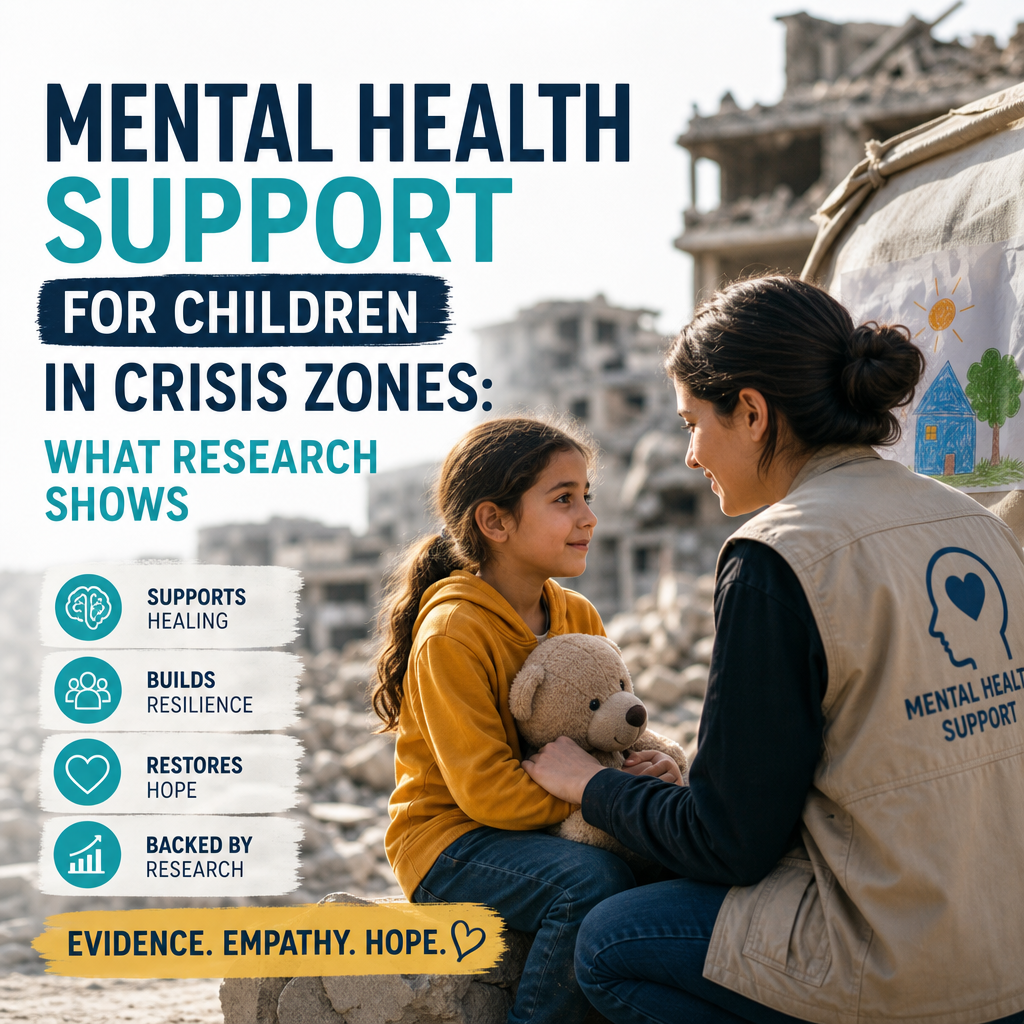
Mental Health Support for Children in Crisis Zones: What Research Shows
Mental Health Support for Children in Crisis Zones: What Our Research Shows
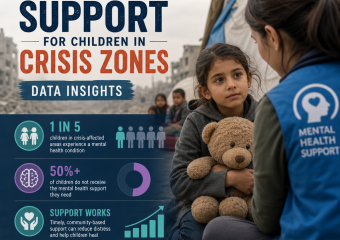
Children living through war, displacement, natural disasters, and prolonged instability face risks that go far beyond physical harm. They are often exposed to fear, loss, disrupted routines, family separation, and limited access to safe spaces. Our research on mental health support for children in crisis zones shows a clear pattern: when emotional needs are ignored, distress deepens; when support is timely, consistent, and child-centered, resilience grows.
Why mental health support matters early
In crisis settings, children are not only reacting to a single traumatic event. Many experience repeated stressors over months or years. That ongoing pressure can affect sleep, concentration, learning, behavior, and relationships.
Research consistently shows that early support can reduce the likelihood of long-term emotional difficulties. It does not erase hardship, but it helps children feel safer and more able to cope. Even simple interventions can make a major difference when delivered by trusted adults.
Common signs of distress in children
Children in crisis zones may not always talk about what they feel. Instead, stress can appear in behavior or physical symptoms. Common signs include:
- Sudden withdrawal or loss of interest in play
- Aggression, irritability, or frequent outbursts
- Trouble sleeping or recurring nightmares
- Bedwetting or regression in younger children
- Difficulty concentrating or learning
- Headaches, stomachaches, or other physical complaints
- Heightened fear, clinginess, or separation anxiety
These signs do not mean every child needs specialized treatment, but they do indicate a need for care, observation, and supportive response.
What our research shows works best
One of the strongest findings in the field is that children benefit most from layered support. No single solution works for every child. The most effective responses combine safety, connection, routine, and targeted care.
1. Safety comes first
Children cannot heal when they do not feel physically or emotionally safe. Research shows that establishing predictable environments is the first step in any mental health response.
This can include:
- Safe learning spaces
- Regular daily routines
- Clear communication from caregivers and teachers
- Access to trusted adults
- Protection from violence, exploitation, and neglect
Even when the broader situation remains unstable, small acts of consistency help children regain a sense of control.
2. Caregivers are essential
Our research shows that children’s well-being is closely tied to the emotional health of the adults around them. Parents, guardians, and other caregivers often carry their own trauma and stress. When they receive support, children benefit too.
Programs that strengthen caregivers may include:
- Parenting support and stress management
- Psychoeducation about trauma responses
- Community support groups
- Practical help with food, shelter, or income
When caregivers feel more capable, they are better able to respond with patience and reassurance.
3. Play and routine support recovery
For children, play is not a luxury. It is one of the main ways they process experience, build connection, and restore a sense of normal life. Research shows that structured play, art, storytelling, and movement-based activities can reduce stress and improve emotional expression.
Schools and child-friendly spaces often provide these opportunities. They also give children a reason to return to routine, which is especially important in unstable settings.
4. School-based support reaches more children
Schools are often among the few stable institutions in crisis zones. Our research shows that school-based mental health support can be one of the most scalable and effective approaches.
This may involve:
- Training teachers to recognize distress
- Offering basic psychosocial support in classrooms
- Creating safe spaces for expression
- Encouraging peer connection and inclusion
- Referring children with higher needs to specialized care
Teachers do not need to be therapists to make a difference. With the right guidance, they can become powerful sources of stability.
Barriers children still face
Even when effective strategies exist, access remains uneven. Our research highlights several major barriers:
- Too few trained mental health professionals
- Stigma around emotional distress
- Language and cultural differences in care
- Interrupted services due to conflict or displacement
- Lack of funding for long-term programs
- Limited privacy in crowded shelters or camps
These barriers mean many children never receive the help they need. That is why support must be designed for the realities of crisis settings, not imported from stable environments without adaptation.
What needs to happen next
The evidence is clear: children in crisis zones need more than emergency relief. They need sustained mental health support that is local, practical, and built around relationships.
Priority actions include:
- Integrating mental health into education, health, and protection services
- Training frontline workers and caregivers in basic psychosocial support
- Investing in community-based and culturally responsive care
- Expanding services for children with severe or persistent distress
- Supporting family reunification and stable caregiving when possible
A message of hope
Children affected by crisis are not defined by trauma alone. Our research shows that with the right support, many can recover, adapt, and thrive. The most effective mental health support for children in crisis zones is not complicated in principle: create safety, restore connection, support caregivers, and make help accessible.
When children are surrounded by adults and systems that respond with care, they are more likely to regain trust, rebuild routines, and imagine a future beyond crisis.