
Mental Health Support for Children in Crisis Zones: Data Insights
Mental Health Support for Children in Crisis Zones: What the Data Shows
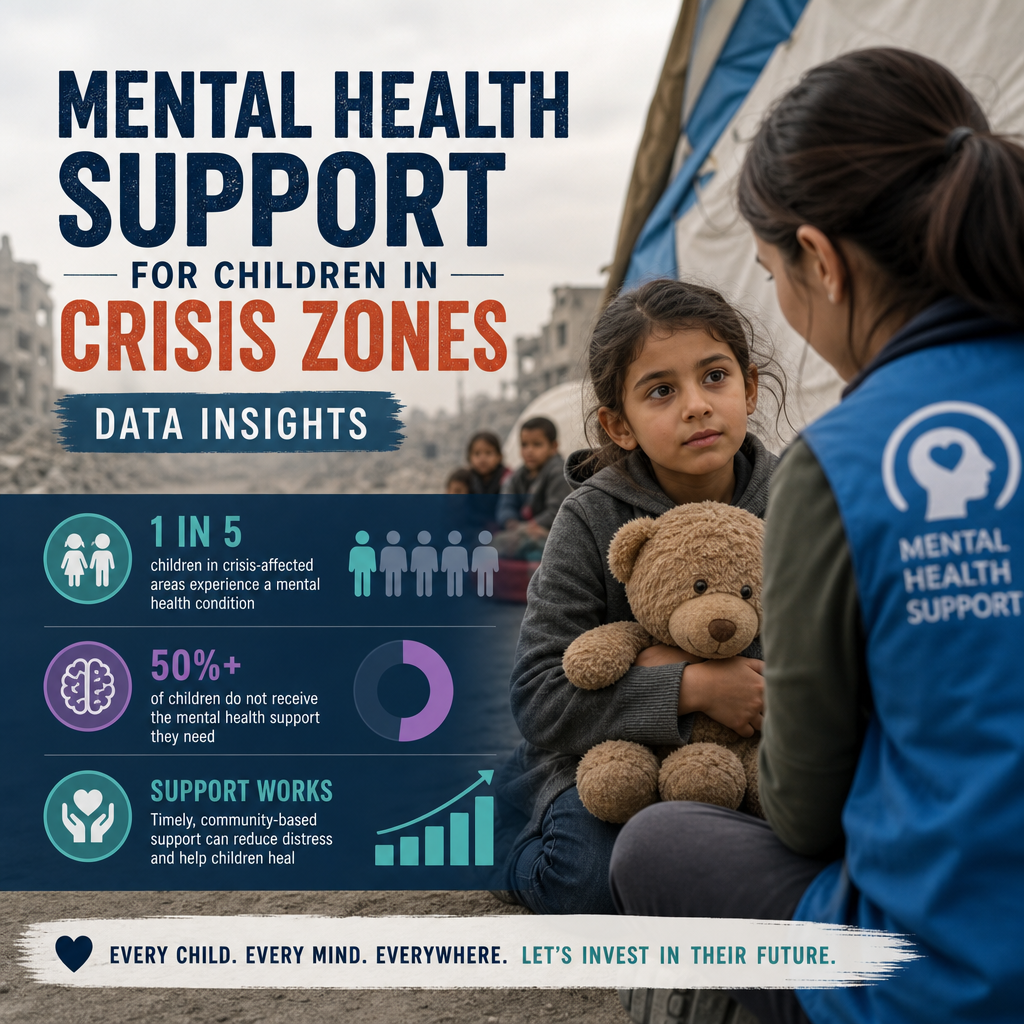
Children living through war, displacement, natural disasters, and chronic instability face more than physical danger. Their emotional and psychological well-being is often under constant strain. The data on mental health support for children in crisis zones shows a clear pattern: exposure to violence and disruption increases risk, but timely, stable support can make a measurable difference.
Why the issue matters
A crisis zone changes almost every part of a child’s world. School may stop. Families may separate. Homes may be damaged or lost. Basic routines disappear.
That disruption matters because children rely on predictability to feel safe. When safety is gone, stress can become toxic. Research across conflict and disaster settings consistently links prolonged exposure to fear and instability with higher rates of anxiety, depression, sleep problems, grief, and post-traumatic stress symptoms.
The data does not suggest that every child in crisis will develop a mental health disorder. But it does show that risk rises sharply when hardship is repeated, prolonged, or combined with loss, displacement, and lack of support.
What the data shows about children in crisis zones
1. Exposure to violence increases emotional distress
Children who witness bombing, gunfire, injury, or death are more likely to report nightmares, hypervigilance, irritability, and trouble concentrating. In many studies of conflict-affected populations, a large share of children show at least some trauma-related symptoms.
The important takeaway is not just that distress is common. It is that distress often continues long after the immediate danger has passed, especially when children remain in unstable environments.
2. Displacement adds another layer of risk
Forced migration can be especially hard on children. Losing home, school, friends, and community can create a deep sense of grief and disconnection.
Data from refugee and internally displaced populations shows higher levels of psychological distress than in non-displaced peers. Separation from caregivers is one of the strongest predictors of worse outcomes, while family unity is one of the strongest protective factors.
3. School disruption affects mental health
When schools close or become inaccessible, children lose more than lessons. They lose structure, social support, and a place where adults can notice changes in behavior.
Education is one of the most effective forms of mental health support for children in crisis zones because it restores routine and hope. Studies repeatedly show that children who return to some form of learning are more likely to show improved mood, reduced stress, and better social functioning.
4. The longer the crisis lasts, the greater the harm
Short-term stress can sometimes be absorbed with support. Long-term insecurity is different.
Chronic exposure to crisis is associated with cumulative stress. Children may become more withdrawn, more aggressive, or less able to regulate emotions. Over time, these challenges can affect physical health, learning, and relationships.
What helps most
The data also points to solutions. Effective support does not always require specialized therapy first. In many crisis settings, the most helpful interventions are practical, consistent, and community-based.
Key protective supports include:
- Stable caregiving
- A calm, responsive adult can buffer stress and help children feel safe.
- Safe spaces
- Child-friendly spaces allow play, connection, and supervision.
- Routine
- Predictable daily schedules reduce uncertainty and build security.
- School access
- Learning environments provide normalcy and peer support.
- Psychological first aid
- Basic emotional support after a crisis can reduce immediate distress.
- Referral pathways
- Children with severe symptoms need access to specialized care when available.
Importantly, interventions work best when they are culturally appropriate and built with local communities. Programs imposed from outside may miss the realities families face every day.
The role of caregivers and communities
Children do not heal in isolation. The mental health of parents, teachers, and community leaders shapes how children cope.
When caregivers are overwhelmed by grief, trauma, or economic pressure, children often feel it. That is why supporting adults is part of supporting children. Family-centered aid, caregiver counseling, and community networks can strengthen the environment around a child even when resources are limited.
Community-based programs also reduce stigma. In many crisis zones, families may hesitate to seek mental health care because they do not recognize symptoms, fear judgment, or simply do not know where to turn. Education and outreach can change that.
A realistic picture of recovery
The evidence is clear: crisis harms children, but support works. Not every child needs intensive therapy. Many benefit first from safety, routines, connection, and access to trusted adults.
The best response is layered:
- Keep children safe
- Rebuild daily routines
- Support caregivers
- Restore education and play
- Refer severe cases to specialized care
When those pieces are in place, children are far more likely to recover resilience and regain a sense of control.
Final thoughts
The data on children in crisis zones tells a difficult but hopeful story. The risks are real, and they are not equal across all children. Those facing displacement, family separation, and long-term instability are most vulnerable. But the same evidence shows that mental health support for children in crisis zones can reduce suffering and improve outcomes when it is early, consistent, and grounded in community needs.
In crisis settings, mental health support is not a luxury. It is part of protecting a child’s future.