

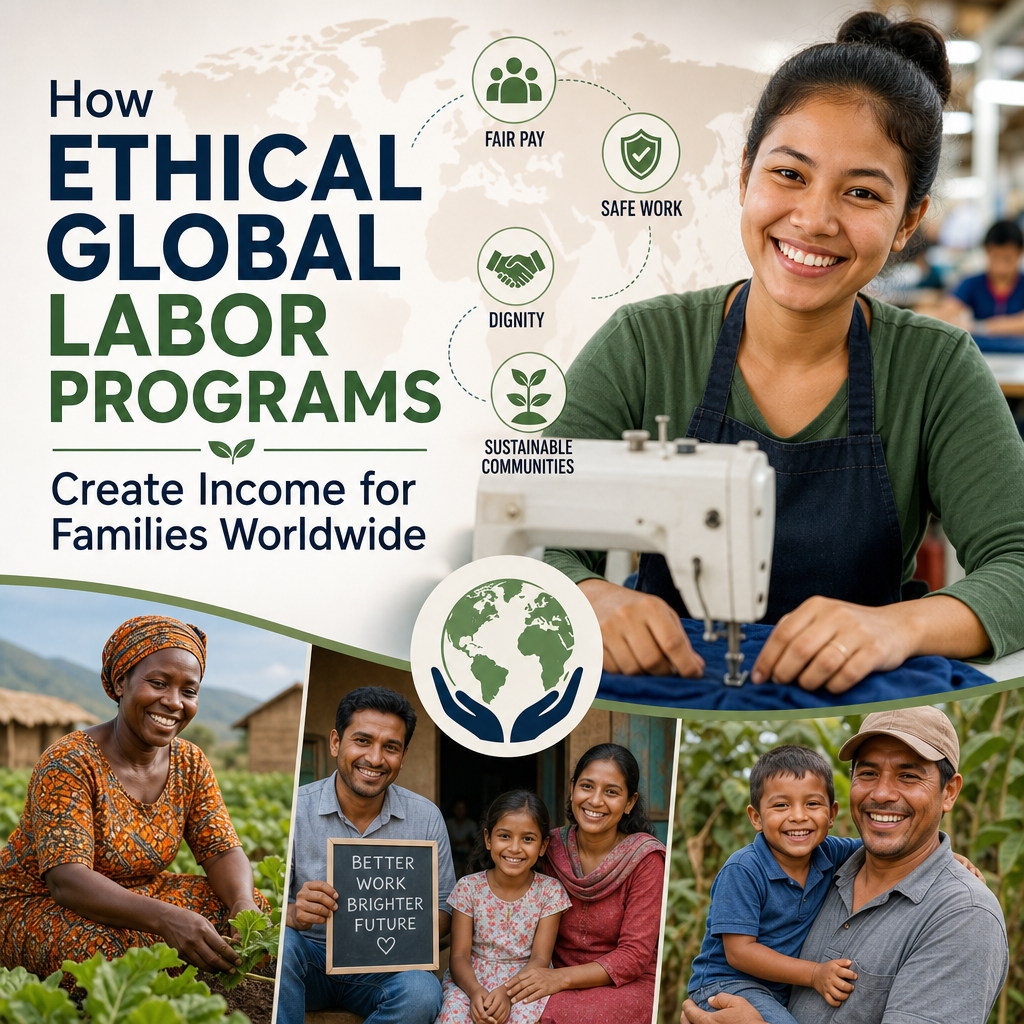
How Ethical Global Labor Programs Create Income for Families Worldwide
How Ethical Global Labor Programs Are Creating Income for Families Worldwide
Ethical global labor programs are changing how people earn a living across borders. Instead of relying on exploitative practices or unstable short-term work, these programs connect families to fair, transparent, and sustainable income opportunities. The result is more than a paycheck. It is greater stability, stronger communities, and a path toward long-term economic independence.
As global business becomes more connected, companies have more power than ever to shape working conditions. When they choose ethical labor models, they help create income in places where opportunities may otherwise be limited. That income can support food, education, healthcare, and safer housing for families around the world.
What Makes a Labor Program Ethical?
Ethical global labor programs are built on fairness, accountability, and respect for workers. They are designed to provide income without exploitation, unsafe conditions, or hidden costs.
Key features often include:
- Fair wages that reflect local living costs
- Safe working environments
- Clear contracts and payment terms
- No forced or child labor
- Opportunities for skills development
- Respect for workers’ rights and dignity
When these conditions are in place, workers are not just earning money. They are participating in a system that values their time, effort, and well-being.
How These Programs Create Income for Families
For many households, the biggest benefit of ethical labor programs is simple: reliable earnings. In regions where local job markets are limited, these programs can open access to work that was previously unavailable.
This income often has a ripple effect. One wage earner can support an entire household. A parent can pay school fees for children, buy nutritious food, or invest in small household improvements. In some cases, families can begin saving for emergencies or future business opportunities.
The income impact goes beyond wages
Ethical employment can also reduce financial volatility. Instead of depending on informal or seasonal labor, families may gain:
- More predictable monthly income
- Access to long-term work relationships
- Better financial planning options
- Opportunities to build credit or savings
- Improved resilience during economic stress
This stability matters, especially in communities where a small financial setback can have serious consequences.
Why Skills Training Matters
Many ethical global labor programs do more than offer jobs. They also provide training that helps workers grow. This can include technical skills, language support, digital tools, or management training.
When workers develop new abilities, they increase their earning potential over time. A job that starts as entry-level can become a pathway to higher-paying work or entrepreneurship. For families, that means income today and more opportunity tomorrow.
Common benefits of training include:
- Higher productivity
- Better job security
- Increased confidence
- Access to more advanced roles
- Greater independence from informal labor markets
Skills development is one of the most powerful ways ethical programs help families move forward economically.
The Role of Transparent Supply Chains
Behind every ethical labor program is a supply chain that must be accountable. Transparency helps ensure that companies know who is doing the work, how they are treated, and whether they are paid fairly.
When businesses trace their supply chains carefully, they can identify risks and correct problems before they become abuse. This creates more trustworthy systems for workers and more responsible purchasing for consumers.
It also helps local producers and service providers compete fairly in the global market. Instead of being pushed into the lowest-cost option, they can be rewarded for quality, reliability, and ethical practices.
Communities Benefit Too
The income generated through ethical labor programs does not stop with one household. It often strengthens entire communities.
When families have steady income, they spend more at local markets, support small businesses, and contribute to community growth. Schools see higher attendance. Health outcomes can improve. Local economies become more active and resilient.
Community-wide effects may include:
- More local business activity
- Increased school enrollment
- Better access to healthcare
- Reduced migration pressure
- Stronger community participation
In this way, ethical employment becomes a foundation for broader social development.
A Better Model for Global Work
The old model of global labor often focused only on low costs. Ethical global labor programs take a different approach. They show that businesses can create value without sacrificing worker dignity.
This shift is important because consumers, companies, and workers are all part of the same system. When ethical practices become standard, income is distributed more fairly and families gain a chance to build better futures.
The goal is not just to provide work. It is to create work that supports human potential, family stability, and economic mobility.
Conclusion
Ethical global labor programs are helping families worldwide earn income in ways that are fair, reliable, and sustainable. By prioritizing wages, safety, transparency, and training, these programs create more than employment. They create opportunity.
For families, that opportunity can mean a child staying in school, a home becoming more secure, or a household finally having room to save. For communities, it can mean stronger local economies and more hopeful futures.
As more organizations choose ethical practices, the impact will continue to grow—one fair job, one family, and one community at a time.