
Why AI-Powered Nonprofits Are Leading the Next Humanitarian Revolution
Why AI-Powered Nonprofits Are Leading the Next Humanitarian Revolution
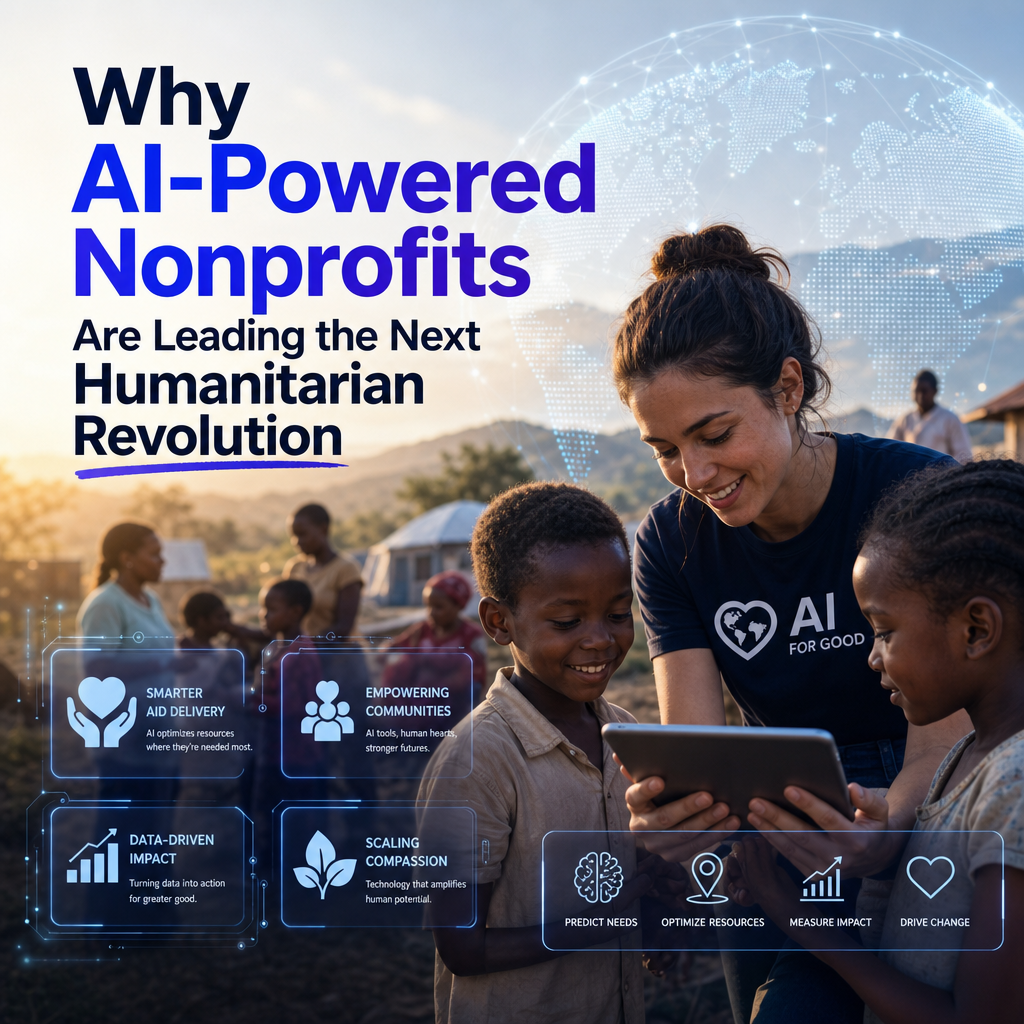
Humanitarian work has always depended on urgency, trust, and limited resources. Today, a new force is changing how aid reaches people in crisis: AI-powered nonprofits. These organizations are using artificial intelligence to work faster, predict needs more accurately, and deliver support with greater precision than traditional systems often allow.
This shift is not about replacing human compassion. It is about strengthening it. By combining technology with mission-driven leadership, AI-powered nonprofits are helping shape the next humanitarian revolution.
The New Reality of Humanitarian Needs
Modern crises are more complex than ever. Climate disasters, conflict, disease outbreaks, and economic instability can overlap and spread across borders quickly. At the same time, nonprofit teams are often underfunded and overstretched.
That creates a difficult equation:
- More people need help
- Needs change faster
- Resources remain limited
- Response times must improve
This is where artificial intelligence becomes powerful. It helps nonprofits identify patterns, forecast demand, and make decisions based on real-time data rather than guesswork.
How AI Improves Humanitarian Response
AI is not just a buzzword in the nonprofit world. It is already being used to solve practical problems that directly affect lives.
Faster disaster response
When hurricanes, floods, or wildfires strike, every minute matters. AI can analyze weather data, satellite images, and social media activity to detect where damage is likely to be worst. That means nonprofits can deploy aid more quickly and prioritize the most affected communities.
Smarter resource allocation
Nonprofits often have to choose where to send food, medical supplies, or emergency funds. AI tools can help determine which regions need help first and which groups are most vulnerable. This reduces waste and improves outcomes.
Better donor engagement
AI also helps nonprofits communicate more effectively with supporters. By analyzing donor behavior and preferences, organizations can create more personalized fundraising campaigns. That can lead to higher engagement and more stable funding.
Stronger fraud detection
In humanitarian programs, trust is everything. AI can flag unusual transaction patterns or suspicious activity, helping nonprofits protect donations and maintain accountability.
Why AI-Powered Nonprofits Are Different
What makes AI-powered nonprofits stand out is not just their use of technology. It is the way they combine innovation with empathy.
Traditional systems often react after problems become visible. AI allows nonprofits to anticipate problems earlier. Instead of waiting for a food shortage, an outbreak, or a displacement crisis to fully unfold, they can use predictive models to prepare ahead of time.
This proactive approach changes the nature of humanitarian work.
From reactive to preventive
Prevention is often more effective than emergency response. AI can help identify communities at risk before conditions worsen, giving nonprofits time to intervene early. That may mean pre-positioning supplies, sending targeted alerts, or coordinating with local partners before a crisis escalates.
From broad to targeted support
Not every crisis is the same, and not every solution should be either. AI makes it easier to customize aid based on age, location, income, health status, or exposure to risk. The result is more precise support for the people who need it most.
Human Judgment Still Matters
Despite its power, AI is only a tool. The best humanitarian results come when technology supports, rather than replaces, human leadership.
Nonprofits still need people who understand local cultures, ethical concerns, and community realities. Data can show trends, but it cannot fully capture lived experience, dignity, or trauma. That is why the most effective AI-powered nonprofits use technology to inform decisions while leaving compassion, accountability, and relationships in human hands.
Challenges That Must Be Managed
AI brings opportunity, but it also comes with responsibility. Nonprofits must be careful about how they use data and algorithms.
Key concerns include:
- Privacy: Sensitive information must be protected
- Bias: Poorly trained models can reinforce inequality
- Access: Smaller nonprofits may lack technical resources
- Transparency: Communities should understand how decisions are made
To lead the humanitarian revolution responsibly, organizations need clear safeguards, ethical guidelines, and inclusive design. The goal should always be fairness, not just efficiency.
The Future of Humanitarian Action
The rise of AI-powered nonprofits signals a major shift in how aid is delivered. Instead of relying only on scale and speed, organizations can now rely on insight, prediction, and personalization.
This has the potential to transform everything from emergency relief to long-term development. Food distribution can become more accurate. Health outreach can become more targeted. Fundraising can become more sustainable. Most importantly, help can arrive when and where it is needed most.
The next humanitarian revolution will not be led by technology alone. It will be led by organizations that use technology wisely, ethically, and with purpose.
A More Intelligent Kind of Compassion
At their best, AI-powered nonprofits represent a new model of humanitarian leadership. They show that innovation and empathy do not have to compete. In fact, when they work together, they can create faster, fairer, and more effective support for vulnerable communities.
The future of humanitarian action is not just digital. It is deeply human, guided by data and powered by compassion.