
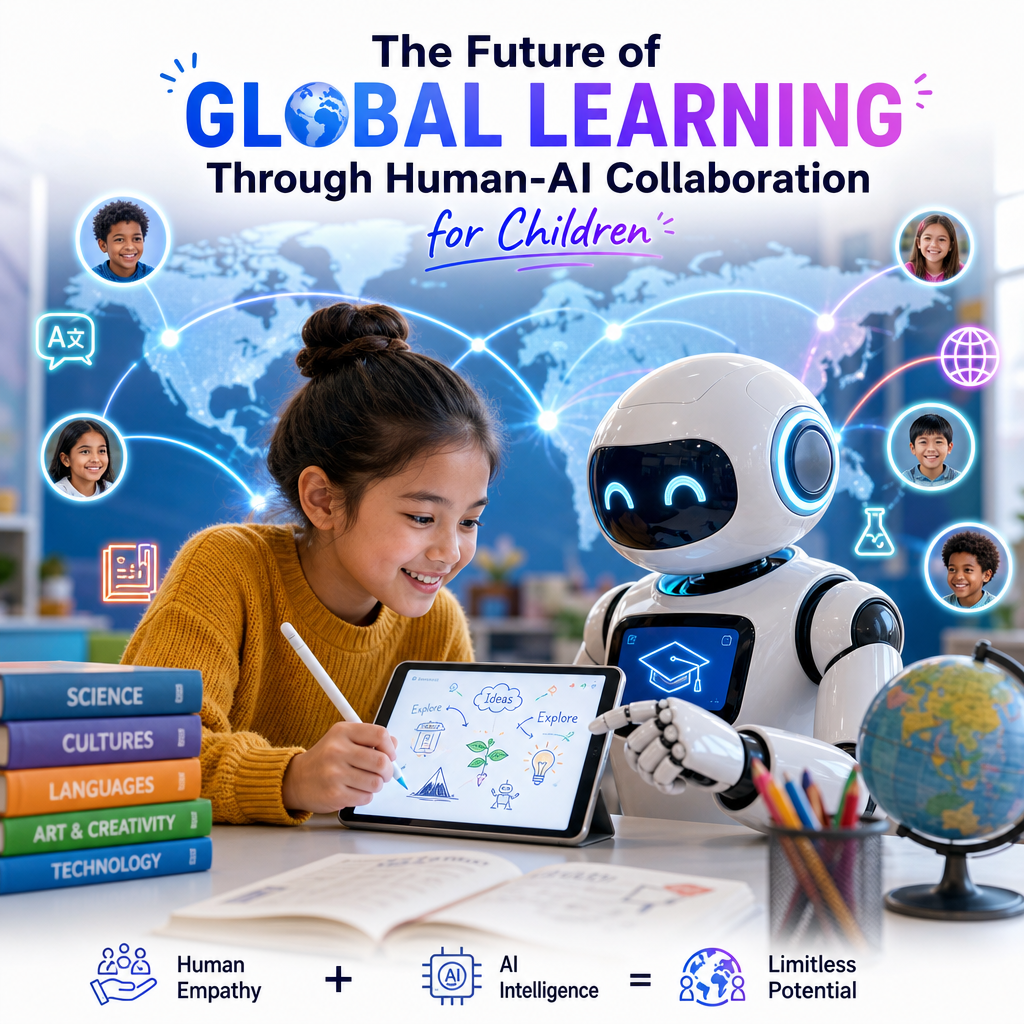
The Future of Global Learning Through Human-AI Collaboration for Children
The Future of Global Learning: Human-AI Collaboration for Children Everywhere
The future of education is not just digital. It is human, intelligent, and connected.
Around the world, children learn in very different circumstances. Some have access to excellent schools, trained teachers, and rich learning tools. Others face overcrowded classrooms, limited materials, or long gaps in access to education. In this uneven landscape, human-AI collaboration for children everywhere is emerging as one of the most promising ways to close learning gaps and expand opportunity.
Artificial intelligence will not replace teachers. Instead, it can help them teach better, faster, and more personally. The real future of global learning lies in combining the empathy, judgment, and creativity of humans with the speed, scale, and adaptability of AI.
Why Global Learning Needs a New Model
Traditional education systems were built for a local, paper-based world. But children today are growing up in a global environment shaped by technology, migration, climate change, and rapid information flow.
That creates a need for learning systems that can:
- adapt to different languages and cultures
- support children at different learning levels
- provide access in low-resource settings
- prepare students for an unpredictable future
AI can help meet these needs by making education more flexible and responsive. But it works best when paired with caring adults who understand the emotional and social sides of learning.
What AI Can Do Well
AI is especially powerful when it comes to personalization. A child struggling with reading can get extra practice. A student who is ready to move ahead can receive new challenges. Learning tools can adjust in real time based on performance, giving each child a more tailored experience.
AI can also support teachers in practical ways:
- grading simple assignments
- identifying learning gaps
- translating materials into multiple languages
- suggesting lesson plans and activities
- offering 24/7 learning support for students
For children in remote or underserved areas, this can be transformative. A low-cost device and internet access may open a doorway to lessons, tutoring, and practice that were once unavailable.
Why Human Teachers Still Matter Most
Even as AI grows more capable, children still need human connection.
Teachers notice when a child is discouraged, confused, or emotionally overwhelmed. They build trust, encourage curiosity, and create a sense of belonging. These are not small things. They are the foundation of meaningful learning.
Human educators also help children think critically. AI can provide answers, but teachers help students ask better questions. They guide children to compare ideas, reflect on sources, and understand the difference between information and wisdom.
In the best classrooms of the future, AI will handle routine tasks so teachers can focus on what only humans do best: mentoring, motivating, and inspiring.
Human-AI Collaboration in Action
The most effective model is not “AI or teacher.” It is “AI with teacher.”
Imagine a classroom where:
- an AI tool helps a teacher identify which students need support before a test
- a multilingual assistant helps newcomer children follow lessons in their own language
- adaptive reading software helps each child practice at the right level
- teachers use AI-generated insights to group students for projects and discussion
This kind of collaboration can make learning more inclusive and efficient. It can also help teachers manage larger classes without losing the personal touch that children need.
Global Equity Must Come First
The future of global learning should not deepen inequality. If AI tools are only available to wealthy schools or high-income countries, the gap will widen.
To make human-AI collaboration truly global, several things must happen:
- Affordable access to devices and internet connectivity
- Localized content that respects language, culture, and curriculum
- Training for teachers so they can use AI confidently and safely
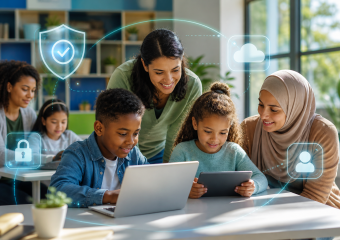
- Strong privacy protections for children’s data
- Public investment to ensure underserved communities are not left behind
Without these safeguards, AI could become another layer of educational inequality. With them, it could become a powerful equalizer.
Teaching Children to Learn With AI
Children also need to learn how to use AI wisely.
That means teaching digital literacy, critical thinking, and ethical awareness from an early age. Students should understand that AI tools can be helpful, but not always correct. They should learn to verify information, recognize bias, and use technology responsibly.
This is part of preparing children for the future. In a world where AI will be everywhere, knowing how to collaborate with it is as important as knowing how to read or write.
A Smarter, Kinder Future
The future of education is not about choosing between human warmth and machine intelligence. It is about combining them in ways that help every child thrive.
When AI supports teachers, learning becomes more personalized. When teachers guide AI, education becomes more humane. And when both work together, children everywhere gain a better chance to learn, grow, and succeed.
The promise of global learning is not just access. It is dignity, opportunity, and connection. Human-AI collaboration can help make that promise real for children everywhere.