

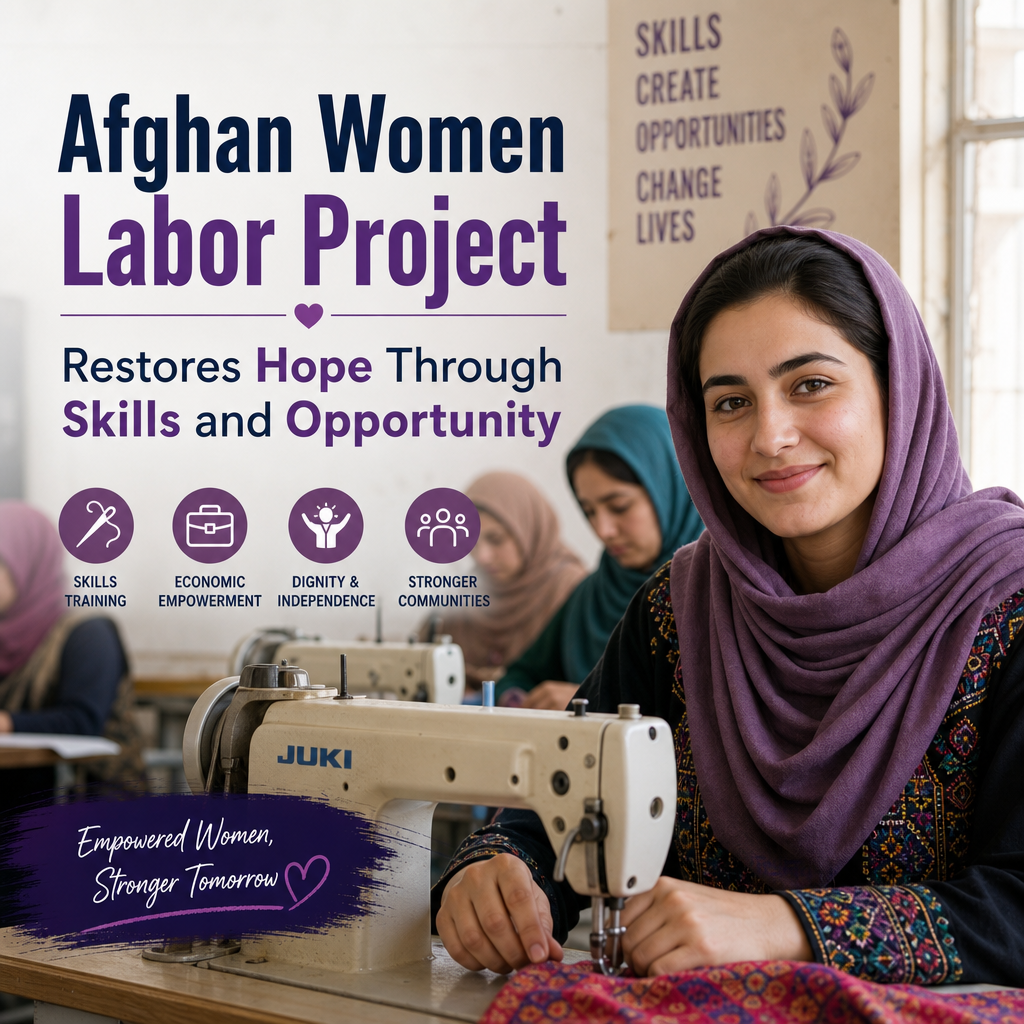
Afghan Women Labor Project Restores Hope Through Skills and Opportunity
Afghan Women Labor Project: Restoring Hope Through Skills and Opportunity
In communities where daily life has been shaped by hardship, uncertainty, and limited access to work, small opportunities can create lasting change. The Afghan Women Labor Project is one such opportunity. By helping women gain practical skills, earn income, and build confidence, it offers more than employment—it offers dignity, independence, and hope.
For many Afghan women, the ability to work is not simply about financial support. It is about restoring a sense of purpose and creating a future that feels possible. Through training, mentoring, and labor-based opportunities, this project is helping women take meaningful steps toward stability.
Why Work Matters for Afghan Women
Economic participation has always been a key part of social progress. When women can work safely and consistently, families become stronger, children are more likely to stay in school, and local economies benefit. In Afghanistan, however, women have often faced barriers such as restricted mobility, limited education, and few job openings.
The Afghan Women Labor Project addresses these barriers by focusing on practical employment pathways. Instead of asking women to overcome every obstacle on their own, it creates structures that support them along the way. That includes access to training, fair work opportunities, and community-based encouragement.
This kind of support matters because it recognizes a simple truth: when women are given the tools to succeed, they often use them to lift entire households and communities.
Building Skills That Lead to Opportunity
One of the most powerful parts of the Afghan Women Labor Project is its focus on skills development. Many women enter the program with strong motivation but limited access to formal education or vocational training. The project helps bridge that gap.
Common areas of training may include:
- Sewing and tailoring
- Handicrafts and artisan production
- Food preparation and small-scale processing
- Basic business and financial skills
- Quality control and product packaging
- Teamwork and workplace readiness
These are not just short-term tasks. They are practical skills that can lead to long-term income. A woman who learns tailoring, for example, may be able to support her family, train others, or start a small home-based business. A woman who learns product packaging may contribute to local enterprise and build a steady source of income.
The goal is not only to provide jobs, but to create sustainable pathways to self-reliance.
Restoring Confidence Through Meaningful Work
Employment does more than put money in a woman’s hands. It can restore confidence, improve mental well-being, and create a stronger sense of identity. For women who have spent years with few options, even small achievements can have a deep impact.
The Afghan Women Labor Project gives participants a chance to see their own abilities in action. As they learn, produce, and contribute, they begin to rebuild trust in themselves. That personal growth often becomes one of the most important outcomes of the project.
When a woman realizes that her work is valued, she is more likely to continue learning and to imagine new goals for herself and her family. In that way, the project becomes a source of hope as much as a source of income.
Supporting Families and Communities
The benefits of the Afghan Women Labor Project extend far beyond individual participants. In many cases, women use their earnings to help cover food, clothing, school fees, and medical needs. This support can make a major difference in households facing financial stress.
At the community level, women’s participation in labor can strengthen local economies. Small businesses grow, goods are produced locally, and knowledge is shared among neighbors. As more women gain skills, they become role models for younger girls and others who may feel that opportunity is out of reach.
The ripple effects can include:
- Better household stability
- Increased access to education for children
- Greater self-confidence among women
- Stronger local economic activity
- A more hopeful vision for the future
These outcomes show that supporting women’s labor is not a side issue. It is a vital part of building resilient communities.
The Importance of Dignity and Choice
Any project designed to support women must be rooted in dignity. That means listening to women’s needs, respecting their circumstances, and creating opportunities that fit their realities. The Afghan Women Labor Project reflects this approach by focusing on practical work that can often be done in community or home-based settings.
This is important because it gives women more control over how they participate. For many, flexibility is essential. It allows them to balance work with family responsibilities while still contributing economically.
Choice also matters. When women are given real options, they are more likely to engage fully and build confidence in their own decision-making. That sense of ownership is one of the strongest foundations for long-term success.
A Future Built on Skills and Hope
The Afghan Women Labor Project is more than a labor initiative. It is a reminder that opportunity can change lives, even in difficult circumstances. By investing in women’s skills and creating pathways to work, the project helps restore hope where it has often been in short supply.
Every training session, every completed product, and every earned paycheck represents more than a task finished. It represents progress. It represents resilience. And it represents the belief that Afghan women deserve the chance to shape their own futures.
In a world that often focuses on what has been lost, this project points toward what can still be built—one skill, one opportunity, and one woman at a time.