
How AI Micro-Tasks Are Creating Income for Families Worldwide
How AI‑Assisted Micro‑Tasks Are Creating Income for Families Worldwide
AI is changing work in more ways than many people expected. While headlines often focus on automation replacing jobs, another trend is growing quietly: AI-assisted micro-tasks are helping families earn income from home, one small task at a time.
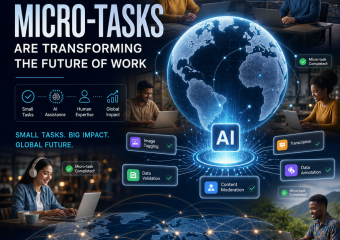
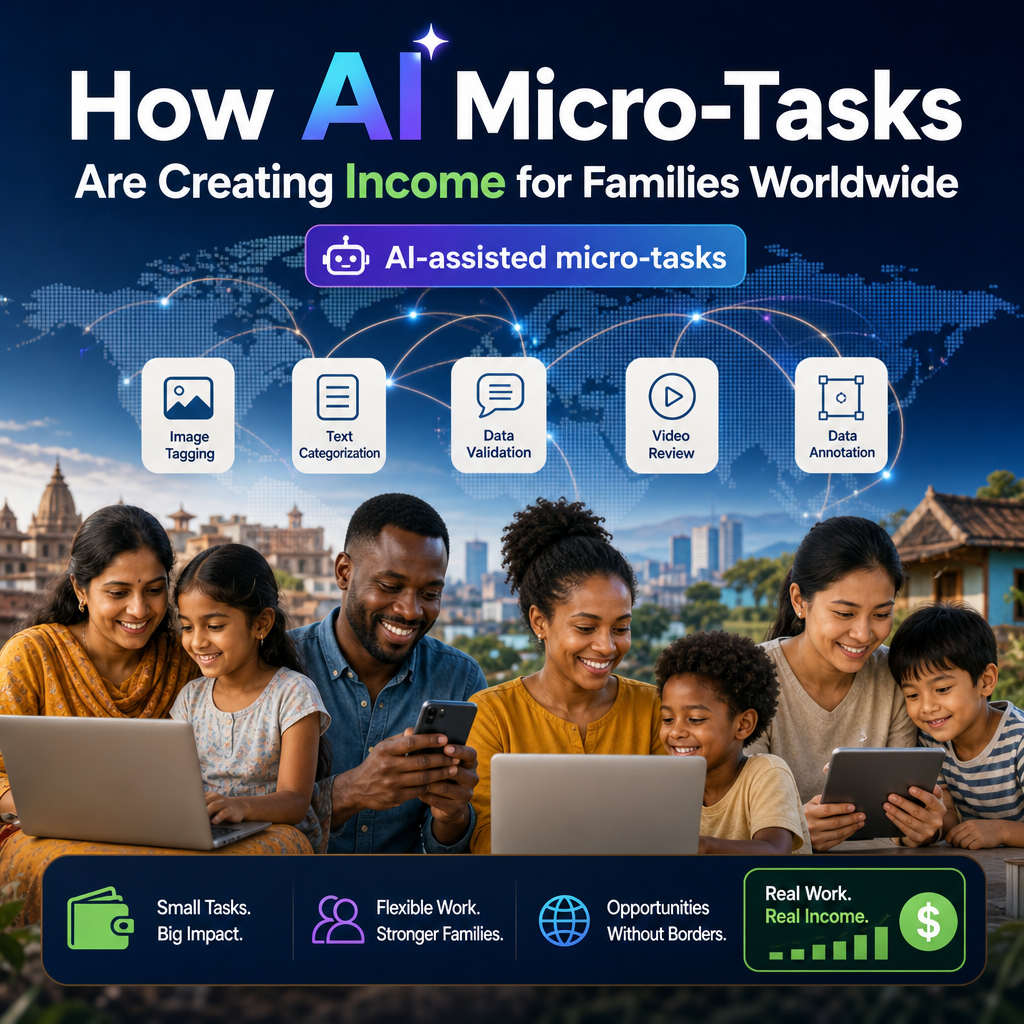
These tasks are usually simple, fast, and flexible. They may include labeling images, transcribing short audio clips, checking product data, moderating content, or rating search results. Individually, each task may pay only a little. But for families who need flexible work, that steady stream of small jobs can make a real difference.
What Are AI-Assisted Micro-Tasks?
Micro-tasks are tiny pieces of digital work that can be completed in minutes. They are often used to train and improve AI systems. Because modern AI tools can help break larger jobs into smaller steps, these tasks are becoming more accessible to everyday workers.
Common examples include:
- Tagging objects in photos
- Reviewing short pieces of text
- Correcting AI-generated captions
- Verifying business listings or product information
- Recording simple voice samples
- Classifying images or documents
Some platforms use AI to pre-sort the work, making it easier for people to complete tasks quickly. Others connect workers with AI tools that guide them through the process. This creates a new form of digital labor that is more flexible than traditional online freelancing.
Why Families Are Turning to Micro-Tasks
For many families around the world, full-time remote work is not realistic. Internet access may be inconsistent. Schedules may be unpredictable. Caregiving responsibilities may make fixed hours difficult. AI-assisted micro-tasks fit into these realities because they can often be done in short bursts.
A parent can complete tasks after putting children to bed. A student can work between classes. Someone in a rural area can earn money without commuting long distances.
The appeal comes down to three things:
- Flexibility — Work can often be done anytime.
- Low barrier to entry — Many tasks require little formal training.
- Small but frequent earnings — Even modest payouts can help cover groceries, school supplies, or transport costs.
In many households, that extra income matters more than the size of each individual task.
How AI Helps Make These Jobs Possible
AI does not just create the demand for micro-tasks. It also helps make the work faster and more practical.
For example, AI can:
- Generate task instructions in plain language
- Pre-check answers for obvious mistakes
- Match workers with jobs based on skill level
- Translate tasks for multilingual workers
- Help platforms scale to millions of small assignments
This creates a feedback loop. The more AI tools improve, the more human review they need in certain areas. Families around the world are stepping in to provide that human judgment.
This is especially important in areas where AI systems struggle with nuance, local context, language variation, or cultural differences. Human workers still play a critical role in making AI more accurate and useful.
Real Opportunities, Real Challenges
AI-assisted micro-tasks can be a valuable source of income, but they are not a perfect solution. Payment can be uneven. Some platforms may offer very low rates. Work availability can change quickly. In some cases, workers may not fully understand how their data is used or how decisions are made.
Families using these platforms should be aware of common challenges:
- Income may fluctuate from week to week
- Some tasks are repetitive and mentally tiring
- Not all platforms are trustworthy
- Workers may need to manage their own taxes or fees
- Internet access and device quality can limit earnings
Still, for many people, these jobs offer a practical entry point into the digital economy. They can be a starting place for building skills, improving confidence, and learning how online work systems function.
The Bigger Impact on Household Income
The rise of AI-assisted micro-tasks is especially meaningful because it spreads work beyond traditional office settings. It allows households in different countries and economic situations to participate in the same global market.
This matters in places where stable employment is hard to find. It also matters for families trying to supplement an existing income. Even small amounts earned consistently can help smooth out financial stress.
For some, micro-task work becomes part of a broader income strategy:
- A parent may combine it with childcare
- A student may use it to pay tuition costs
- A household may use it to bridge gaps between seasonal jobs
- A retired worker may use it as supplemental income
These small digital jobs may not replace a full salary, but they can strengthen household resilience.
A New Kind of Work, Built Around Human Skill
The success of AI depends on human input. Behind many machine learning systems are workers doing careful, repetitive, and often overlooked tasks. Families worldwide are finding ways to turn that need into income.
That does not mean the system is perfect. Fair pay, clear rules, and better worker protections remain essential. But the growth of AI-assisted micro-tasks shows something important: technology can create income opportunities not only for specialists, but also for ordinary families willing to do small tasks well.
As AI continues to expand, these micro-jobs are likely to remain part of the digital economy. For many households, they are more than just side work. They are a practical way to earn, adapt, and stay connected to a changing world.