

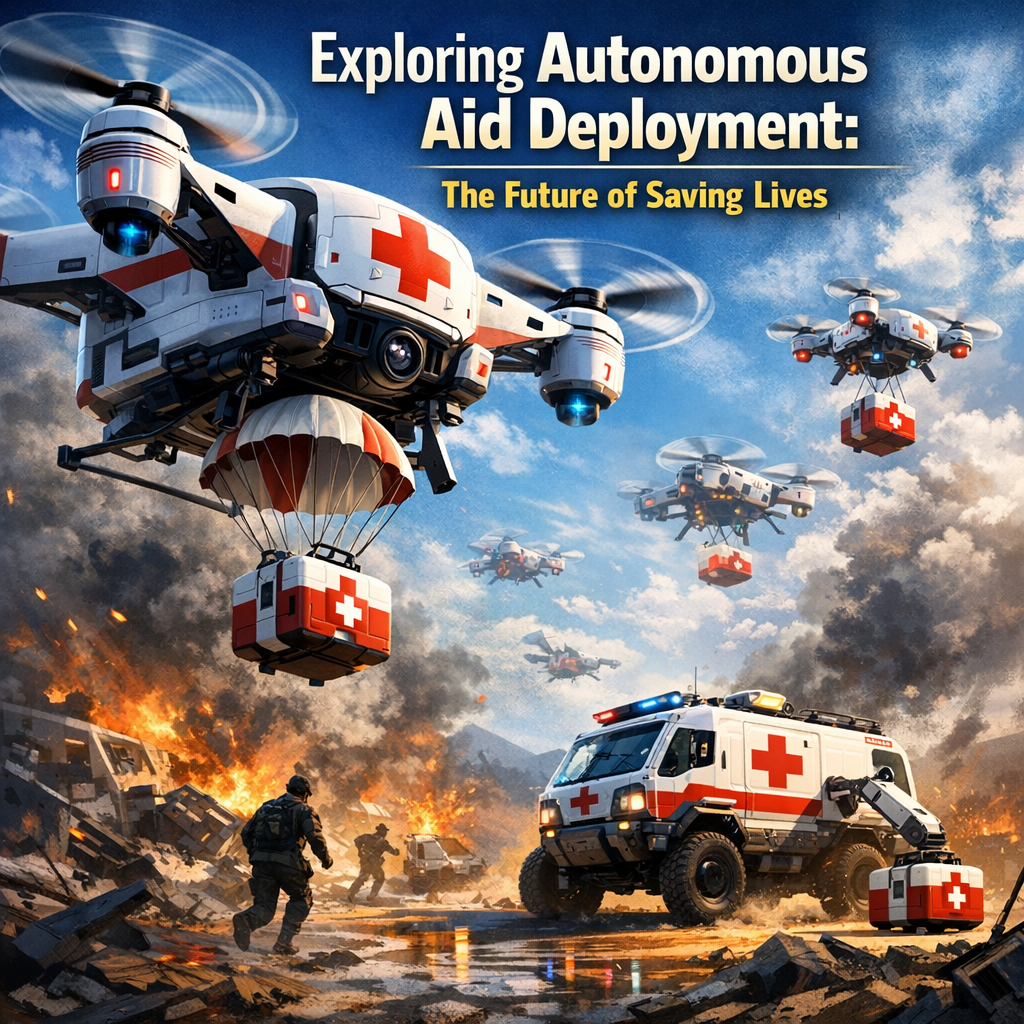
Exploring Autonomous Aid Deployment: The Future of Saving Lives
Why Autonomous Aid Deployment Is the Future of Saving Lives
In times of crisis, efficiency and speed in delivering aid can significantly impact the outcome of recovery efforts. The rise of autonomous technologies has introduced innovative solutions that promise to revolutionize the field of emergency aid. This article explores how autonomous aid deployment is shaping the future of lifesaving measures, enhancing responses to natural disasters, conflicts, and other humanitarian crises.
The Emergence of Autonomous Technologies
As technology advances, the potential for autonomous systems to operate independently, without human intervention, is increasingly becoming a reality. These systems range from drones and robots to AI-driven logistics platforms, all designed to perform tasks that were traditionally handled by human teams.
Drones in Disaster Response
Drones, or unmanned aerial vehicles (UAVs), have become pivotal in surveying disaster-hit areas. They can quickly assess damage, locate survivors, and map out the most effective routes for delivering aid. Unlike manned aircraft, drones can enter hazardous environments without risking human lives, providing real-time data to aid organizations.
Robots for Search and Rescue
Robots are being deployed in environments that are too dangerous for humans, such as collapsed buildings or areas with potential chemical hazards. These robots can navigate through rubble, detect human presence through heat sensing, and deliver essential supplies to trapped individuals.
AI in Logistics
Artificial intelligence plays a critical role in planning and executing complex logistics involved in aid distribution. AI systems analyze vast amounts of data to predict the needs of affected populations and optimize relief operations, thus reducing waste and ensuring that resources are utilized in the most effective manner.
Advantages of Autonomous Aid Deployment
The use of autonomous technologies in emergency aid has several distinct advantages that can lead to more effective and timely relief efforts.
Speed of Deployment
Autonomous systems can be activated immediately and operate continuously without the need for rest, significantly speeding up the response time in emergency situations.
Access to Remote Areas
Many regions affected by disasters are difficult to access due to destroyed infrastructure or geographic barriers. Autonomous vehicles, especially drones, can easily reach these remote locations and deliver supplies without the need for clear roads or landing strips.
Safety and Efficiency
Sending human aid workers into disaster zones involves considerable risk. Autonomous systems minimize the need for human presence in dangerous areas, thereby reducing the risk of casualties and allowing human workers to focus on tasks that require human judgment and empathy.
Scalability and Adaptability
Autonomous technologies can be scaled depending on the scope of the disaster. They are also adaptable to different environments and situations, making them an invaluable tool in diverse crisis scenarios.
Challenges and Ethical Considerations
Despite the numerous benefits, the integration of autonomous technologies in aid deployment does come with challenges and ethical considerations.
Technical Reliability
Reliability of autonomous systems remains a concern. Malfunctions or failures can potentially delay aid delivery and compromise safety. Continuous research and development are crucial to improve the robustness of these technologies.
Data Security and Privacy
The use of drones and AI requires handling sensitive data. Protecting this information from breaches and ensuring privacy is maintained during operations is imperative.
Regulatory and Legal Issues
There are numerous legal implications involved in deploying autonomous systems, particularly drones and robots, in different jurisdictions. Ensuring compliance with international and local laws is essential for the smooth operation of these technologies.
The Path Forward
Embracing autonomous aid deployment is not just about adopting new technologies; it’s about a fundamental shift in the approach to emergency response. Governments, humanitarian organizations, and tech companies must work together to develop policies that support the safe and ethical use of autonomous systems.
Investment in Research and Development
Continuous investment in R&D will enhance the capabilities and reliability of autonomous technologies, making them more adaptable to various emergency scenarios.
Training and Partnership
Training humanitarian personnel to integrate these technologies into their operations and forging partnerships between technology providers and aid organizations will ensure these tools are used effectively.
Focusing on Sustainable and Ethical Practices
It’s crucial that the deployment of autonomous systems adheres to ethical standards and contributes to sustainable practices, ensuring that all actions are aligned with the primary goal of saving lives and maintaining human dignity.
Conclusion
Autonomous aid deployment represents a remarkable advancement in the field of emergency response. With potential to reach affected individuals faster, reduce risks to human life, and optimize resource allocation, it is clear why this approach is considered the future of saving lives. As we continue to navigate the challenges and embrace the benefits, the integration of these technologies promises to reshape the landscape of humanitarian aid, making it more effective and responsive than ever before.