
AI for Good: How Data Drives Humanitarian Solutions
AI for Good: How Data Is Driving Global Humanitarian Solutions
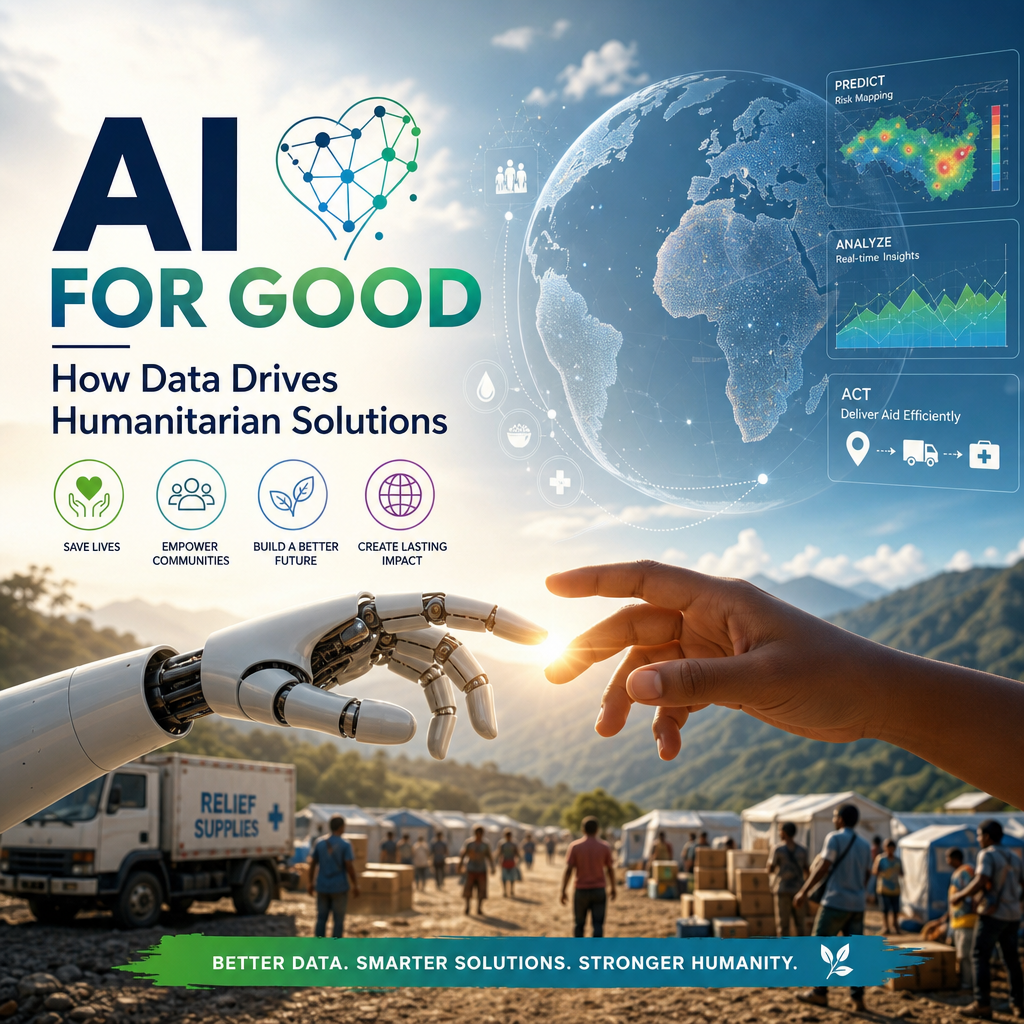
Artificial intelligence is often associated with business growth, automation, and productivity. But one of its most meaningful applications is happening far beyond the corporate world. AI for Good is helping organizations use data to respond faster, reach more people, and make better decisions in humanitarian crises.
From predicting floods to mapping hunger hotspots, data-driven tools are changing how aid is planned and delivered. In a world where emergencies move quickly and resources are limited, this shift can save lives.
Why Data Matters in Humanitarian Work
Humanitarian organizations deal with some of the hardest problems on the planet: conflict, climate disasters, disease outbreaks, displacement, and poverty. These challenges are complex, fast-moving, and often poorly documented.
That is where data becomes essential.
When collected and analyzed effectively, data can reveal patterns that humans might miss. It can show where aid is needed most, which communities are at risk, and how resources should be distributed. AI makes this process faster and more scalable by finding insights in huge datasets from satellites, sensors, mobile phones, public records, and social media.
How AI Is Supporting Humanitarian Solutions
1. Predicting Disasters Before They Happen
One of the most powerful uses of AI in humanitarian work is early warning. By analyzing weather patterns, river levels, soil conditions, and historical disaster data, AI systems can help predict floods, droughts, wildfires, and storms.
This gives governments and aid groups more time to act. Communities can be evacuated sooner, supplies can be pre-positioned, and emergency plans can be activated before a crisis becomes catastrophic.
2. Mapping Need in Real Time
After an earthquake, hurricane, or conflict outbreak, response teams need to know where people are most affected. AI tools can process satellite images and other live data sources to identify damaged roads, destroyed buildings, and isolated populations.
This kind of rapid analysis helps humanitarian teams send help where it is needed most. Instead of relying only on manual reports, decision-makers can use near real-time information to guide action.
3. Fighting Hunger and Malnutrition
Food insecurity is a growing global crisis, especially in regions affected by climate change and instability. AI can help forecast crop failures, monitor changing weather conditions, and detect early signs of malnutrition.
Organizations are using machine learning models to identify where food shortages are likely to emerge. This allows aid agencies to intervene earlier, improve supply planning, and reduce the risk of famine.
4. Improving Public Health Responses
During disease outbreaks, speed is critical. AI can support public health teams by analyzing infection trends, tracking mobility patterns, and helping forecast where cases may rise next.
It can also assist with resource allocation, such as deciding where to send vaccines, medical equipment, or emergency staff. In low-resource settings, these insights can make health systems more responsive and resilient.
5. Helping Refugees and Displaced Communities
Millions of people around the world are displaced by war, violence, and disaster. AI can help humanitarian groups better understand migration patterns, improve registration systems, and match people with services such as shelter, food, and legal support.
Some organizations also use natural language tools to improve communication with displaced people in different languages, making assistance more accessible and inclusive.
The Human Side of AI for Good
While technology can be powerful, humanitarian work is still deeply human. Data and algorithms should support people, not replace them.
That means organizations must use AI carefully and responsibly. Poor-quality data can lead to bad decisions. Biased models can reinforce inequality. And collecting sensitive information without proper safeguards can put vulnerable people at risk.
For AI for Good to work, it must be built on trust, transparency, and local knowledge.
Key principles for responsible use include:
- Protecting privacy and personal data
- Checking for bias in models and datasets
- Working with local communities and experts
- Using AI to support, not override, human judgment
- Making systems transparent and explainable
Why This Matters Now
Global humanitarian needs are increasing, but funding and resources are not keeping pace. Climate disasters are becoming more frequent. Conflicts are lasting longer. Health systems are under pressure. In this environment, data-driven solutions can help organizations do more with less.
AI is not a magic fix, but it is a practical tool. When used well, it can make humanitarian responses faster, smarter, and more targeted. It can help leaders see problems earlier and respond with greater precision.
A Smarter Future for Humanitarian Action
The promise of AI for Good lies in its ability to turn information into action. Data can reveal hidden risks, guide emergency response, and improve long-term planning for vulnerable communities.
As technology continues to evolve, the most successful humanitarian solutions will likely be those that combine advanced analytics with empathy, ethics, and local collaboration. In the end, the goal is not just to build smarter systems. It is to create a world where help reaches people sooner, more fairly, and when they need it most.