
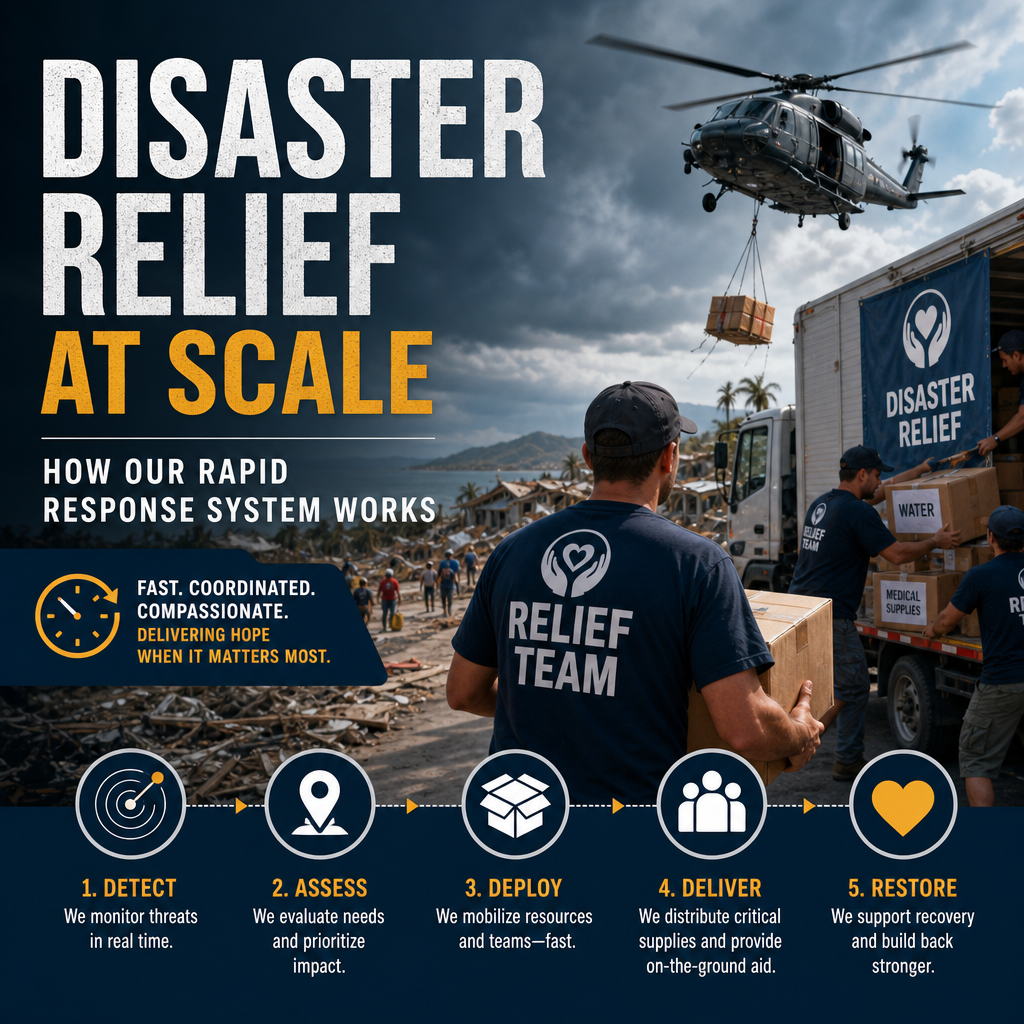
Disaster Relief at Scale: How Our Rapid Response System Works
Disaster Relief at Scale: Inside Our Rapid Response System
When disaster strikes, every minute matters. Roads may be blocked, communication lines may be down, and communities can go from normal to crisis in a matter of hours. At that point, the challenge is not only delivering aid—it is delivering the right aid, to the right place, at the right time.
That is where disaster relief at scale becomes essential. A strong rapid response system helps turn urgency into action, chaos into coordination, and good intentions into measurable support.
Why Speed and Coordination Matter
In the early hours of a disaster, needs change fast. One neighborhood may need clean water, while another needs shelter materials, medical supplies, or food. Without a system in place, even well-funded relief efforts can become slow, duplicated, or misdirected.
A rapid response system is built to solve that problem. It brings together planning, logistics, communication, and field operations into one coordinated process. The goal is simple:
- Assess needs quickly
- Mobilize resources immediately
- Deliver aid efficiently
- Adjust based on real-time conditions
When these pieces work together, response teams can scale their efforts without losing focus on the people they serve.
The Core of Our Rapid Response System
Our approach to disaster relief at scale is built on a few essential layers. Each one plays a different role, but together they create a fast and flexible response network.
1. Preparedness Before the Crisis
The most effective response begins long before an emergency. Preparedness includes mapping vulnerable regions, pre-positioning supplies, training teams, and building partnerships with local organizations.
This preparation reduces delays when an event occurs. Instead of starting from zero, response teams already know:
- Which areas are most likely to be affected
- What supplies are most needed
- Which partners can support distribution
- How to move quickly when access is limited
Planning ahead does not eliminate the chaos of disaster, but it makes the first response far more effective.
2. Real-Time Situation Awareness
A rapid response system depends on accurate information. We use incoming reports, field updates, local contacts, and digital tools to understand what is happening on the ground as it unfolds.
This real-time visibility helps answer critical questions:
- Which communities are hardest hit?
- Which roads or routes are open?
- What resources are already available locally?
- Where are the biggest gaps in support?
By continuously updating the picture, teams can prioritize the most urgent needs instead of relying on outdated assumptions.
3. Flexible Logistics
Delivering aid at scale requires more than supplies in a warehouse. It requires a logistics system that can adapt to changing conditions.
That means having multiple transport options, backup routes, and distribution plans that can shift quickly if circumstances change. In practice, this flexibility can make the difference between a shipment arriving on time or being delayed for days.
A good logistics strategy also considers the full life cycle of aid delivery:
- Sourcing supplies
- Storing them safely
- Transporting them efficiently
- Distributing them fairly
- Tracking what arrives and where
When logistics are managed well, relief efforts stay organized even under pressure.
Technology as a Force Multiplier
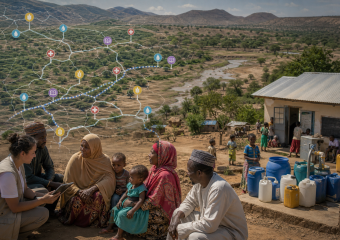
Technology plays a major role in modern disaster response. It helps us move faster, communicate better, and make more informed decisions.
Digital dashboards, mobile reporting, mapping tools, and supply-tracking systems can all strengthen response operations. These tools do not replace human judgment, but they help teams work with clearer information and fewer delays.
For example, technology can help:
- Identify high-need areas through mapping
- Track inventory in real time
- Coordinate multiple teams across regions
- Share updates with partners and donors quickly
In large-scale emergencies, that kind of visibility is invaluable.
People Still Make the Difference
Even the best systems depend on people. Local responders, volunteers, logistics teams, medical staff, and community leaders are the ones who carry out the work in difficult conditions.
Their knowledge of the region, language, and local networks often determines how effective a response can be. That is why community partnership is a core part of our approach.
We aim to support local leadership, not bypass it. When communities help shape the response, aid is more likely to reach the people who need it most—and in ways that are culturally and practically appropriate.
Building for the Next Emergency
Disasters are unpredictable, but response systems should not be. Each emergency teaches new lessons about communication, access, supply chain resilience, and community needs.
A strong disaster relief system keeps learning after each deployment. That means reviewing what worked, identifying bottlenecks, and improving for the next crisis. Over time, these lessons help create a more resilient response network that can scale with confidence.
A Faster, Smarter Way to Help
Disaster relief at scale is not just about sending more aid. It is about designing a system that can move quickly, coordinate effectively, and adapt when conditions change.
Our rapid response system is built around that idea. With preparation, information, logistics, technology, and community partnership working together, relief efforts can reach more people in less time.
In a crisis, speed saves lives—but only when it is guided by structure, trust, and a clear plan.