
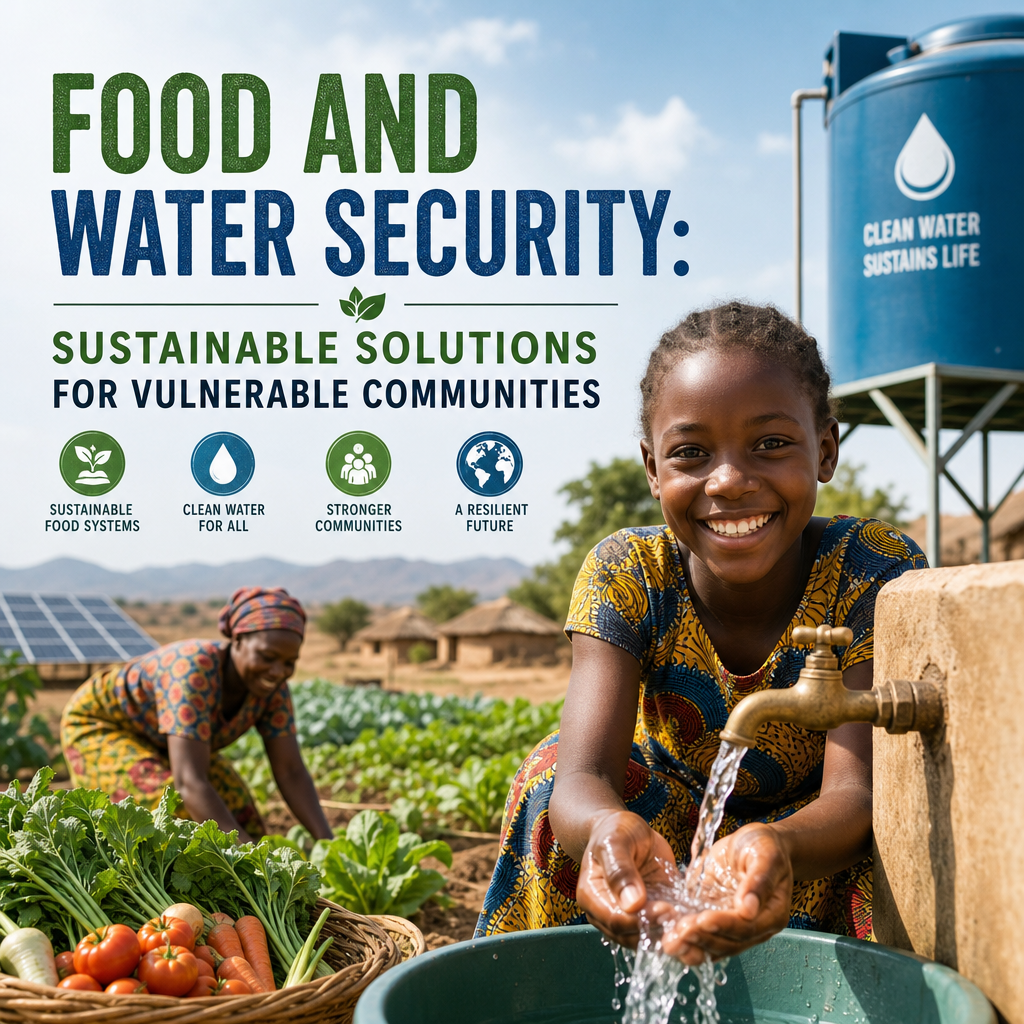
Food and Water Security: Sustainable Solutions for Vulnerable Communities
Food & Water Security: Sustainable Solutions for Vulnerable Communities
Food and water are the foundation of health, dignity, and stability. Yet for millions of people around the world, access to safe water and reliable food remains uncertain. Drought, conflict, poverty, climate change, and weak infrastructure can quickly turn everyday necessities into emergencies.
For vulnerable communities, food & water security is not just a development goal. It is a matter of survival. Sustainable solutions must do more than provide short-term relief. They need to strengthen local systems, protect natural resources, and help communities adapt to long-term change.
Why Food and Water Security Are Deeply Connected
Food production depends on water, and clean water depends on healthy ecosystems. When one system fails, the other often follows.
A lack of water can reduce crop yields, kill livestock, and limit household hygiene. At the same time, poor agricultural practices, pollution, and overuse of land can damage rivers, groundwater, and soil quality. In vulnerable communities, these pressures often overlap.
Common challenges include:
- Irregular rainfall and prolonged drought
- Flooding that destroys crops and contaminates water sources
- Limited access to irrigation and storage systems
- Unsafe drinking water and poor sanitation
- Rising food prices and supply chain disruptions
Because these problems are interconnected, solutions must be integrated as well.
Sustainable Agriculture Builds Resilience
One of the most effective ways to improve food security is to support climate-smart agriculture. These methods help farmers produce more food while using fewer resources and reducing environmental harm.
Practical farming strategies
Some sustainable agricultural solutions include:
- Drip irrigation, which delivers water directly to plant roots and reduces waste
- Drought-resistant crops that can survive with less rainfall
- Crop rotation and intercropping to improve soil health and reduce pests
- Composting and organic soil management to retain moisture and nutrients
- Agroforestry, which combines trees and crops to protect soil and provide shade
These approaches are especially useful in vulnerable communities because they can be adapted to small farms, family gardens, and local food systems. They also reduce dependence on expensive inputs and increase resilience during climate shocks.
Protecting and Managing Water Resources
Water security begins with protecting the sources people already have. Sustainable water management helps communities use water more efficiently while keeping it safe for human consumption and agriculture.
Key water solutions
- Rainwater harvesting to collect and store water during wet seasons
- Watershed restoration to improve groundwater recharge and reduce erosion
- Solar-powered pumps for low-carbon access to water in remote areas
- Leak reduction and pipeline repair to prevent waste in distribution systems
- Community water treatment systems to improve safety at the local level
In many regions, even small investments in water infrastructure can make a major difference. A reliable borehole, protected well, or storage tank can reduce the time families spend collecting water and free up hours for school, work, and caregiving.
Local Knowledge and Community Leadership Matter
Sustainable solutions work best when they are designed with the people they are meant to serve. Vulnerable communities often have deep knowledge of their environment, seasonal patterns, and survival strategies. That knowledge should guide planning and decision-making.
Community-led projects are more likely to succeed when they include:
- Local participation in planning and management
- Training for farmers, water users, and community health workers
- Gender-inclusive leadership, especially for women who often manage household water and food
- Partnerships with local organizations and cooperatives
- Clear maintenance plans to keep systems working over time
When communities have ownership over resources, they are more likely to protect them and share them fairly.
Technology Can Support, Not Replace, Local Systems
Technology can play a valuable role in strengthening food and water security, but it works best when it supports existing community systems rather than replacing them.
Useful innovations include:
- Mobile alerts for weather and drought forecasts
- Low-cost sensors for soil moisture and water quality
- Digital tools for market access and crop planning
- Data mapping to identify areas most at risk of scarcity
However, technology must be affordable, accessible, and culturally appropriate. In many vulnerable communities, the most effective solutions are still the simplest: protected wells, improved seeds, better storage, and reliable local coordination.
A Path Toward Long-Term Security
Food and water security cannot be achieved through emergency aid alone. Relief is essential during crises, but long-term sustainability depends on building stronger systems before disaster strikes.
That means investing in:
- Climate-resilient farming
- Clean and efficient water infrastructure
- Ecosystem restoration
- Education and local capacity building
- Policies that protect the most at-risk populations
The goal is not simply to prevent hunger or thirst today. It is to create conditions where communities can thrive tomorrow, even in the face of uncertainty.
Conclusion
Sustainable solutions for food & water security must be practical, local, and future-focused. By combining resilient agriculture, smart water management, community leadership, and climate adaptation, vulnerable communities can move from crisis response to long-term stability.
When people have reliable access to food and safe water, everything else becomes more possible: better health, stronger schools, more stable livelihoods, and greater hope for the future.