
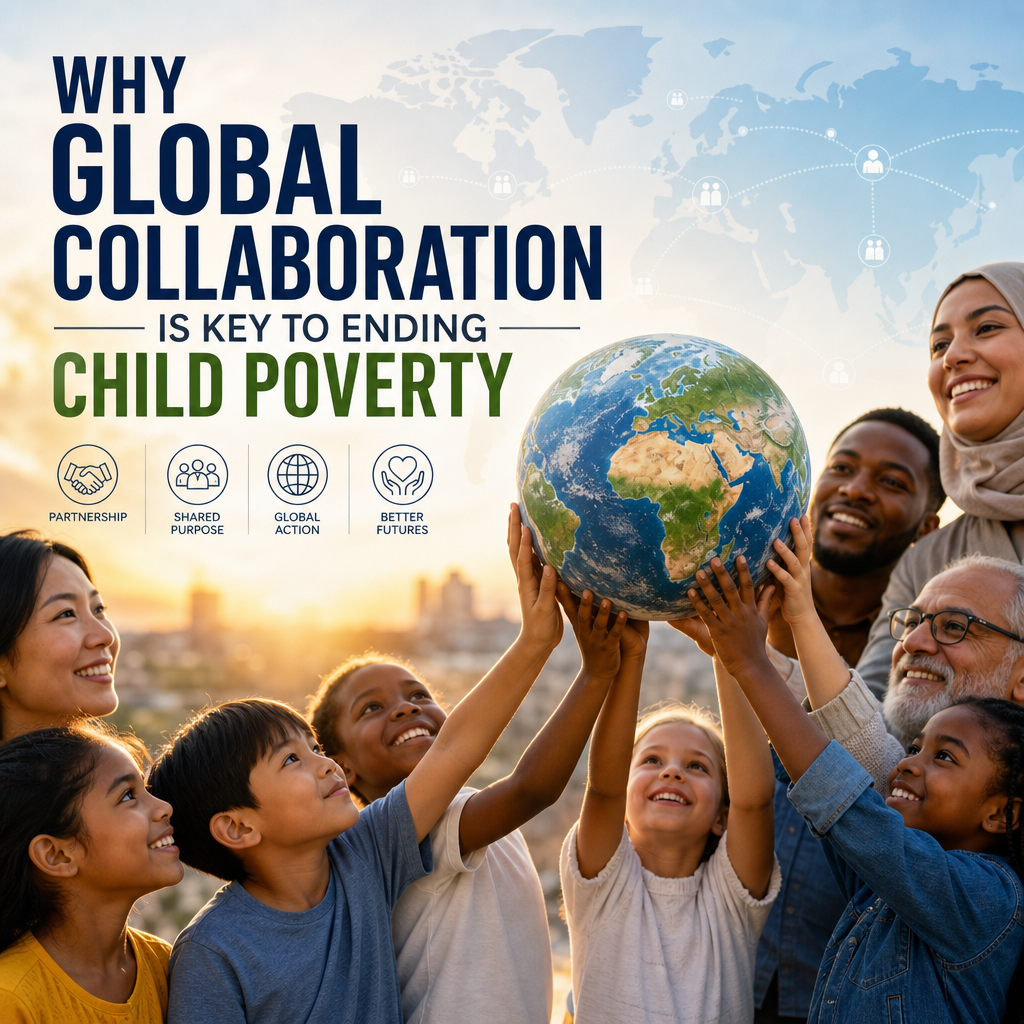
Why Global Collaboration Is Key to Ending Child Poverty
Why Global Collaboration Is the Key to Ending Child Poverty
Child poverty is one of the most urgent and complex challenges in the world. It is not caused by a single issue, and it cannot be solved by a single organization, government, or country. Poverty affects children through hunger, poor health, lack of education, unsafe housing, and limited opportunities for the future. That is why global collaboration is essential. When countries, nonprofits, businesses, and local communities work together, they can address the root causes of child poverty more effectively and sustainably.
Child Poverty Is a Global Problem
Although child poverty looks different from place to place, its effects are universal. A child in a rural village without access to clean water faces different barriers than a child in an overcrowded city neighborhood, but both may struggle to eat well, stay healthy, and attend school regularly.
The issue crosses borders in many ways:
- Economic inequality affects families worldwide.
- Climate change increases food insecurity and displacement.
- Conflict forces children from their homes and interrupts education.
- Disease and poor healthcare systems can trap families in long-term hardship.
Because these problems are connected globally, the solutions must also be connected globally.
Why Working Alone Is Not Enough
Many governments and aid groups do important work, but isolated efforts often have limited impact. A school-building project, for example, may help children attend classes, but if families cannot afford meals, uniforms, or transportation, attendance may still remain low. Likewise, food aid can relieve hunger temporarily, but it does not always solve the deeper economic conditions that create poverty in the first place.
Global collaboration helps fill these gaps by bringing together different strengths:
- Governments can create policy and funding.
- Nonprofits can deliver services and community support.
- Businesses can invest in jobs, innovation, and infrastructure.
- Researchers can provide data and evidence.
- Local leaders can ensure solutions fit real community needs.
When these groups coordinate, they can build systems that support children from multiple angles.
Shared Knowledge Leads to Better Solutions
One of the biggest benefits of global collaboration is the ability to share knowledge. A successful program in one country can inspire improvements in another. For example, school meal programs, child nutrition campaigns, and early childhood education models have been adapted across regions with strong results.
Shared learning helps organizations avoid repeating mistakes and focus on what truly works. It also encourages innovation. When experts from different countries and sectors come together, they can combine ideas in new ways.
Examples of what collaboration can improve
- Access to nutritious food
- Vaccination and child healthcare
- Quality education and literacy
- Protection from child labor and exploitation
- Support for families in crisis
The more knowledge is shared, the faster successful solutions can spread.
Collaboration Strengthens Global Resources
Ending child poverty requires money, talent, and long-term commitment. No single country or institution can carry that burden alone. Global collaboration allows resources to be pooled and used more strategically.
International partnerships can support:
- Emergency relief during crises
- Long-term development programs
- Public health campaigns
- Clean water and sanitation projects
- Digital access and learning tools
This matters because child poverty is often worsened by multiple overlapping problems. A family may need food assistance, school support, healthcare access, and stable income at the same time. Collaborative efforts make it more likely that children receive comprehensive help rather than partial support.
Local Communities Must Be at the Center
Global collaboration does not mean imposing outside solutions. In fact, the most effective partnerships are those that listen to local communities and respect their leadership. Families, teachers, health workers, and community organizations understand the daily realities of child poverty better than anyone else.
Successful collaboration should:
- Include local voices from the beginning.
- Support community-led decision-making.
- Adapt programs to cultural and regional needs.
- Build local capacity for long-term impact.
When local knowledge is combined with global support, solutions become more practical, respectful, and lasting.
A Future Built Through Cooperation
Ending child poverty is not just a moral goal. It is also an investment in a healthier, safer, and more prosperous world. Children who grow up with food, education, and opportunity are more likely to become adults who contribute to their communities and economies.
Global collaboration is the key because it turns isolated efforts into shared progress. It brings scale to good ideas, resources to urgent needs, and coordination to complex problems. Most importantly, it recognizes that every child deserves a fair chance, no matter where they are born.
The fight against child poverty will be won not by one nation or one group, but by many people working together with a common purpose.