
Understanding Why Traditional Aid Fails and Autonomous Intelligence Solutions
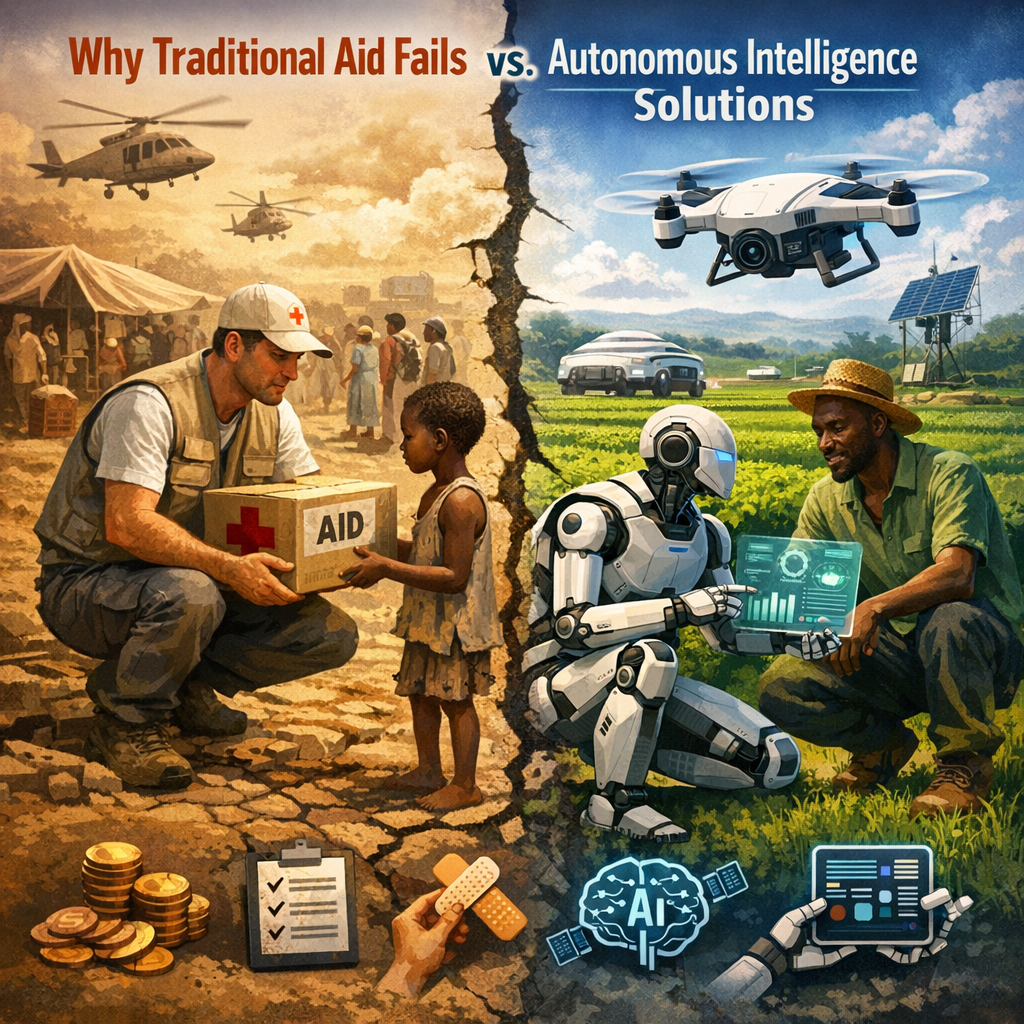
Why Traditional Aid Fails—and How Autonomous Intelligence Fixes It
In the realm of global humanitarian efforts, traditional methods of aid disbursement and administration can sometimes fall short of their transformative potential. Complex challenges such as inefficiency, corruption, and lack of real-time responsiveness frequently undermine these well-intentioned efforts. This blog explores why the traditional approach often falters and how autonomous intelligence could be the key to more effective solutions.
Limitations of Traditional Aid
Inefficiency and Resource Wastage
One of the fundamental issues with traditional aid mechanisms is their inefficiency. Resources, often in vast amounts, don’t always reach those in dire need due to logistical mishaps and bureaucratic bottlenecks. This mismanagement can result in wasted supplies, funding, and efforts—effectively diminishing the impact of aid programs.
Corruption and Misallocation
Corruption remains a pervasive issue, siphoning off resources meant for the impoverished and needy. In some scenarios, aid distribution is manipulated to benefit a few while the actual beneficiaries remain in distress. This not only erodes trust in aid organizations but also hampers future relief efforts.
Lack of Adaptability
Traditional systems are generally not equipped to adapt quickly to changing circumstances. During crises, such as natural disasters or pandemics, real-time response and flexibility in operations are essential. Unfortunately, predefined protocols and slow administrative processes can greatly inhibit this adaptability.
Autonomous Intelligence: A Revolutionary Approach
Streamlining Logistics
Autonomous intelligence systems can dramatically enhance the efficiency of aid distribution. Using AI-driven logistics, supplies can be managed and dispatched in a manner that minimizes human error and maximizes delivery speed. These systems are capable of dynamically adjusting routes and schedules to meet urgent demands more effectively.
Enhancing Transparency and Accountability
By integrating blockchain technology, which offers a decentralized and tamper-proof ledger, autonomous intelligence can fortify the transparency of aid transactions. Every step of aid distribution, from donor to final recipient, can be recorded and monitored, reducing the opportunity for corruption and misallocation of resources.
Rapid Response to Crises
Autonomous systems can process vast amounts of data from various sources in real-time. During emergencies, AI can analyze data from ground sensors, satellites, and other inputs to assess needs and optimize aid deployment instantaneously. This responsiveness can make a significant difference in the aftermath of a disaster.
Potential Impact and Implementation Challenges
Transforming Aid Effectiveness
The adoption of autonomous intelligence in humanitarian efforts holds promising potential to transform aid effectiveness dramatically. With enhanced efficiency, transparency, and responsiveness, these technologies can ensure that aid not only reaches its intended recipients but does so in a timely and equitable manner.
Challenges to Overcome
Despite the clear benefits, integrating autonomous intelligence into traditional aid systems is not free of challenges. These include technological adoption barriers, the need for robust data privacy protections, and ensuring these solutions are accessible across different regions, including those with limited technological infrastructure.
Conclusion
While traditional aid systems have undoubtedly facilitated significant progress in global humanitarian efforts, it’s clear that they are fraught with significant shortcomings that can undermine their efficacy. Autonomous intelligence offers a fresh and highly promising approach to overcoming these challenges, paving the way for more effective, accountable, and timely aid distribution. As the world moves forward, embracing this technology could be pivotal in transforming how assistance is delivered to those in need, making humanitarian efforts more impactful than ever before.
By leveraging the power of AI and autonomous technologies, the future of humanitarian aid looks not just hopeful but revolutionary.