

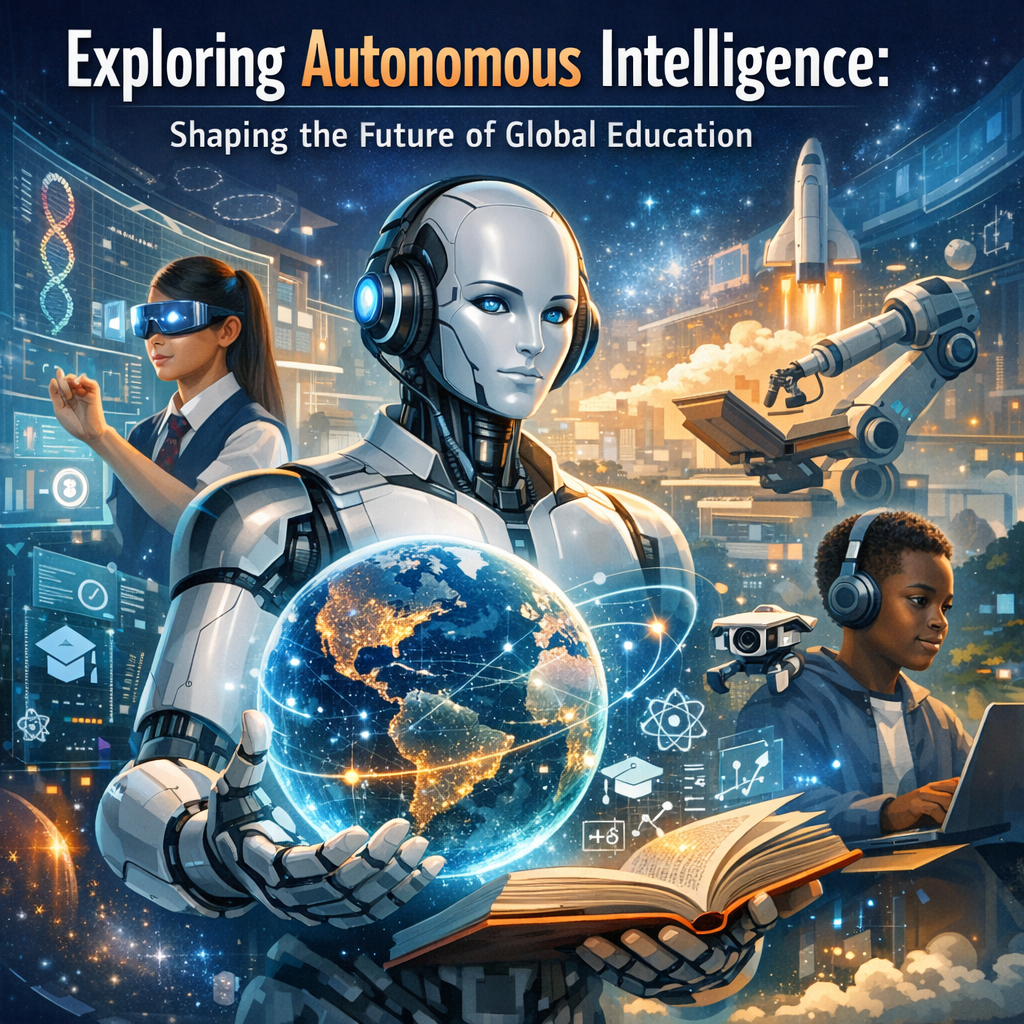
Exploring Autonomous Intelligence: Shaping the Future of Global Education
The Future of Global Education Through Autonomous Intelligence
The educational landscape is undergoing a revolution, one that promises a future shaped by the infusion of technology and autonomous intelligence. As we stride deeper into the 21st century, the integration of AI-driven methodologies is setting the stage for transformative changes in how and what the next generations will learn. This post explores the potential impacts and innovations of autonomous intelligence in global education.
Unveiling Autonomous Intelligence
Autonomous intelligence refers to systems capable of performing tasks and making decisions with minimal human intervention. It represents a significant leap from the automated responses of traditional machines to a more sophisticated, decision-making and learning approach. In the context of education, this technology holds the potential to create more personalized, accessible, and efficient learning experiences.
Personalized Learning Experiences
Adaptive Learning Technologies
One of the most promising applications of autonomous intelligence in education is personalized learning. AI systems can analyze a student’s previous performance, learning pace, and preferences to tailor educational content accordingly. This adaptive learning technology ensures that students engage with material that matches their individual learning needs and styles, potentially increasing both understanding and retention of knowledge.
Intelligent Tutoring Systems
AI-driven tutoring systems can provide additional support by giving real-time feedback and personalized assessments. These systems use data from student interactions to identify areas of difficulty and adjust the teaching approach, similar to a human tutor. This form of personalized attention was once only possible in a one-on-one teaching scenario but can now be scaled globally, thanks to AI.
Enhancing Global Access to Education
Overcoming Geographical Barriers
Autonomous intelligence can power platforms that deliver educational content to remote or underserved regions. These AI systems can operate independently of the internet by using pre-loaded content and interacting intelligently with students. This capability is crucial for making education more accessible in areas where digital infrastructure is lacking.
Multilingual Education
AI can also bridge language barriers. Advanced translation algorithms allow for the real-time translation of courses and materials, offering students the ability to learn in their native language. This not only opens up access but also enhances comprehension and retention, as students are more likely to engage thoroughly with content presented in their mother tongue.
Streamlining Administration and Assessment
Automated Administrative Tasks
The administrative burden on educational institutions can be heavy, often taking resources away from teaching and learning. Autonomous intelligence offers a solution by automating routine tasks such as enrollment, scheduling, and record-keeping. This shift can enable educators and administrators to focus more on student engagement and less on paperwork.
AI in Assessment
Autonomous systems are also transforming how assessments are managed. AI can evaluate student submissions for routine homework and even more sophisticated assessments like essays and research papers. Beyond grading, AI can analyze these assessments to provide insights into student learning patterns, potentially identifying educational trends and needs that can inform future teaching strategies.
Challenges and Ethical Considerations
While the integration of autonomous intelligence into education offers numerous benefits, it also comes with challenges. Privacy concerns, data security, and the ethical use of AI are paramount. Ensuring that AI systems do not perpetuate existing biases and that they operate transparently is crucial. Furthermore, there’s the challenge of maintaining a human element in education, which is essential for fostering critical thinking, creativity, and social skills.
The Road Ahead
The future of global education augmented by autonomous intelligence looks promising, with the potential to democratize learning, personalize educational experiences, and streamline administrative processes. As we embrace this technology, it’s vital to address the accompanying challenges responsibly. Balancing technological integration with ethical considerations and human interaction will be key to harnessing the full potential of AI in education.
The horizon of educational technology is expansive, and autonomous intelligence is just one of many exciting developments shaping the future. By fostering an inclusive, responsive, and responsible approach, the global educational landscape can indeed transform for the better.