
How Local Communities Become Global Change Makers Through Save World Children Programs
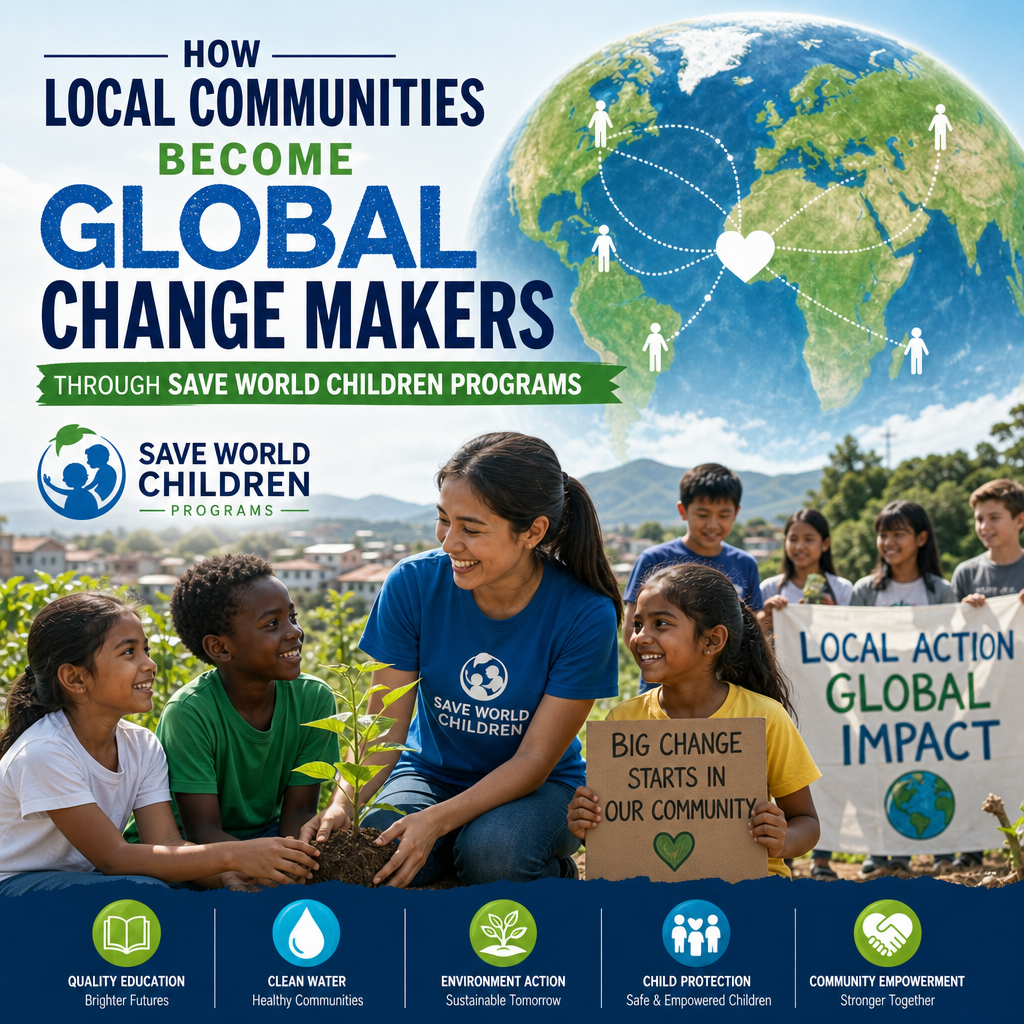
How Local Communities Become Global Change Makers Through Save World Children Programs
Global change often begins in familiar places: a school classroom, a neighborhood center, a local faith group, or a small business on the corner. When people come together around a shared purpose, they can create lasting impact far beyond their own streets. This is especially true through Save World Children Programs, where local communities help improve the lives of children while contributing to broader progress around the world.
The idea is simple but powerful. When communities invest in children, they invest in the future. And when those efforts are organized, consistent, and connected to a larger mission, they become part of something much bigger than one town or one project.
Why Local Action Matters on a Global Scale
It is easy to think that global change only happens through governments, major charities, or international institutions. In reality, many of the strongest solutions begin at the community level.
Local communities understand real needs because they see them every day. They know which families are struggling, which children need support, and which resources are missing. That local knowledge makes action more effective and more human.
Through Save World Children Programs, small efforts can multiply:
- A school fundraiser can provide learning materials for children in need.
- A community health drive can improve access to basic care.
- A volunteer network can support families during emergencies.
- A local advocacy campaign can raise awareness that reaches far beyond the neighborhood.
These actions may start small, but they send ripples outward.
What Save World Children Programs Do
Save World Children Programs are designed to connect local efforts with child-focused solutions that have global relevance. They help communities turn compassion into action through practical, measurable initiatives.
Supporting Education
Education is one of the most effective ways to break cycles of poverty. Local communities can support programs that provide books, school supplies, tutoring, scholarships, and safe learning spaces.
When children can attend school regularly and learn in a supportive environment, their opportunities expand. Over time, educated children grow into adults who can strengthen their own communities.
Improving Health and Nutrition
Healthy children learn better, grow stronger, and have more opportunities. Local groups can help support programs that address nutrition, sanitation, vaccinations, and basic healthcare.
Even simple interventions, such as community meal programs or health awareness events, can make a major difference in a child’s life.
Creating Safe Spaces
Children need places where they can feel protected, encouraged, and valued. Save World Children Programs often help communities build safe environments through after-school care, mentoring, recreational activities, and family support services.
These spaces do more than keep children busy. They build confidence, trust, and emotional resilience.
How Communities Become Change Makers
The most inspiring part of community-led change is that everyone has something to offer. You do not need to be an expert or have a large budget to make a meaningful contribution.
1. Start with awareness
Change begins when people understand the issue. Sharing information about children’s needs, global inequality, and the mission of Save World Children Programs helps build a foundation for action.
2. Build local partnerships
Schools, churches, youth groups, local businesses, and civic organizations can join forces. Partnerships make it easier to gather volunteers, raise funds, and reach more people.
3. Focus on long-term impact
One-time events are helpful, but sustainable programs create lasting results. Communities that commit to ongoing support help children receive consistent care and opportunities over time.
4. Encourage youth involvement
Young people are not just future leaders; they are change makers today. When children and teens participate in service projects, they learn empathy, leadership, and responsibility.
The Power of Collective Compassion
One of the most beautiful parts of Save World Children Programs is the way they turn compassion into collective strength. A single person may donate a little time, money, or energy. But when many people act together, that effort becomes powerful.
This collective approach also helps people see that global challenges are not distant or abstract. They are connected to real families, real children, and real communities. And because of that, change feels possible.
Communities often discover that helping children elsewhere also strengthens their own values at home. Volunteers become more engaged. Local leaders become more collaborative. Schools and organizations become more mission-driven. In the process, a stronger culture of care begins to grow.
Small Actions, Big Outcomes
The path from local community to global change maker does not require perfection. It requires commitment.
A neighborhood that hosts a book drive, a group of parents that organizes a fundraiser, or a small team that raises awareness can all become part of a larger movement. Over time, those efforts help children receive education, safety, nutrition, and hope.
That is the true strength of Save World Children Programs: they prove that local people can help solve global problems. By acting with purpose and working together, communities do more than support children. They shape a better future for everyone.
A Future Built by Communities
Every global movement needs a beginning, and many of the strongest ones start locally. When communities choose to stand with children, they create a foundation for real and lasting change.
Through Save World Children Programs, local action becomes global impact. One project leads to another. One partnership inspires more. One child’s life improves, and that improvement spreads outward in ways no one can fully predict.
In the end, communities become global change makers not because they have all the answers, but because they are willing to care, act, and keep going.