
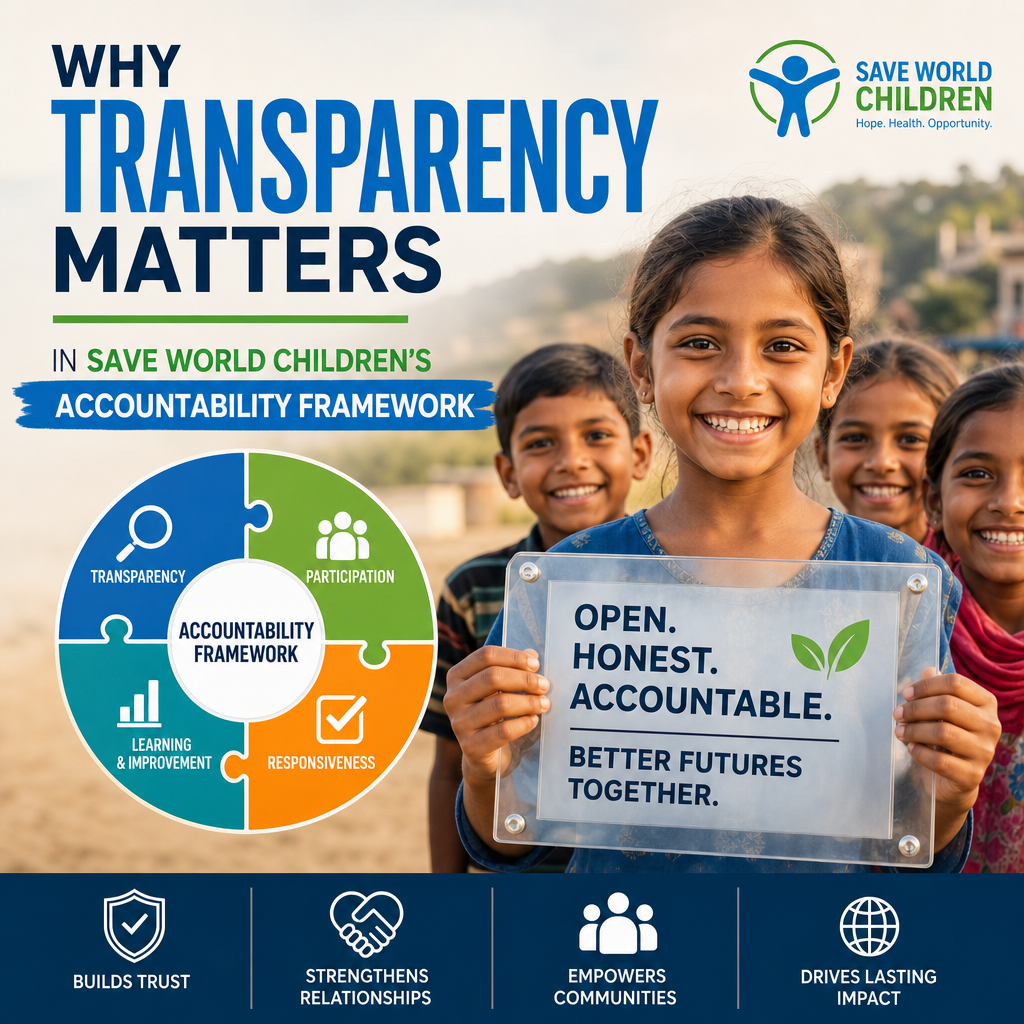
Why Transparency Matters in Save World Children’s Accountability Framework
Why Transparency Matters: Inside Save World Children’s Accountability Framework
Transparency is more than a buzzword in the nonprofit world. For organizations working with vulnerable children and families, it is the foundation of trust, safety, and long-term impact. Save World Children’s accountability framework is built on that principle: every decision, process, and promise should be visible, measurable, and open to review.
When donors give, communities participate, and partners collaborate, they want confidence that resources are used responsibly. More importantly, children and families deserve to know that the programs designed to support them are ethical, effective, and grounded in respect. That is where transparency becomes essential.
What Transparency Really Means
Transparency is not just about publishing reports or sharing updates. It is about creating a culture where information flows clearly and honestly across the organization.
At Save World Children, transparency means:
- Explaining how funds are raised and spent
- Sharing program goals and results openly
- Reporting challenges as well as successes
- Welcoming feedback from the communities served
- Making accountability part of everyday operations
This kind of openness helps prevent confusion, builds credibility, and ensures that decisions are made in the best interest of children.
Why Accountability Matters in Child-Focused Work
Working with children requires a higher level of responsibility. Families place tremendous trust in organizations that promise to support education, health, protection, and development. If that trust is weakened, the damage can be lasting.
A strong accountability framework helps an organization:
Protect children and families
Clear rules, reporting channels, and oversight mechanisms reduce the risk of harm and make it easier to identify problems early.
Use resources effectively
Donor support should reach the children who need it most. Accountability ensures programs stay focused and funds are not wasted.
Improve program quality
When outcomes are tracked and evaluated honestly, teams can learn what works and adjust what does not.
Strengthen public trust
People are more likely to support a mission when they can see how decisions are made and how impact is measured.
Inside Save World Children’s Accountability Framework
Save World Children’s accountability framework is designed to keep transparency at the center of its work. Instead of treating accountability as an occasional review, it is embedded into the organization’s daily practices.
1. Clear reporting systems
Every program includes defined reporting steps so progress can be monitored consistently. This helps teams identify both achievements and gaps in real time.
2. Financial responsibility
Transparent financial management is a core part of the framework. Budgets, spending, and resource allocation are tracked carefully to ensure that donor contributions are used efficiently and ethically.
3. Community feedback channels
The organization values the voices of the people it serves. Families, local leaders, and community members can share concerns, suggestions, and observations, helping shape programs that reflect real needs.
4. Safeguarding policies
Children’s safety is never optional. Policies are in place to prevent abuse, protect privacy, and ensure that staff and partners understand their responsibilities.
5. Independent review and evaluation
Regular assessments provide an outside perspective on progress and performance. This helps ensure that the organization remains honest about results and committed to improvement.
The Benefits of Being Open
A transparent organization does not look perfect; it looks trustworthy. That difference matters.
When challenges are acknowledged openly, they can be addressed faster. When results are shared honestly, supporters understand the true impact of their contributions. When communities are invited to participate, programs become more relevant and effective.
Some of the key benefits of transparency include:
- Stronger donor confidence
- Better decision-making
- Improved child protection
- More effective use of resources
- Deeper relationships with communities
In short, transparency helps good intentions become real outcomes.
How Transparency Supports Long-Term Impact
Short-term charity can offer immediate relief, but lasting change requires systems people can rely on. That is why accountability is so important. It creates structure around compassion.
Save World Children’s accountability framework supports long-term impact by ensuring that every project is:
- Planned with care
- Monitored consistently
- Evaluated honestly
- Improved based on evidence
- Shared with stakeholders in a clear way
This approach does more than demonstrate responsibility. It creates a cycle of learning and trust that strengthens the organization over time.
Building a Culture of Trust
Transparency is not a single report or a one-time announcement. It is a culture. It shows up in how staff communicate, how leaders make decisions, and how the organization responds when something goes wrong.
That culture matters because trust is earned through consistency. If an organization says it values children, it must also prove that value through open practices and accountable leadership.
Save World Children’s accountability framework reflects that belief. By making transparency part of its structure, the organization helps ensure that its mission is not only ambitious, but credible.
Final Thoughts
In child-focused work, transparency is not optional. It is a moral and practical necessity. Families, donors, and communities deserve honesty. Children deserve protection. And organizations deserve the chance to build trust through clear, responsible action.
That is why Save World Children’s accountability framework matters. It turns transparency into a system, accountability into a habit, and trust into a lasting force for good.