How Save World Children Uses Research to Shape Global Policy
How Save World Children Uses Research to Shape Global Policy
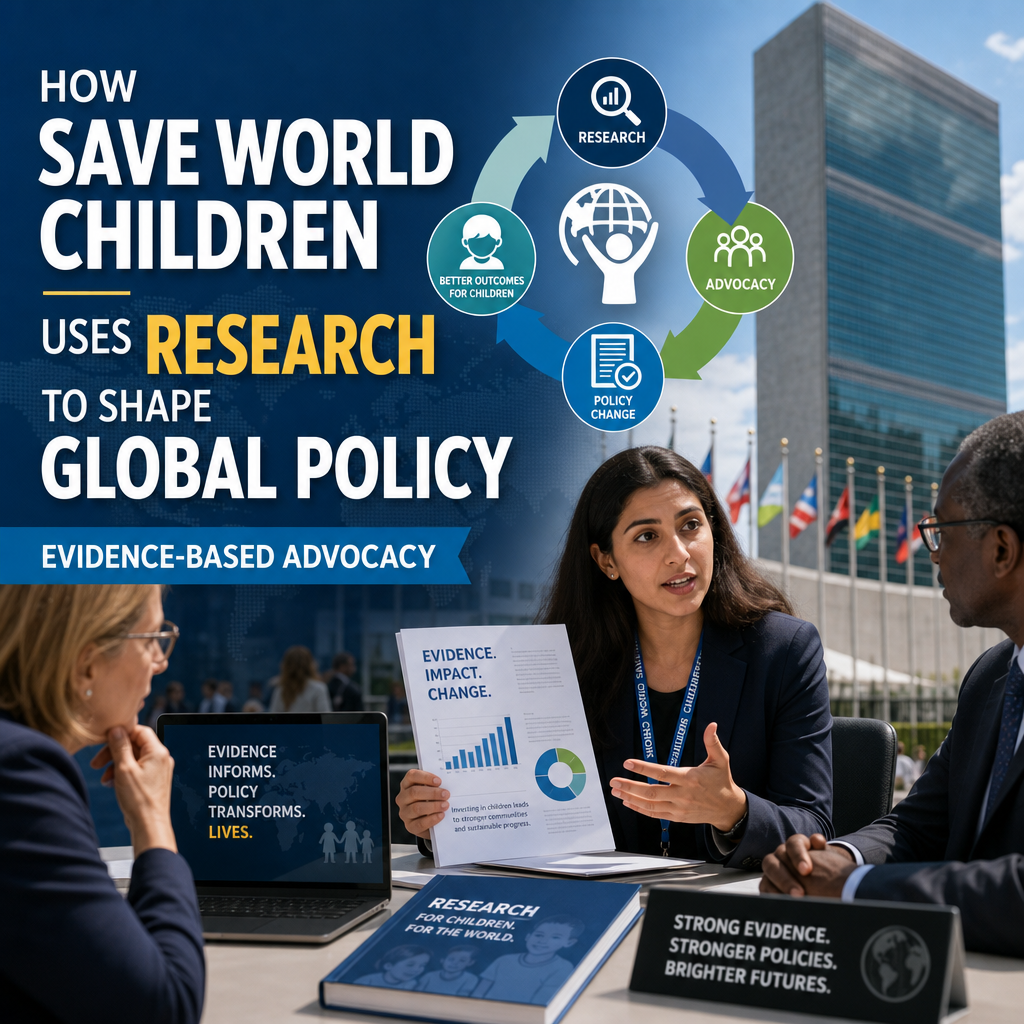
When organizations want to change children’s lives at scale, good intentions are not enough. Real progress depends on evidence: what children need, where systems are failing, and which solutions actually work. That is why Save World Children uses research as a foundation for its advocacy.
Rather than relying on broad appeals alone, the organization collects data, studies trends, and turns findings into practical policy recommendations. This evidence-based approach helps decision-makers act with confidence and gives children’s needs a stronger voice in national and global debates.
Why Research Matters in Child Advocacy
Policy changes can affect millions of children at once. A law that expands access to education, improves nutrition, or strengthens child protection can have a lasting impact across generations. But policymakers are more likely to adopt reforms when they can see clear proof that a problem exists and that a solution is possible.
Research helps Save World Children:
- identify the most urgent risks facing children
- understand which groups are most vulnerable
- measure the scale of gaps in health, education, and protection
- test whether programs deliver real results
- make policy recommendations that are realistic and actionable
In short, research turns concern into evidence and evidence into influence.
Gathering Evidence from the Ground Up
One of the strengths of Save World Children is its ability to connect local realities with global policy debates. The organization works close to communities, where it can observe how families are affected by poverty, conflict, climate shocks, or weak public services.
This local insight is essential. National averages often hide serious inequality. For example, a country may show progress in school enrollment overall, while rural girls or displaced children still face major barriers. Field research can reveal these gaps and give policymakers a more accurate picture.
Sources of Research May Include:
- community surveys and interviews
- health and education assessments
- program monitoring data
- academic studies and peer-reviewed reports
- partnerships with universities and research institutes
- input from children, parents, and local leaders
By combining these sources, Save World Children builds a fuller understanding of the challenges children face.
Turning Data into Policy Recommendations
Research is most useful when it leads to clear action. Save World Children does not stop at reporting problems. It translates evidence into policy briefs, advocacy campaigns, and public recommendations that decision-makers can use.
For example, if research shows that children are missing school because of unsafe transportation, the organization may advocate for better school routes, safer infrastructure, or targeted subsidies. If data reveals that malnutrition is rising in crisis settings, it may push for expanded food assistance and stronger maternal health support.
This step matters because policymakers need solutions that are specific, affordable, and grounded in evidence. Save World Children helps bridge the gap between what the data shows and what governments can do next.
Influencing Policy at National and Global Levels
Research has power when it reaches the right audience. Save World Children uses its findings to engage with a wide range of stakeholders, including:
- government ministries
- parliamentarians and local officials
- United Nations agencies
- donor governments
- international development organizations
- coalitions of civil society groups
At the national level, this can mean helping shape budgets, laws, or social protection programs. At the global level, research can feed into major policy discussions on topics like child poverty, emergency response, education access, and climate resilience.
The organization’s research-backed advocacy is especially valuable in international forums, where countries compare strategies and negotiate priorities. Evidence from Save World Children can help highlight overlooked problems and keep children’s rights at the center of global commitments.
The Role of Child Participation
One of the most important parts of effective research is listening to children themselves. Save World Children recognizes that children are not just subjects of policy; they are experts in their own experiences.
When children share what they need, researchers can uncover issues that statistics alone may miss. A survey may show low attendance, but children may explain that the real barrier is fear of violence, lack of sanitation, or the cost of school materials.
Including children’s voices helps ensure that policy solutions are more accurate, respectful, and responsive. It also strengthens advocacy by showing that reforms are based not only on numbers, but on lived experience.
Why This Approach Builds Lasting Change
Research-driven advocacy is slower than reacting to headlines, but it is far more sustainable. Save World Children uses evidence to build trust, challenge assumptions, and keep attention on the root causes of child hardship.
This approach creates lasting change because it:
- makes problems visible with credible data
- shows which interventions work best
- helps governments target resources more effectively
- supports accountability by tracking progress over time
- keeps child wellbeing central to policy decisions
By combining research with advocacy, the organization increases the chances that reforms will be both meaningful and durable.
A Smarter Path to Better Policy
In a crowded global policy landscape, evidence makes the difference between good intentions and real impact. Save World Children shows how research can be used not just to describe problems, but to shape solutions.
Its model is simple but powerful: listen carefully, collect strong evidence, analyze what it means, and push for policies that reflect children’s real needs. That is how research becomes a tool for global change.
And for children around the world, that kind of change can mean safer lives, better opportunities, and a stronger future.