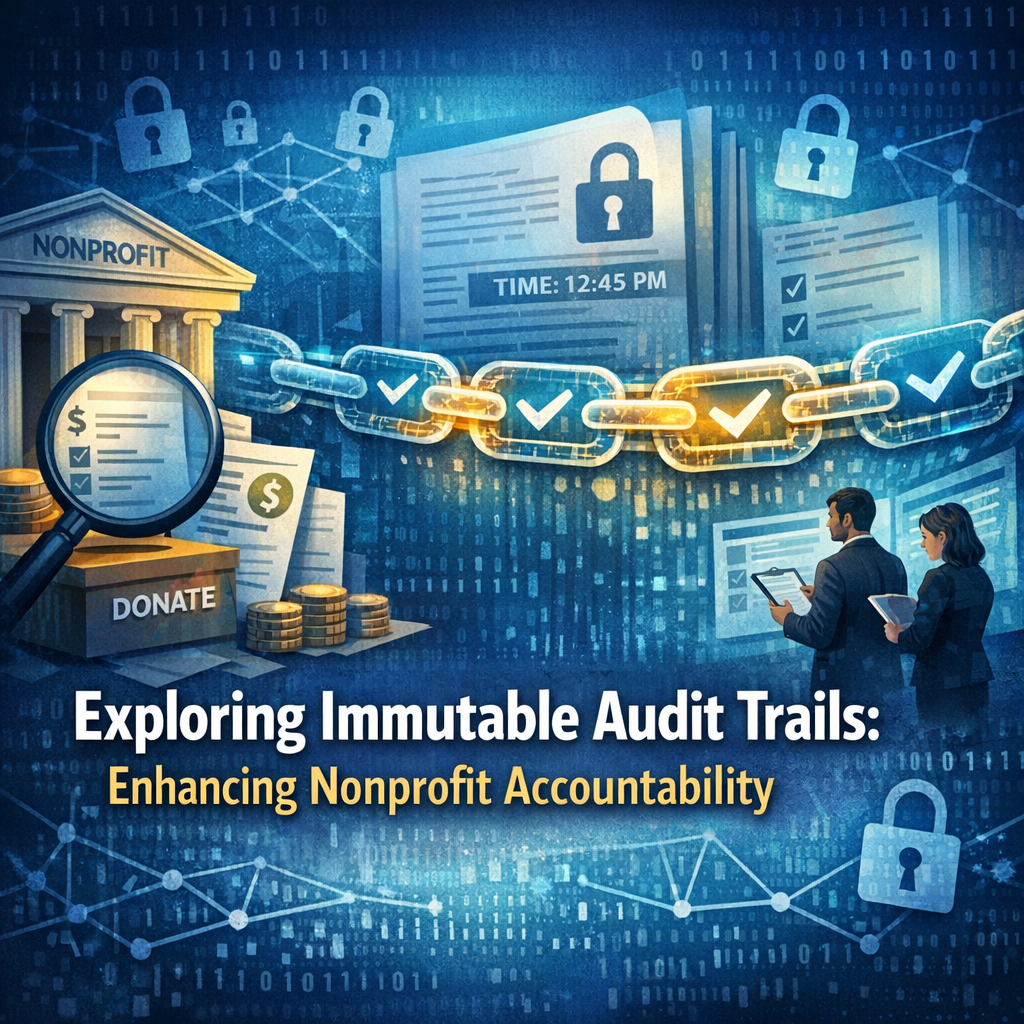
# The Future of Nonprofit Accountability: Immutable Audit Trails

In an age where transparency and trust are paramount, nonprofits are increasingly turning to technology for solutions that enhance accountability and build confidence among stakeholders. One promising advancement lies in the development of immutable audit trails. This technology not only promises to revolutionize the way nonprofits operate but also how they report, manage funds, and comply with regulatory requirements.

What is an Immutable Audit Trail?


An immutable audit trail is a comprehensive and unalterable record of transactions or events that is maintained in a secure environment. This technology is typically powered by blockchain, which ensures that once data has been recorded, it cannot be changed or deleted. This feature provides an unprecedented level of security and transparency, making it ideal for nonprofit organizations.

Enhancing Transparency with Immutable Audit Trails


Building Donor Trust


Nonprofits thrive on the trust and generosity of their donors. By implementing immutable audit trails, organizations can offer unparalleled transparency regarding how donations are used. Donors can view a clear, timestamped trail of where their money is going, who is handling it, and what impact it is achieving. This transparency not only builds trust but also encourages further donations.

Streamlined Compliance and Reporting


Maintaining compliance with various regulations can be a cumbersome process for many nonprofits. Immutable audit trails simplify these tasks by providing a tamper-proof record of all transactions. This can significantly streamline the process of preparing reports for regulatory bodies and ensure compliance with financial standards and laws.

Implementing Immutable Audit Trails in Nonprofits


Integration Challenges


While the benefits are clear, integrating immutable audit trails into existing systems poses certain challenges. Nonprofits must consider the initial setup costs, the complexity of blockchain technology, and the need for training staff to handle new systems. However, the long-term benefits often offset these initial hurdles.

Collaboration with Tech Partners


For a seamless integration, nonprofits often need to collaborate with technology providers who specialize in blockchain solutions. These partnerships can help tailor the technology to specific needs of the nonprofit sector, ensuring that the solutions are both effective and user-friendly.

Case Studies


1. Direct Relief: This humanitarian aid organization uses blockchain to track and verify the supply chain of pharmaceuticals. This ensures that aid reaches the intended recipients and that donations are used effectively.

2. The Water Project: Focused on providing clean water to communities in Sub-Saharan Africa, this nonprofit uses blockchain to manage donations and fund deployment. Donors can see real-time data on how their contributions are making an impact.

The Future Outlook


As more nonprofits begin to recognize the benefits of immutable audit trails, the adoption of this technology is expected to grow. This will not only lead to higher levels of efficiency and transparency but also foster a greater degree of trust and engagement with donors and stakeholders.

Conclusion


Immutable audit trails represent the future of nonprofit accountability, offering robust solutions to enhance transparency, simplify compliance, and build donor trust. As this technology becomes more accessible and understood, it could become a standard practice in the nonprofit sector, heralding a new era of integrity and efficiency.