
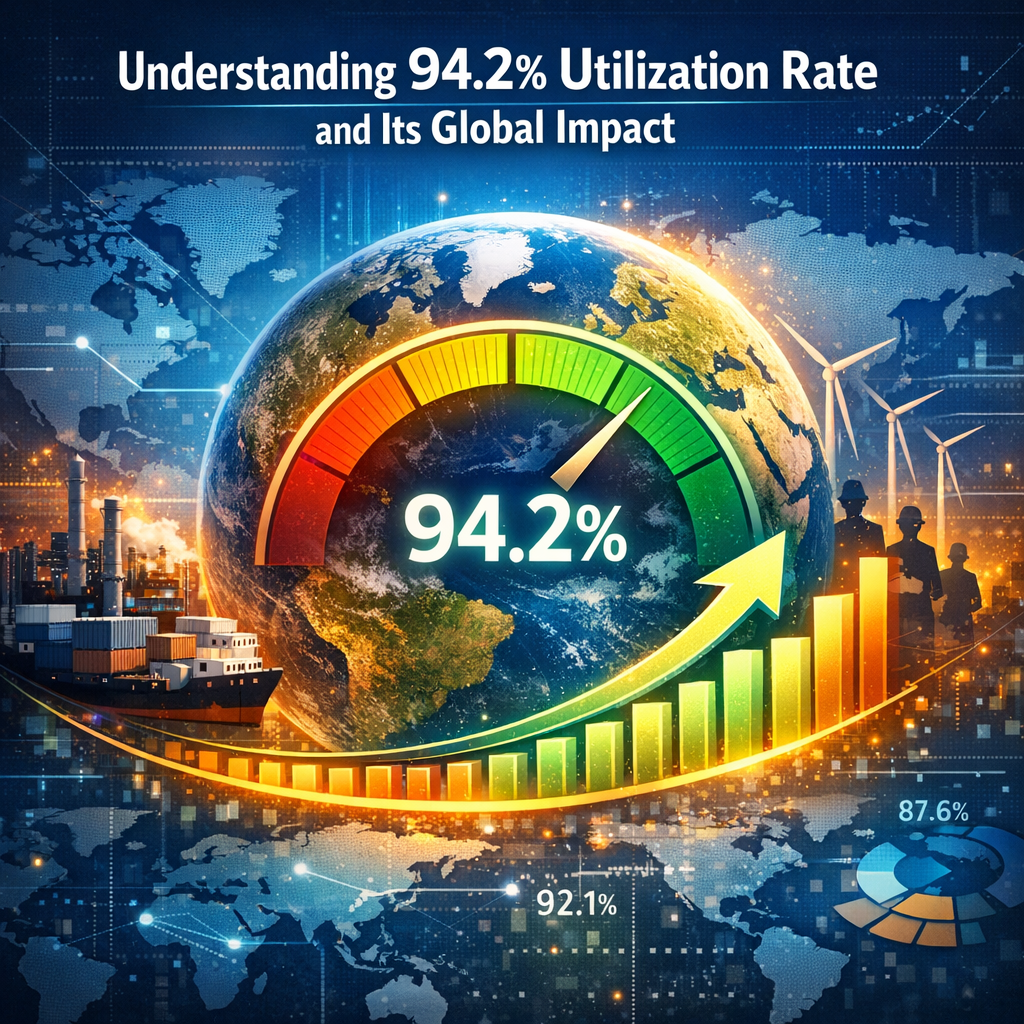
Understanding 94.2% Utilization Rate and Its Global Impact
Understanding the Global Impact of a 94.2% Utilization Rate
The utilization rate in any industry or service is a critical indicator of efficiency and resource management. When we speak about a 94.2% utilization rate, we are delving into a realm where nearly every available resource is being employed towards productivity. This does not merely reflect operational success; it has far-reaching implications on a global scale, affecting everything from economic stability to environmental sustainability.
Economic Implications
Boost in Productivity
A 94.2% utilization rate is indicative of high productivity levels. Businesses operating at such high levels can generate more output using fewer resources, which, in effect, leads to lower costs and higher profits. This efficiency can lead to:
- Cost reduction: Companies save on operational costs, which can be passed on to consumers in the form of lower prices.
- Increased competitiveness: Businesses can better compete on the global stage, providing them with an edge in international markets.
Job Creation and Unemployment
High utilization often necessitates a robust workforce. This is crucial in:
- Reducing unemployment: As companies expand and optimize their output, new job opportunities emerge.
- Improving living standards: Employment uplifts communities by improving the quality of life and reducing poverty levels.
Environmental Impact
Resource Optimization
Operating at a 94.2% utilization rate maximizes the use of available resources, which has several environmental benefits:
- Reduced waste: With resources being used more effectively, the amount of waste produced per unit of product decreases.
- Energy efficiency: High utilization often involves streamlined processes that lower energy consumption per unit of output.
Challenges and Sustainability
However, a high utilization rate can also pose sustainability challenges. It can lead to:
- Resource depletion: Continual high demand can strain natural resources, risking depletion.
- Environmental degradation: Without sustainable practices, increased output can lead to more pollution and habitat destruction.
Social Implications
Quality of Life Improvements
When industries thrive, the ripple effects can improve the social fabric of communities. This includes:
- Healthcare and education: Increased profits from higher productivity can lead to more corporate philanthropy and taxes that fund public services.
- Infrastructure development: Economic growth supports better public infrastructure, which improves the quality of life.
Potential for Inequality
However, it’s important to recognize that benefits might not be evenly distributed. High utilization could potentially lead to:
- Workforce burnout: Intense work environments can stress employees, affecting their health and well-being.
- Wage disparities: If not managed properly, the economic benefits could widen the income gap between the upper and lower echelons of society.
Implications for Policy Making
Given the mixed potential outcomes of a high utilization rate, it becomes essential for policymakers to guide the process towards positive ends. They need to:
- Promote sustainable practices: Encouraging industries to adopt sustainable methodologies to ensure long-term resource availability.
- Ensure equitable growth: Develop and enforce policies that distribute economic benefits fairly across all strata of society.
Conclusion
A 94.2% utilization rate reflects not just an impressive statistical feat but a complex interplay of economic efficiency, environmental responsibility, and social dynamics. While it offers numerous advantages in terms of productivity and economic growth, it also poses significant challenges that require careful, sustainable management. As global industries strive toward such high utilization rates, understanding these complexities becomes crucial. The goal should be to balance growth with sustainability and fairness, ensuring that the benefits of such efficiency are enjoyed broadly and responsibly across the globe.