
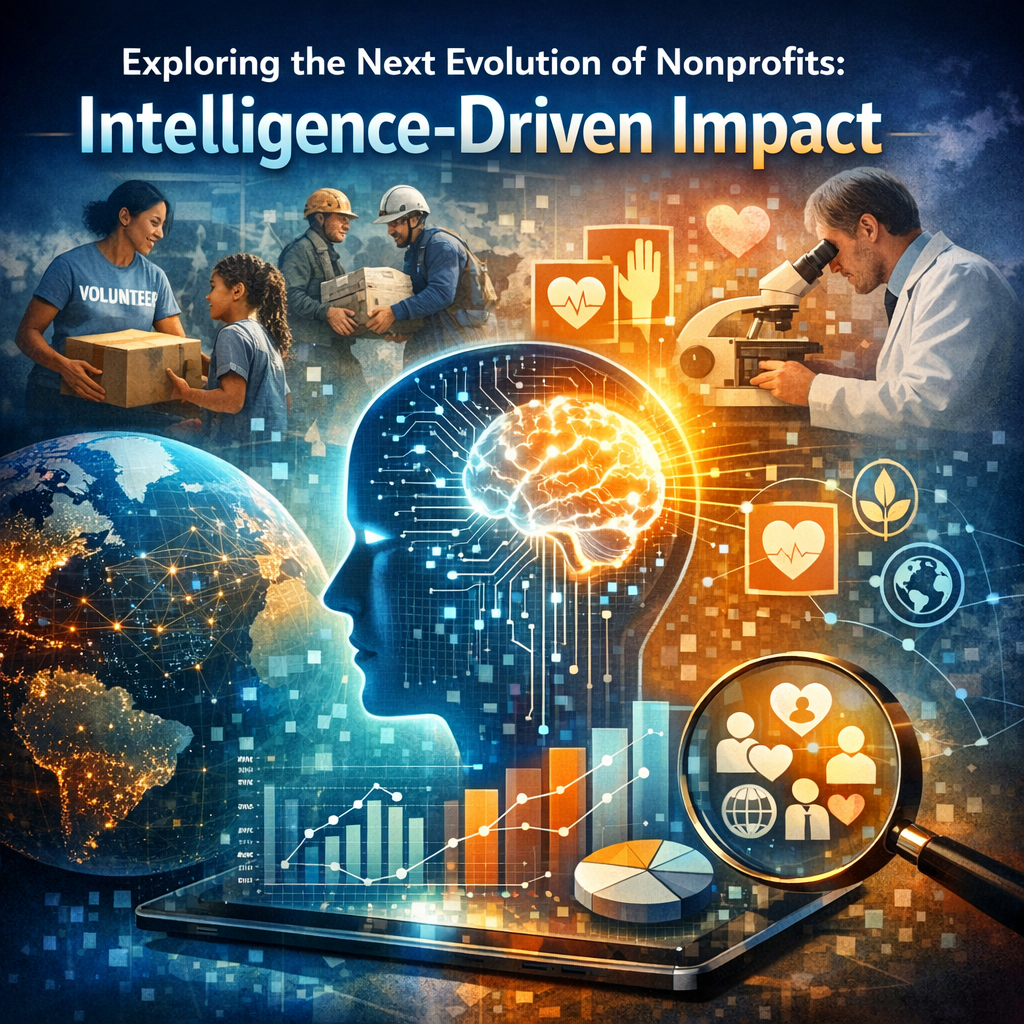
Exploring the Next Evolution of Nonprofits: Intelligence-Driven Impact
The Next Evolution of Nonprofits: Intelligence‑Driven Impact
Nonprofits have always been on the frontline of solving societal problems. Yet, as the world becomes increasingly complex, the need for these organizations to adapt and innovate is more crucial than ever. The next evolution in nonprofit management emphasizes an “Intelligence-Driven Impact” approach, using data and analytics to maximize their effectiveness and reach. This strategic shift not only enhances targeted outcomes but also strengthens accountability and resource management.
Understanding Intelligence-Driven Impact
Intelligence-driven impact refers to the strategic use of data-driven insights to enhance the decision-making processes within nonprofits. This approach allows organizations to target resources more effectively, predict needs more accurately, and evaluate the outcomes of their efforts with enhanced precision.
Key Components of an Intelligence-Driven Strategy
- Data Collection: Gathering quantitative and qualitative data relevant to organizational goals.
- Analytics: Leveraging advanced tools to process and analyze the data to uncover patterns and insights.
- Insight Implementation: Applying these insights to refine strategies, optimize operations, and enhance overall impact.
By embracing these components, nonprofits can shift from a traditionally reactive model to a more proactive, strategic framework.
Benefits of Intelligence-Driven Impact in Nonprofits
Enhanced Decision Making
With access to real-time data and advanced analytics, nonprofit leaders can make informed decisions that are based on evidence rather than intuition. This precision leads to better allocation of resources, optimized program development, and ultimately, more effective solutions to the problems at hand.
Increased Transparency and Accountability
Data not only guides decision-making but also fosters greater transparency and accountability. Donors and stakeholders increasingly demand proof of impact and responsible stewardship of resources. Intelligence-driven nonprofits can provide quantifiable metrics and evidence of their successes and challenges, reinforcing trust and support from their communities.
Improved Funding Efficiency
One of the perennial challenges faced by nonprofits is securing and efficiently using funding. Data-driven strategies allow for demonstrating impact in a tangible way, which is attractive to funders. Additionally, predictive analytics can identify the most successful initiatives, helping to channel funds more effectively and increase return on investment.
Case Studies: Success Stories of Intelligence-Driven Nonprofits
Habitat for Humanity
Habitat for Humanity has utilized data analytics to optimize the selection of project sites and the distribution of resources. By analyzing community data, they are able to prioritize efforts in areas where they can make the most significant impact, based on various socio-economic factors.
The Red Cross
The Red Cross has pioneered the use of real-time data to monitor disasters and mobilize responses more efficiently. By using predictive analytics, they can prepare resources and volunteers even before a disaster strikes, thereby improving the speed and effectiveness of their responses.
Implementing Intelligence-Driven Strategies in Your Nonprofit
Step 1: Establish Clear Objectives
Define what you want to achieve with your data-driven initiatives. Clear goals will guide the types of data you need to collect and the analytical tools required.
Step 2: Invest in Technology
Utilize the appropriate technology and software that can process large volumes of data and provide actionable insights. This may require some initial investment but can be scaled as your organization grows.
Step 3: Train Your Team
Ensure your staff has the skills needed to implement data-driven strategies. This might involve training current employees or hiring new staff with specialized skills in data analysis and management.
Step 4: Foster a Culture of Learning
Adopting an intelligence-driven approach requires a cultural shift towards continuous learning and improvement. Encourage experimentation and be open to adjusting strategies based on what the data reveals.
Conclusion
As the landscape for charitable work evolves, so too must the strategies employed by those committed to making a difference. Intelligence-driven impact represents a significant leap forward for nonprofits willing to embrace the power of data. By understanding the needs of those they serve in a more nuanced way, nonprofits can not only increase their impact but also strengthen their operational efficiency and stakeholder trust. In this age of information, data is not just a tool; it’s the foundation of future successes in the philanthropic realm.