
How Save World Children Measures Impact: Data That Drives Change
How Save World Children Measures Impact: Data That Drives Change
Nonprofits must prove their value in measurable ways. This article explains how Save World Children measures Impact and uses Monitoring to turn real data into real change — from program design to public reporting.
Measuring results is more than bookkeeping. Clear measurement shows whether interventions improve children’s health, education, and protection; informs faster course corrections; and builds trust with communities and donors. For Save World Children, measurement sits at the center of strategy: it answers the basic question, “Are we helping children in ways that last?”
Impact refers to the long-term changes caused by a program — for example, reduced child malnutrition or higher school completion. Monitoring is the ongoing collection of information that shows whether activities are being delivered as planned and whether short-term outcomes are moving in the right direction.
How they work together
- Monitoring provides real-time signals and operational metrics.
- Impact evaluation tests whether those signals translate into long-term change.
- Together they create a feedback loop for adaptive management and transparency.
How Save World Children measures impact: methods and tools
Save World Children combines quantitative and qualitative approaches to build a robust evidence base. Typical elements include:
- Baseline and endline surveys: Household and facility surveys before and after interventions to measure change.
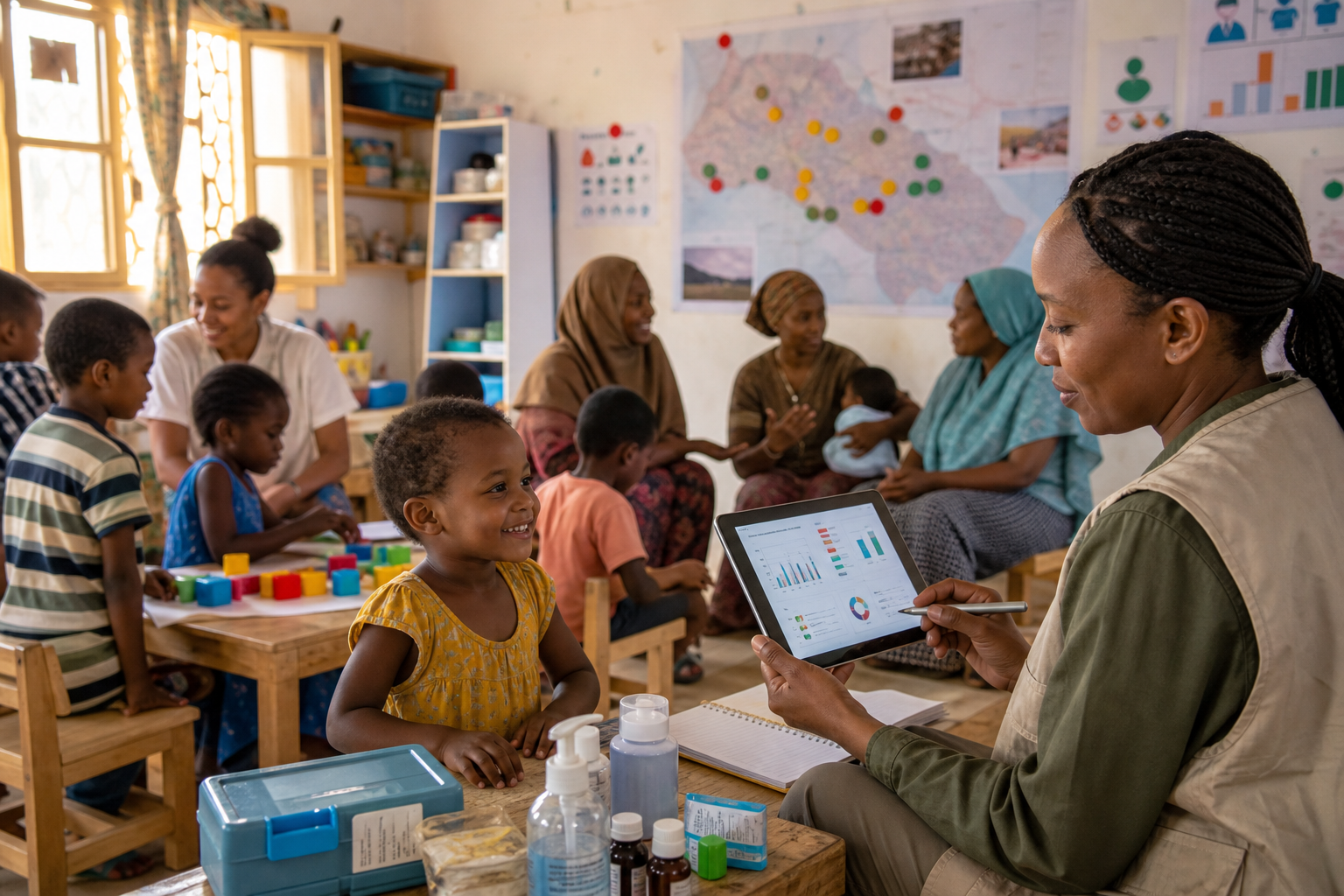
- Routine monitoring systems: Digital data collection, attendance registers, and supply tracking to monitor implementation.
- Mixed-method evaluations: Combining randomized or quasi-experimental designs with interviews and focus groups to understand why change happened.
- Geo-tagging and GIS: Mapping service delivery and outcomes to spot coverage gaps.
- Community feedback loops: Hotlines, suggestion boxes, and participatory sessions to capture beneficiary experience and complaints.
Indicators they track
- Child health: immunization rates, malnutrition prevalence, morbidity.
- Education: enrollment, attendance, learning outcomes.
- Protection: incidence reports, access to case management.
- Operational: commodity stockouts, staff training completion, timely reporting.
Turning data into real change
Data only matters if it leads to action. Save World Children uses measurement to:
- Identify underperforming sites and allocate resources where they’re needed most.
- Adjust program design in response to beneficiary feedback and interim results.
- Build evidence to scale what works, and stop or redesign what doesn’t.
- Report transparently to stakeholders, increasing accountability and donor confidence.
Examples of adaptive management
When monitoring shows persistent stockouts at health posts, the organization pilots a supply-chain fix in a subset of districts. If impact data show child health improves, the approach is scaled; if not, further analysis identifies barriers.
Challenges and how they’re addressed
Measuring Impact and Monitoring in humanitarian and development settings is not without obstacles:
- Data quality: Training, validation checks, and third-party audits improve reliability.
- Ethical considerations: Protecting children’s privacy and obtaining consent are mandatory.
- Resource limits: Prioritizing high-value indicators keeps systems manageable.
- Attribution: Using rigorous evaluation designs helps separate program effects from other factors.
Transparency is key. When assessing an organization’s measurement approach, watch for:
- Clear indicators linked to objectives.
- Regular public reporting of results, not just success stories.
- Third-party evaluations and open data where appropriate.
- Active beneficiary feedback mechanisms that influence programming.
Conclusion: Real data, real change
Save World Children’s emphasis on Impact and Monitoring shows how disciplined measurement can improve outcomes for children. By combining rigorous methods, community voice, and transparent reporting, organizations can turn numbers into better services and stronger accountability. Measurement isn’t an end — it’s the tool that makes meaningful change possible.
If you want to dig deeper, ask for the organization’s most recent evaluation summaries and public dashboards. Those documents reveal both successes and the lessons that drive continuous improvement.