
STEM for Underserved Communities: Building the Next Generation of Innovators
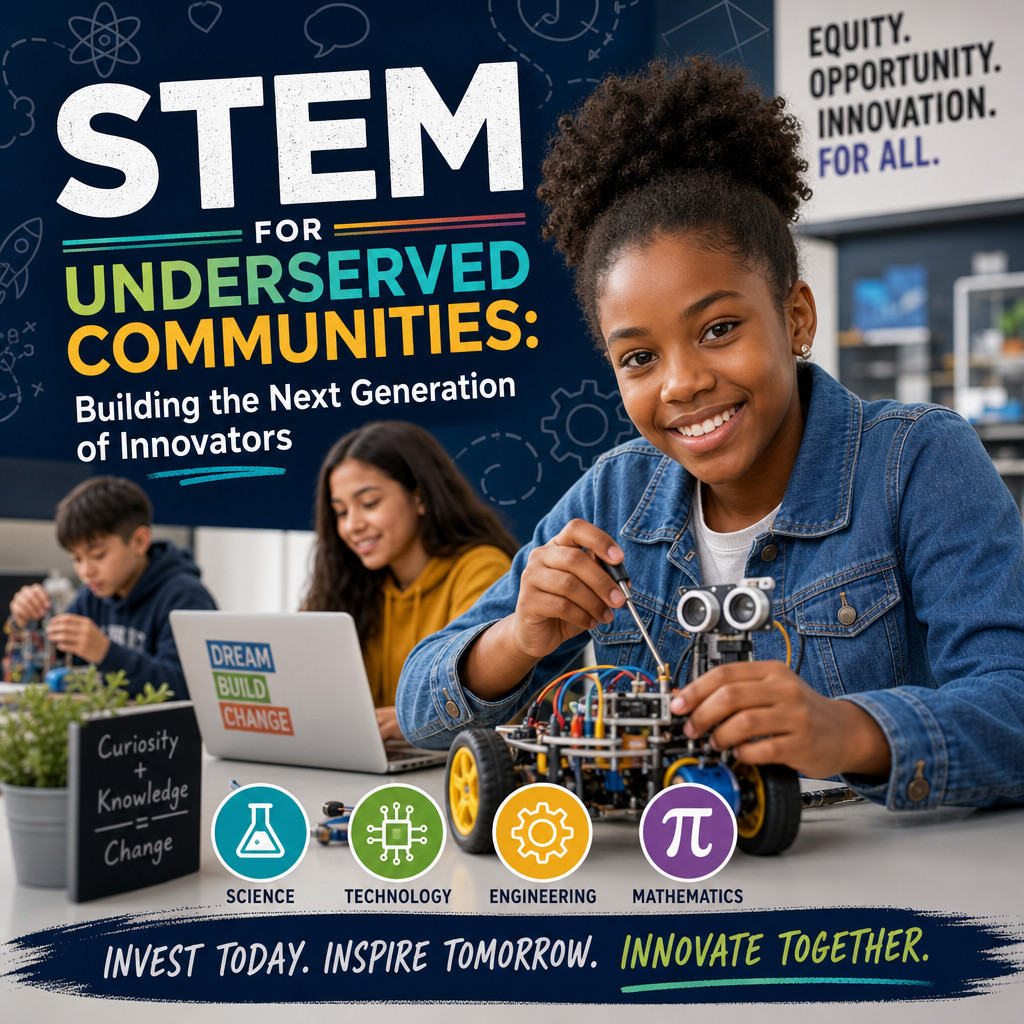
STEM for Underserved Communities: Building the Next Generation of Innovators
Innovation does not come from one kind of classroom, one kind of neighborhood, or one kind of student. It comes from curiosity, opportunity, and access. That is why STEM for underserved communities is more than an education initiative—it is a pathway to economic mobility, stronger local economies, and a more diverse innovation pipeline.
Science, technology, engineering, and math shape nearly every part of modern life. Yet many students in low-income, rural, tribal, and historically marginalized communities still face barriers that limit their access to high-quality STEM learning. Closing that gap is not only a matter of fairness. It is one of the smartest investments society can make.
Why STEM Access Matters
When students are exposed to STEM early, they begin to see themselves as problem-solvers and creators. They learn how to ask questions, test ideas, and build solutions. These skills matter whether they become engineers, healthcare workers, software developers, entrepreneurs, or technicians.
For underserved communities, STEM education can also open doors to careers that offer stability and upward mobility. Many STEM jobs pay above-average wages and are in high demand. That means access to STEM can help families and communities build long-term opportunity.
But the benefits go beyond jobs. STEM education encourages critical thinking, creativity, and collaboration. It prepares students to understand the world around them and to improve it.
Common Barriers Students Face
Students in underserved communities often encounter challenges that make STEM harder to access, including:
- Limited funding for school labs, equipment, and technology
- Fewer advanced coursework options like robotics, coding, or AP science
- Shortages of experienced STEM teachers
- Limited internet access or outdated devices
- Lack of role models or mentors in STEM fields
- Transportation barriers that prevent participation in after-school programs
These obstacles can make STEM feel distant or unavailable, even for highly capable students. If the goal is to build the next generation of innovators, then access must be intentional, not accidental.
What Effective STEM Programs Look Like
Strong STEM programs do not just teach facts. They create experiences that help students connect learning to real life. The best initiatives are hands-on, culturally relevant, and community-centered.
1. Hands-On Learning
Students learn best when they can explore, build, test, and revise. Activities like coding challenges, engineering prototypes, science experiments, and maker projects help bring lessons to life.
2. Real-World Relevance
STEM becomes more meaningful when students see how it relates to their communities. Projects focused on water quality, local agriculture, clean energy, public health, or transit solutions show students that STEM can solve real problems close to home.
3. Mentorship and Representation
Seeing professionals who share a student’s background can be transformative. Mentors, guest speakers, and community partners help students picture themselves in STEM careers. Representation builds confidence and belonging.
4. Flexible Access
Programs need to meet students where they are. That may mean after-school clubs, mobile labs, weekend workshops, online learning, or partnerships with libraries and community centers. Accessibility should be built into the design.
The Role of Schools, Families, and Communities
Expanding STEM for underserved communities is not just the job of schools. It requires collaboration across many parts of the community.
Schools
Schools can broaden access by offering more STEM electives, investing in teacher training, and integrating STEM across subjects. Even classrooms with limited resources can use project-based learning and low-cost materials to spark interest.
Families
Families play an important role in encouraging curiosity. Parents and caregivers do not need advanced technical knowledge to support STEM learning. Asking questions, celebrating experimentation, and connecting math or science to everyday life can make a big difference.
Community Organizations
Nonprofits, libraries, universities, and local businesses can all help expand access. These organizations often provide mentorship, equipment, internships, and enrichment opportunities that schools may not be able to offer alone.
Building Pathways, Not Just Programs
One of the most important lessons in equity work is that one-time events are not enough. A single science fair or workshop can inspire interest, but sustained pathways are what lead to real opportunity.
That means creating a continuum of support:
- Early exposure in elementary school
- Skill-building in middle school
- Advanced learning in high school
- Career exploration, internships, and apprenticeships
- Support for college, certification, or direct entry into the workforce
When students have a clear path forward, STEM feels attainable rather than abstract.
Why This Work Shapes the Future
The future will be shaped by the people who design the tools, systems, and solutions we all rely on. If underserved communities are left out of STEM, then the future will be less innovative, less inclusive, and less capable of meeting the needs of everyone.
Investing in STEM for underserved communities helps ensure that talent is not wasted because of circumstance. It creates space for new ideas, new leaders, and new voices. Most importantly, it tells students that their creativity matters and their communities deserve to be part of progress.
Conclusion
Building the next generation of innovators starts with access, encouragement, and opportunity. By removing barriers and creating meaningful STEM experiences, schools and communities can help students discover their potential and use it to make a difference.
When underserved students are given the tools to explore, invent, and lead, they do more than succeed individually. They strengthen their communities and help shape a smarter, more equitable future for everyone.