

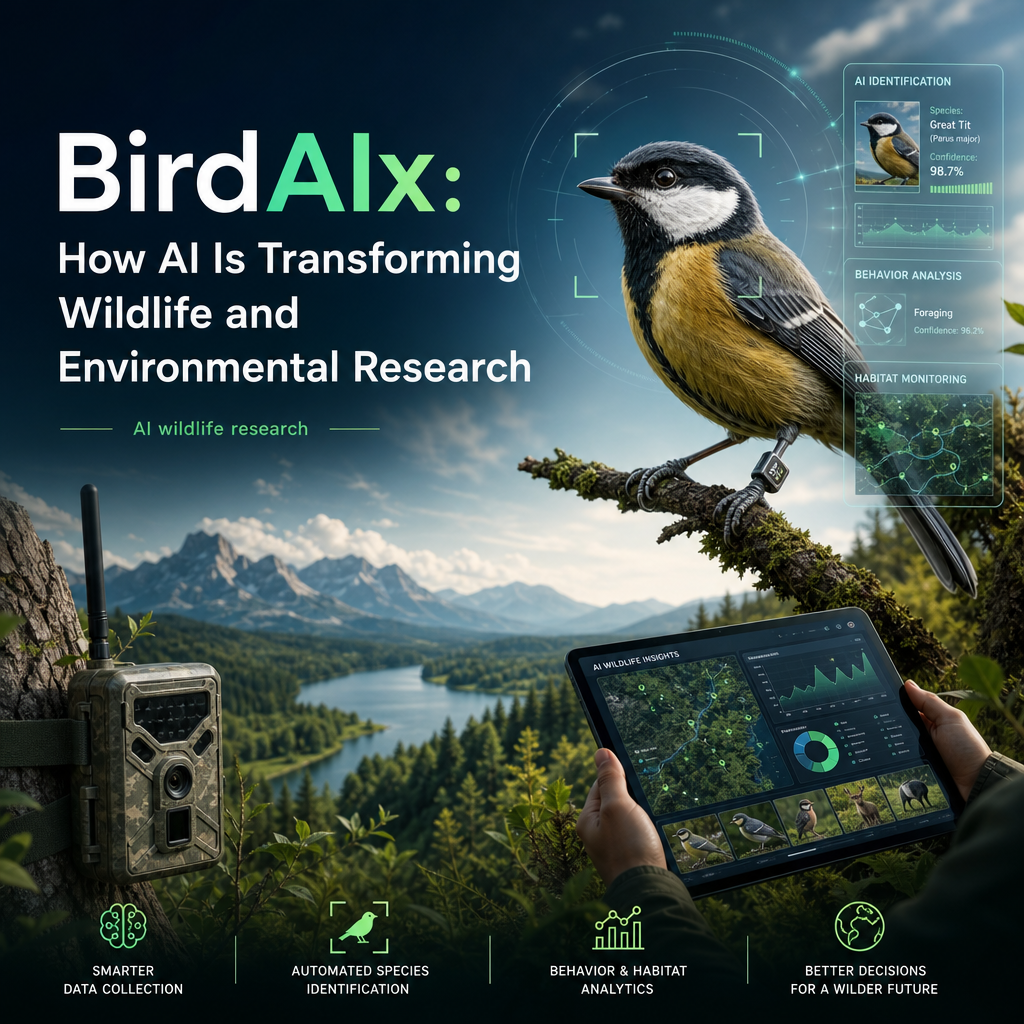
BirdAIx: How AI Is Transforming Wildlife and Environmental Research
BirdAIx: How AI Is Transforming Wildlife and Environmental Research
Wildlife research has always depended on patience, careful observation, and long hours in the field. Today, that work is being reshaped by artificial intelligence. BirdAIx is part of this shift, bringing smarter tools to the study of birds, ecosystems, and environmental change. By combining machine learning, computer vision, and large-scale data analysis, researchers can now gather insights faster and with greater accuracy than ever before.
AI is not replacing field scientists. Instead, it is helping them see patterns that would be nearly impossible to detect manually. From identifying species by sound to tracking migration across continents, BirdAIx is showing how technology can strengthen conservation and ecological research.
What Is BirdAIx?
BirdAIx refers to the use of AI-driven methods and tools in bird monitoring and broader wildlife research. It includes systems that can:
- Recognize bird species from audio recordings
- Analyze images and video from cameras and drones
- Detect movement patterns and habitat use
- Process huge datasets from sensors and tracking devices
- Help predict environmental changes that affect wildlife
In practical terms, BirdAIx makes it possible to collect and interpret data at a scale that would be difficult for human teams alone. That matters because wildlife populations are changing quickly, and researchers need timely information to respond effectively.
Why AI Matters in Wildlife Research
Traditional wildlife studies often require extensive manual effort. Scientists may spend weeks in remote areas, reviewing recordings, sorting camera trap images, or tagging data by hand. AI reduces that burden by automating repetitive tasks and highlighting the most important signals.
Faster species identification
One of the biggest advantages of AI is automatic species recognition. A single field recorder can capture thousands of bird calls in a day. BirdAIx models can scan those recordings and identify species in minutes, giving researchers a much faster way to assess biodiversity.
Better coverage across large areas
Environmental changes often happen across landscapes, not just in one location. AI systems can analyze data from many sources at once, including satellite imagery, drone footage, and sensor networks. This helps researchers monitor forests, wetlands, coastlines, and migration corridors more effectively.
Improved accuracy over time
AI models get better as they learn from more examples. When researchers feed in verified data, the system becomes more reliable at recognizing birds, detecting habitat loss, and flagging unusual behavior. This makes BirdAIx especially valuable for long-term monitoring projects.
Real-World Uses of BirdAIx
BirdAIx is useful in many types of environmental research. Here are a few examples of how it is being applied.
Migration tracking
Bird migration is one of the most fascinating and complex natural processes. AI can help analyze movement data from GPS tags and radar systems, revealing when birds travel, where they stop, and how climate shifts may affect their routes.
Habitat monitoring
AI-powered image analysis can detect changes in forests, grasslands, and wetlands. Researchers can compare old and new imagery to identify deforestation, urban growth, flooding, or drought conditions that impact bird populations and other wildlife.
Acoustic surveys
Bird songs are a rich source of ecological data. BirdAIx tools can process large numbers of audio recordings to measure species diversity, breeding activity, and seasonal changes in bird behavior. This is especially useful in areas that are difficult to access regularly.
Conservation planning
When conservation teams understand where species live and what threats they face, they can make better decisions. AI helps prioritize regions for protection, restoration, and field intervention by identifying high-value habitats and emerging risks.
Benefits for Environmental Research
BirdAIx does more than improve bird studies. It also supports broader environmental science.
Scalable data analysis
Environmental researchers often deal with massive datasets. AI makes it possible to review that information quickly and consistently, turning raw data into actionable insights.
Early warning signals
By detecting changes in wildlife activity, habitat quality, or species presence, AI can provide early warnings about environmental stress. These signals may help scientists respond before damage becomes severe.
Lower costs and less manual work
Automating parts of the research process can reduce time and expenses. That means teams can focus more on fieldwork, interpretation, and conservation strategy rather than tedious data sorting.
Challenges and Ethical Questions
Like any technology, BirdAIx comes with challenges. AI models are only as good as the data they are trained on. If the data is incomplete or biased, the results may be less reliable. In addition, wildlife research often involves sensitive locations and vulnerable species, so data privacy and responsible use are important.
There is also the risk of overreliance on automation. AI can support decision-making, but it should not replace expert judgment. Human researchers still play the key role in validating findings, understanding context, and translating results into action.
The Future of BirdAIx
As AI tools become more advanced, BirdAIx will likely become even more powerful. Future systems may combine live audio monitoring, smart camera traps, satellite data, and predictive modeling in a single platform. This could give researchers a more complete picture of ecosystems in real time.
That future matters because environmental challenges are becoming more urgent. Habitat loss, climate change, pollution, and species decline all require faster and better-informed responses. BirdAIx offers a way to meet that need by giving scientists stronger tools to study, understand, and protect the natural world.
Conclusion
BirdAIx is transforming wildlife and environmental research by making data collection and analysis smarter, faster, and more scalable. It helps scientists identify species, monitor habitats, track migration, and respond to ecological threats with greater precision. While human expertise remains essential, AI is proving to be a powerful ally in conservation.
As technology continues to evolve, BirdAIx may become one of the most important tools in the effort to understand and protect biodiversity for the future.