

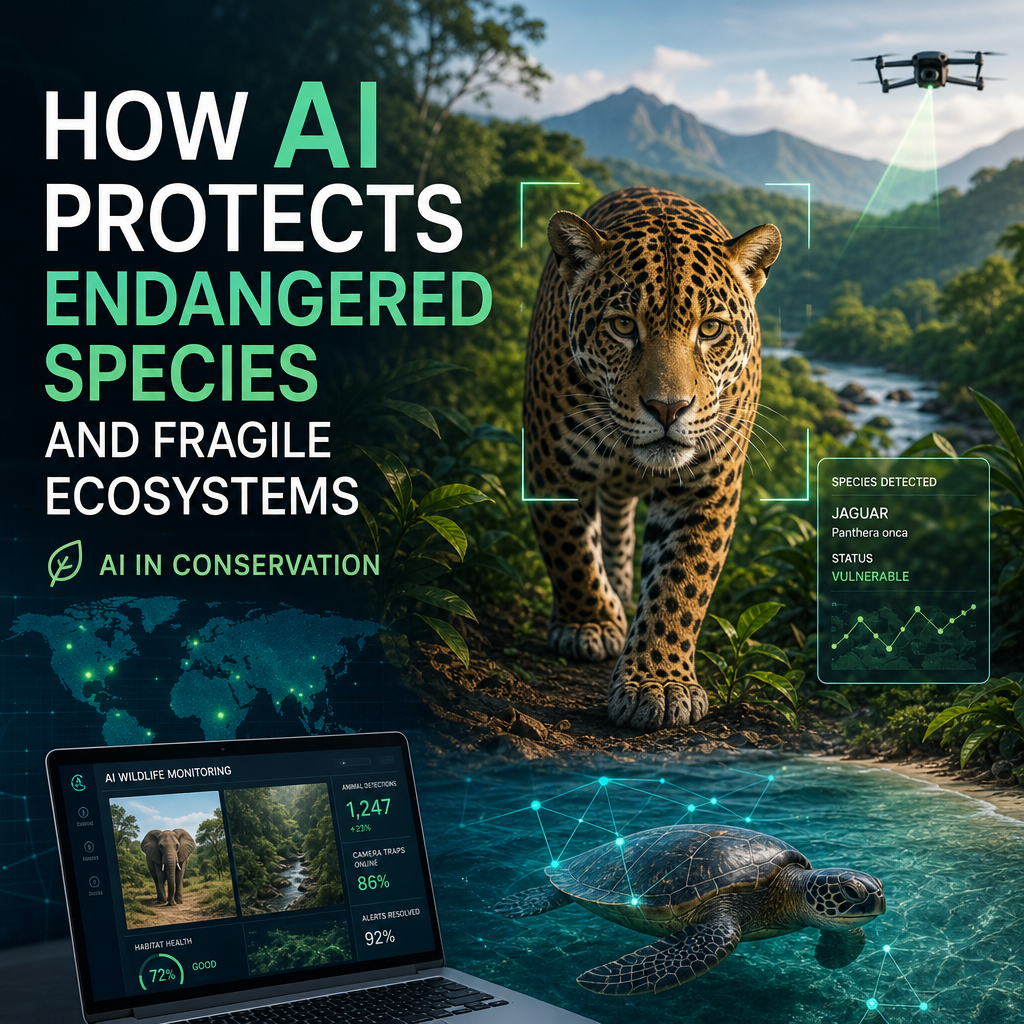
How AI Protects Endangered Species and Fragile Ecosystems
The Role of AI in Protecting Endangered Species and Ecosystems
Artificial intelligence is quickly becoming one of the most useful tools in modern conservation. As habitats shrink, poaching continues, and climate change alters ecosystems, conservation teams need faster, smarter ways to respond. That is where AI in protecting endangered species and ecosystems is making a real difference.
From tracking animals in remote forests to detecting illegal fishing in oceans, AI helps scientists process huge amounts of data and turn it into action. It cannot replace field biologists or local conservationists, but it can greatly extend their reach.
Why Conservation Needs AI
Protecting wildlife is difficult because ecosystems are complex and constantly changing. Rangers, researchers, and environmental groups often deal with limited funding, limited staff, and massive landscapes to monitor.
AI helps by finding patterns in data that humans might miss. It can:
- analyze satellite images in seconds
- identify animal species from camera traps
- detect unusual movement or behavior
- predict risks such as habitat loss or poaching activity
- support quicker decision-making in the field
This makes conservation efforts more efficient and often more effective.
Monitoring Endangered Species More Efficiently
One of the most valuable uses of AI is wildlife monitoring. Camera traps, acoustic sensors, and drones can collect enormous amounts of information, but reviewing that material manually takes time.
AI systems can scan images and audio recordings to identify species automatically. This is especially useful for rare animals that are difficult to observe directly, such as snow leopards, pangolins, or certain bird species.
How AI helps wildlife tracking
- Camera trap analysis: AI can sort through thousands of photos and recognize animals by shape, size, or pattern.
- Acoustic monitoring: Machine learning can detect animal calls in forests, oceans, or grasslands.
- Migration tracking: AI can combine GPS and environmental data to study movement patterns.
These tools allow conservationists to understand population trends and quickly spot changes that may signal danger.
Fighting Poaching and Illegal Wildlife Trade
Poaching remains a serious threat to many endangered species. Elephants, rhinos, tigers, and other animals are targeted for their tusks, horns, skins, or other body parts. AI is helping rangers and law enforcement respond more strategically.
For example, AI can analyze data from drones, satellite images, and motion sensors to detect suspicious activity in protected areas. It can also identify high-risk zones based on past incidents, terrain, and patrol records.
This allows teams to place patrols where they are needed most instead of covering huge areas blindly.
AI tools used in anti-poaching efforts
- drone surveillance with automated threat detection
- predictive models that flag poaching hotspots
- smart sensor networks along borders and park trails
- facial or pattern recognition for identifying illegal trade routes
In many cases, faster alerts mean the difference between protecting an animal and losing it.
Protecting Ecosystems, Not Just Species
Endangered species do not exist in isolation. They depend on healthy ecosystems for food, shelter, and breeding. That means protecting forests, wetlands, coral reefs, grasslands, and oceans is just as important as saving individual animals.
AI in protecting endangered species and ecosystems also supports broader environmental management. It can monitor deforestation, track coral bleaching, identify invasive species, and measure the impacts of drought or flooding.
Ecosystem applications of AI
- Forest monitoring: AI detects tree loss and land-use changes through satellite imagery.
- Ocean health: AI helps map coral reef damage and illegal fishing activity.
- Invasive species control: AI can spot non-native plants or animals before they spread widely.
- Climate analysis: AI models predict how warming temperatures may affect habitats.
By understanding ecosystem health early, conservation teams can respond before damage becomes irreversible.
Challenges and Ethical Considerations
While AI offers powerful benefits, it is not a perfect solution. It depends on good data, reliable systems, and careful human oversight. In some regions, technology may be expensive or difficult to maintain. In others, there may be concerns about privacy, surveillance, or the misuse of data.
There is also the risk of bias if AI models are trained on incomplete or unbalanced data. For conservation, that could lead to inaccurate species detection or weak predictions in under-studied areas.
That is why AI should be seen as a partner to conservation work, not a replacement for it. Local communities, Indigenous knowledge, ecologists, and park rangers remain essential.
A Smarter Future for Conservation
The future of conservation will likely rely on a combination of field expertise and advanced technology. AI can help identify threats earlier, use resources more wisely, and protect places that are too large or remote for human teams alone.
When used responsibly, AI in protecting endangered species and ecosystems offers a powerful way to support biodiversity at a time when it is under severe pressure. It gives conservationists better tools, faster insights, and a stronger chance to protect the natural world for the future.
In the end, AI is not saving wildlife on its own. But it is helping people save more of it, more effectively, and with greater precision than ever before.