
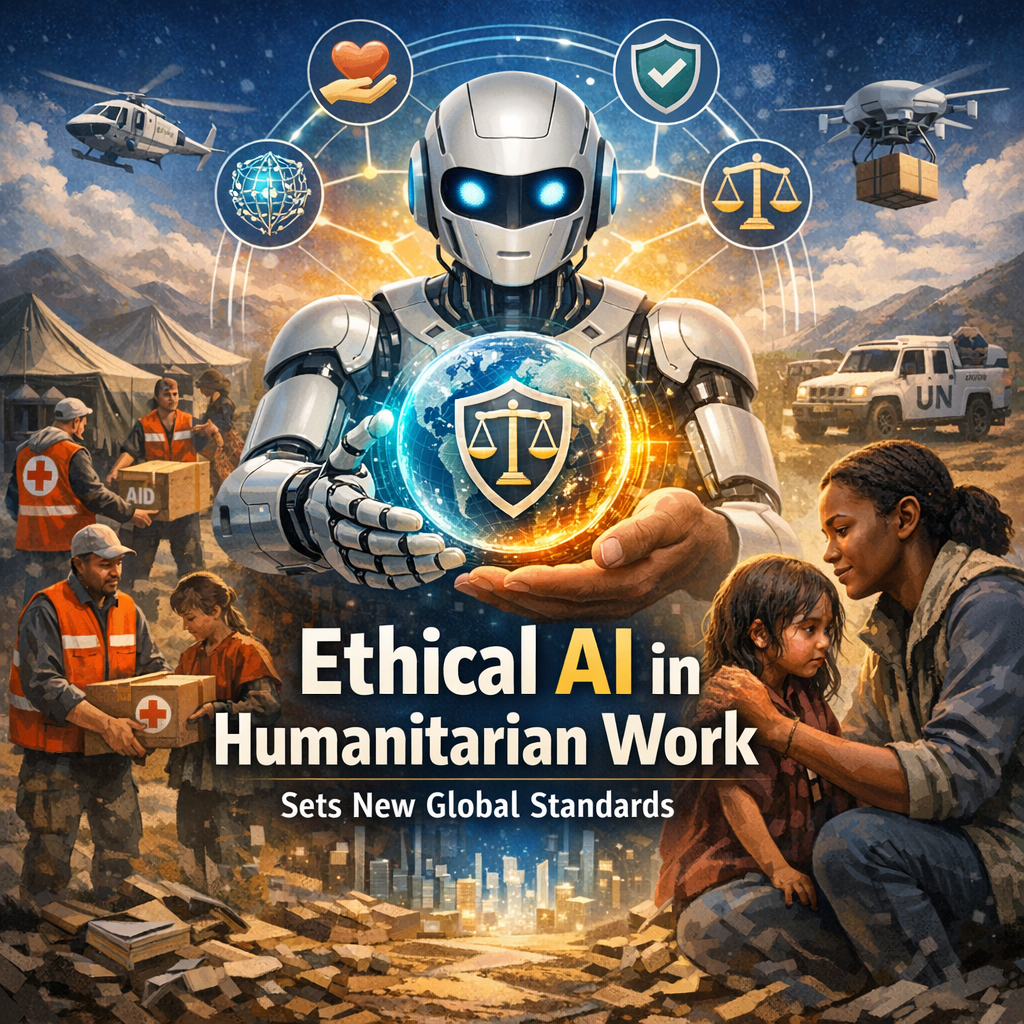
Ethical AI in Humanitarian Work Sets New Global Standards
The Rise of Ethical AI in Humanitarian Work: A New Global Standard
The profound impact of Artificial Intelligence (AI) on various sectors has been undeniable. Amid the rapid advancements in technology, a significant transformation is emerging in the field of humanitarian work. Ethical AI is paving the way for a new global standard, reshaping how aid is delivered and how solutions are formulated for some of the world’s most pressing challenges.
Understanding Ethical AI in the Humanitarian Sector
Ethical AI refers to the principles and practices that ensure AI technologies are implemented in ways that promote transparency, accountability, fairness, and respect for human rights. In the context of humanitarian work, this involves AI systems designed to support and enhance human decision-making in crisis situations, without infringing on privacy or exacerbating existing vulnerabilities.
Key Principles of Ethical AI
- Transparency: Knowing how AI models work, what data they use, and how decisions are derived.
- Accountability: Ensuring there is a mechanism for holding systems (and their creators) responsible for the outcomes they produce.
- Fairness: Avoiding biases that may lead to discrimination against certain groups.
- Respect for Human Rights: Safeguarding the rights and dignity of all people affected by the deployment of AI.
AI Applications Transforming Humanitarian Efforts
Several initiatives highlight how AI is being utilized ethically in humanitarian settings:
Disaster Response and Management
AI tools are being leveraged to analyze data from satellites, social media, and sensors to predict disaster trends and responses. This not only speeds up the response times but also helps in allocating resources more effectively and accurately.
Enhancing Food Security
By predicting crop yields and monitoring crop health through AI-driven imagery and data analysis, organizations can better plan aid distribution, especially in famine-prone areas. This reduces the risk of food waste and ensures aid reaches those in dire need.
Healthcare and Epidemic Control
AI models that predict disease outbreaks are becoming invaluable in managing and mitigating health crises, particularly in resource-limited settings. These models help in deploying medical aid proactively, setting up temporary healthcare facilities, and managing vaccine distributions.
Challenges to Implementing Ethical AI
Implementing AI in humanitarian work is not without challenges. Data privacy concerns, the risk of dependency on technology, and the need for robust frameworks to manage these tools responsibly are some of the critical issues that need addressing.
Ensuring Data Privacy
Protecting the privacy of vulnerable populations is paramount. Any data collected must be handled securely, with consent where necessary, and for the intended humanitarian purposes only.
Avoiding Over-Reliance on AI
Human oversight remains crucial. Decisions made by AI should always be subject to human review, particularly in contexts where wrong predictions could lead to significant repercussions.
Moving Towards a Global Standard
The potential of Ethical AI in reshaping humanitarian work is immense. However, the creation of a global standard for ethical AI use in humanitarian efforts is essential. This involves collaboration between governments, NGOs, tech companies, and international bodies.
Steps for Establishing Global Standards
- Developing Universal Guidelines: Formulating clear guidelines that outline ethical considerations and the application of AI in humanitarian contexts.
- Fostering International Cooperation: Ensuring diverse stakeholders are on board and that systems are adaptable to various regional needs.
- Continuous Monitoring and Evaluation: Implementing frameworks for continuous assessment of AI’s impact on humanitarian work to make iterative improvements.
Conclusion
AI’s role in transforming humanitarian work with high ethical standards promises not only increased efficiency and effectiveness but also a more humane approach to addressing global crises. As the deployment of ethical AI becomes more widespread, the prospect of creating more resilient and responsive humanitarian systems becomes increasingly achievable. However, this requires concerted effort, global cooperation, and an unwavering commitment to the principles of human dignity and rights. The journey towards ethical AI in humanitarian work is not just about adopting new technologies, but about setting a new global standard for the future.