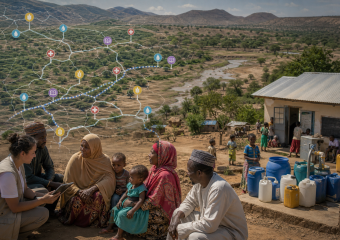


How Save World Children Uses Agentic AI in Humanitarian Efforts
Why Save World Children Is Leading the Next Humanitarian Revolution with Agentic AI
In the evolving landscape of global humanitarian efforts, Save World Children stands out as a paradigm of innovation and progress. The non-profit’s recent pivot towards integrating Agentic Artificial Intelligence (AI) is not just transformative but revolutionary, signaling a new era in how aid operations can be executed efficiently and empathetically.
Understanding Agentic AI
Agentic AI refers to artificial intelligence systems that can make autonomous decisions based on environmental inputs without human intervention. This level of AI sophistication means it can identify needs, prioritize tasks, and deploy resources effectively, especially in high-stress scenarios like disaster response or complex humanitarian crises.
Revolutionizing Humanitarian Aid
Save World Children’s integration of Agentic AI into their operations marks a significant leap in crafting a future where humanitarian aid is not only prompt but also more accurately attuned to the needs of those it intends to serve. Here’s how they’re doing it:
Enhanced Disaster Response
One of the most critical aspects of humanitarian aid is disaster response. Traditionally, this involves manual coordination of resources, which can be slow and error-prone. Save World Children’s use of Agentic AI drastically improves response times and resource allocation, making it possible to help those affected by disasters faster and more efficiently than ever before.
Improving Supply Chain Management
Distributing supplies, especially in interrupted infrastructures, is a logistical nightmare. Agentic AI helps by optimizing supply routes and predicting areas of need before human teams can assess the situation. This anticipatory action helps mitigate severe shortages and ensures that essential supplies like food, water, and medical equipment are distributed effectively.
Focused Medical Assistance
In healthcare, the use of Agentic AI allows for rapid diagnosis and treatment suggestions, tailored specifically to the individual needs of children in affected areas. AI-driven mobile health units bring expert medical advice to remote locations, vastly improving outcomes in emergencies where medical professionals are scarce.
Empowering Local Communities
Beyond just aid delivery, Save World Children emphasizes empowering local communities to take charge of their recovery and development. Agentic AI contributes by:
- Training and Education: AI systems provide remote education solutions to children in inaccessible areas, ensuring continuous learning even in crisis situations.
- Agricultural Development: AI-driven agricultural tools help local farmers predict weather patterns, understand crop viability, and maximize yield with minimal resources.
Ethical Considerations and Community Trust
Incorporating AI into humanitarian aid isn’t without its challenges. Save World Children prioritizes building trust and ensuring the ethical use of AI. They are committed to:
- Transparency: Keeping operations transparent to ensure that stakeholders understand how AI is being used and who benefits.
- Privacy: Implementing strict data protection measures to secure the personal information of those they aid.
- Community Involvement: Ensuring the local population is involved in how AI solutions are implemented within their communities.
The Future of Humanitarian Aid
As we look towards the future, the role of Agentic AI in humanitarian efforts by organizations like Save World Children only promises to grow. This technology offers a unique capability to not only respond to emergencies but to also prevent them and accelerate recovery and development in new, innovative ways.
Conclusion
The pioneering work of Save World Children with Agentic AI marks a significant milestone in the evolution of humanitarian aid. As we advance, it becomes clear that such technologies will not only augment existing capabilities but revolutionize how relief is provided across the globe. This is not just an advancement in technology but a genuine shift towards more resilient, responsive, and respectful humanitarian action.